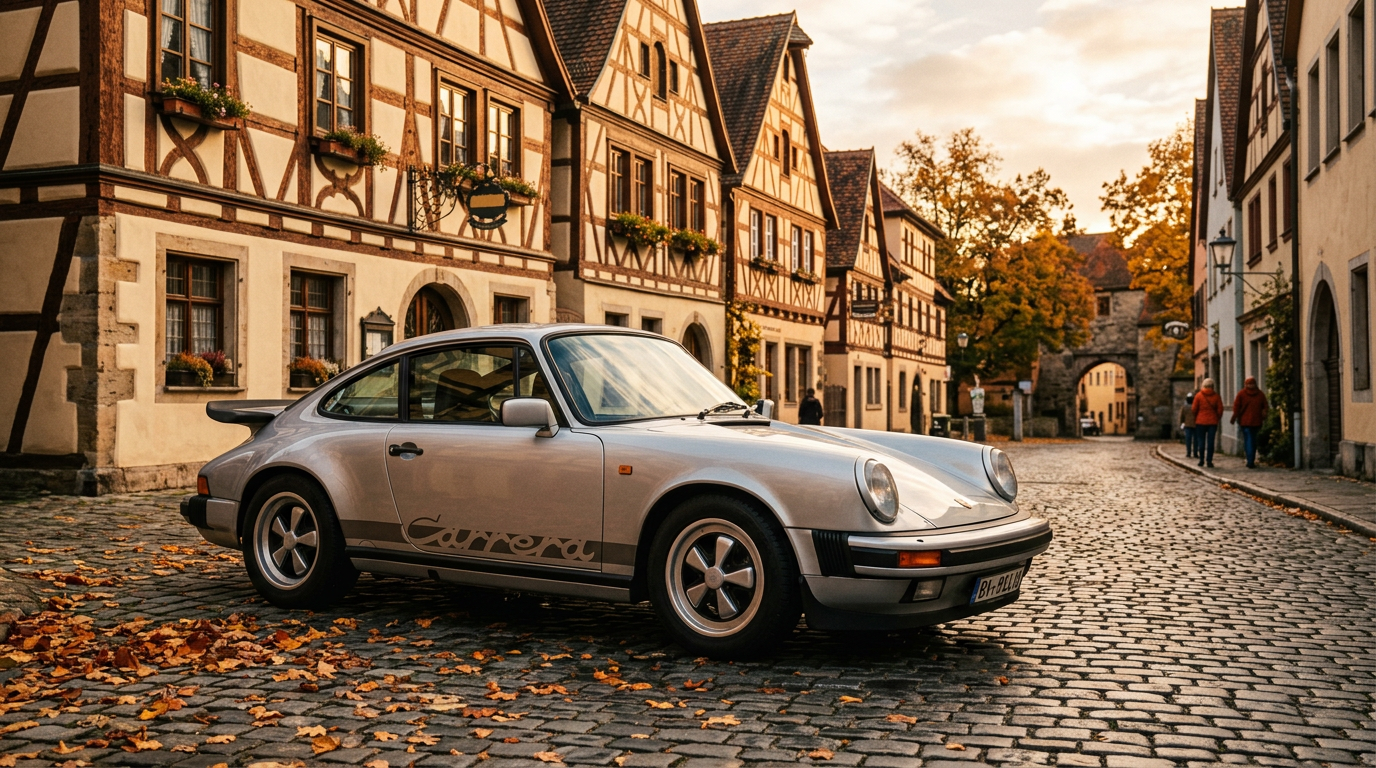
You have found the right car. It is in Stuttgart, or Milan, or Eindhoven - and you are not. The question now is not whether to buy it, but how to get it home safely, affordably, and without the damage that turns a good purchase into a regretful one.
Classic car transport across Europe is a well-established industry with specialists who move valuable vehicles between countries every day. But the range of services, prices, and quality varies enormously. The difference between a professional enclosed transporter and a budget open trailer is not just cost - it is the difference between a car that arrives as it left and one that arrives with stone chips, a cracked windscreen, or worse.
This guide covers every option: driving the car home yourself, open and enclosed transport, costs by route, insurance considerations, and the preparation steps that protect your car in transit.
Option 1: Drive It Home
The most enjoyable option and, for roadworthy cars, often the most economical. A tank of fuel, a channel crossing or a mountain pass, and the immediate reward of driving the car you have just bought through the European landscape it was designed for.
When to drive it home:
- The car is mechanically sound and roadworthy
- You have valid insurance for the transit (German Kurzzeitkennzeichen or your domestic policy with European cover)
- The distance is manageable (under 1,500 km is comfortable in a day and a half)
- You want to assess the car's behaviour over a meaningful distance before committing to any further work
When not to drive it home:
- The car is not roadworthy or not registered
- The car is too valuable to risk road damage (stone chips, weather, breakdown)
- You are not confident driving the specific car on unfamiliar roads (a rear-engined Porsche 930 Turbo on wet autobahn is not a beginner's drive)
- The distance exceeds what you can comfortably cover
Cost: Fuel (€100–€300 depending on distance and consumption), ferry or tunnel crossing (€100–€250 for a car), motorway tolls (varies by country - France is expensive, Germany is free for cars), overnight accommodation if needed.
Preparation: Check fluid levels, tyre condition and pressures, lights, wipers, and carry a basic toolkit plus a warning triangle and reflective vest (legally required in most European countries). Download offline maps for your route. Carry the purchase contract, insurance documents, and your driving licence.
Option 2: Open Transport
Search classic cars across 47 European countries on Carseto.
Compare prices, find the best deals, and plan your cross-border purchase.
The most common and most affordable professional transport option. The car is loaded onto an open trailer - typically a multi-car transporter carrying 2–6 vehicles - and driven to your location.
Advantages: Cost-effective. Widely available. Flexible scheduling. Most transport companies operate regular routes between major European markets (Germany↔UK, Germany↔Poland, Italy↔Northern Europe).
Disadvantages: The car is exposed to weather, road spray, and stone chips during transit. For driver-quality classics where minor cosmetic imperfections are acceptable, this is rarely an issue. For concours-quality or high-value cars, enclosed transport is worth the premium.
Cost by route (approximate, 2026 prices):
| Route | Open (shared) | Open (sole use) |
|---|---|---|
| Germany → UK | £400–£800 | £700–£1,200 |
| Germany → Poland | €300–€600 | €500–€900 |
| Italy → Germany | €500–€900 | €800–€1,400 |
| Italy → UK | £600–£1,100 | £1,000–£1,800 |
| Italy → Poland | €500–€900 | €800–£1,300 |
| France → UK | £300–£600 | £500–£900 |
| Netherlands → UK | £300–£500 | £500–£800 |
Shared transport (your car shares the trailer with others) is cheaper but less flexible on timing. Sole-use transport (the transporter carries only your car) offers door-to-door scheduling and reduced handling.
Option 3: Enclosed Transport
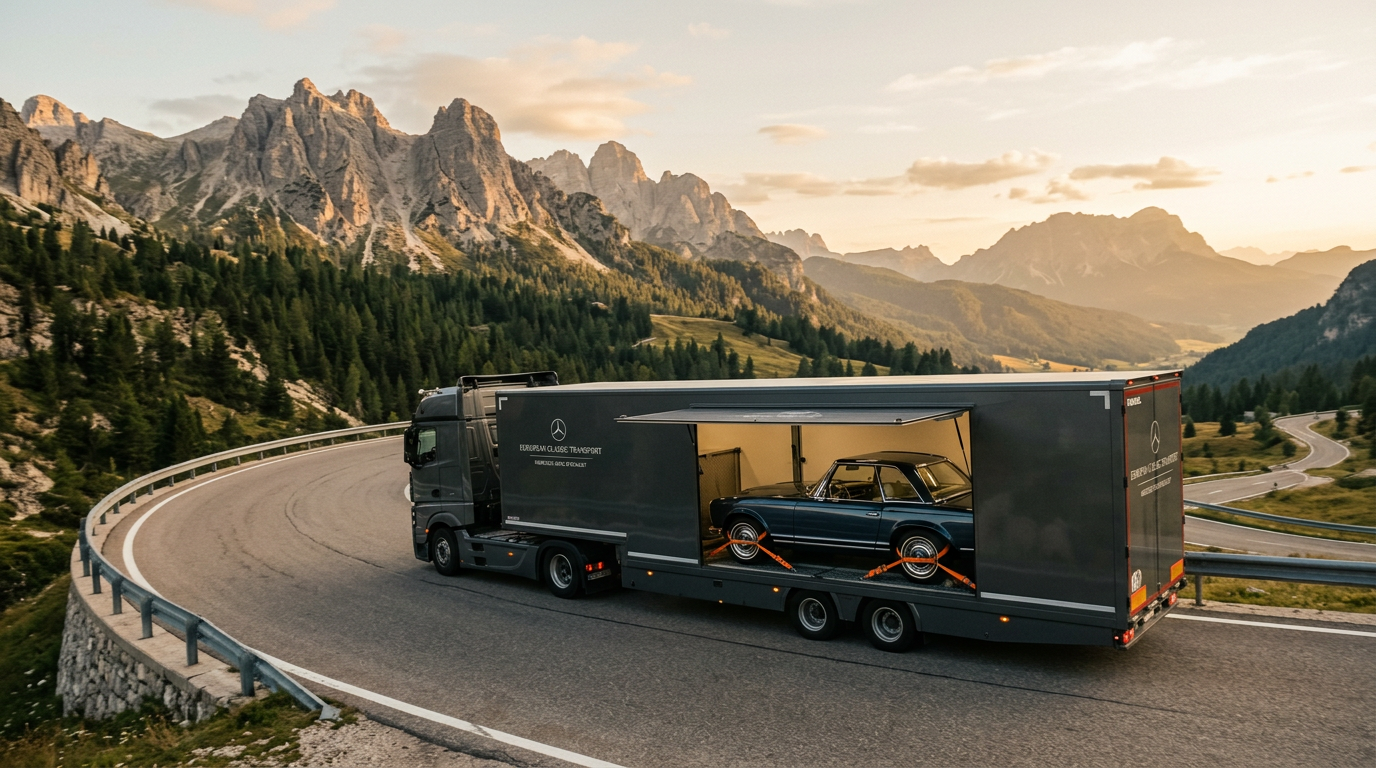
The premium option. The car travels inside a fully enclosed trailer, protected from weather, road spray, stone chips, and UV exposure. Enclosed transport is the standard for high-value classics, concours cars, and any vehicle where cosmetic condition is paramount.
Advantages: Complete protection from external elements. Climate-controlled options available for the most sensitive vehicles. Reduced handling (fewer loading/unloading cycles on shared transporters). Professional operators specialising in high-value vehicles.
Disadvantages: Significantly more expensive - typically 60–120% more than open transport. Less availability, particularly for ad-hoc single-car shipments. Longer lead times for booking.
Cost by route (approximate, 2026 prices):
| Route | Enclosed (single car) |
|---|---|
| Germany → UK | £1,000–£2,000 |
| Germany → Poland | €600–€1,200 |
| Italy → Germany | €800–€1,800 |
| Italy → UK | £1,200–£2,500 |
| Netherlands → UK | £800–£1,500 |
For cars valued above €80,000, the additional cost of enclosed transport is marginal relative to the car's value and the cost of repairing cosmetic damage.
Option 4: Drive-Away Services
A professional driver collects the car and drives it to your location. This combines the cost-effectiveness of driving with the convenience of not having to travel yourself.
Advantages: No trailer loading/unloading (reduced risk of ramp damage). The car is driven at road speed rather than strapped to a trailer. You receive feedback from the driver about the car's mechanical behaviour during the journey.
Disadvantages: The car accumulates mileage. Wear and tear from the journey (tyres, brakes, consumables). Risk of road incidents, however minor. Not suitable for non-roadworthy cars.
Cost: €500–€1,500 depending on distance, plus fuel and tolls. The driver's return travel is typically included in the quote.
Best for: Roadworthy cars in the €10,000–€50,000 range where the car is intended as a driver rather than a concours piece, and where the additional mileage (500–1,500 km) is not a concern.
Insurance During Transport
This is the single most important practical consideration - and the one most frequently overlooked.
Transport Company Insurance
All professional transport companies carry goods-in-transit insurance. However, the coverage limit, the excess (deductible), and the exclusions vary enormously. Before booking, ask for:
- The maximum coverage per vehicle (should match or exceed your car's value)
- The excess/deductible (typically €500–€2,000 - this is what you pay before the insurer's coverage begins)
- Exclusions (cosmetic damage, pre-existing conditions, mechanical failure during transit)
- Proof of insurance (request a copy of the policy, not just a verbal assurance)
Your Own Insurance
If you have an agreed-value classic car insurance policy, check whether it covers the car during professional transport. Many policies do - but some exclude coverage while the car is in the care of a third-party transporter. Verify before shipping.
Gap in Coverage
The most common insurance problem: your own policy excludes third-party transport, and the transport company's coverage has a €2,000 excess plus exclusions for cosmetic damage. If a stone chip cracks the windscreen or a strap mark damages the paint, you may find yourself covering the repair cost out of pocket.
The solution: Either ensure your own policy covers third-party transport, or negotiate the transport company's excess down, or accept the gap and budget accordingly. For cars above €50,000, the additional cost of comprehensive transit insurance (available through specialist brokers) is worthwhile.
Preparing Your Car for Transport
Proper preparation reduces the risk of damage and disputes.
Document the car's condition before loading. Take photographs of every panel, every corner, the roof, the underside of bumpers, the wheels, and any existing damage. Date-stamp the photographs (your phone does this automatically). These photographs are your evidence if a damage claim arises.
Remove or secure loose items. Anything inside the car that can move - floor mats, tools, spare parts, personal belongings - should be removed or securely fastened. Loose items become projectiles during transport.
Reduce fuel level. A quarter-tank is sufficient for loading and unloading. Full fuel tanks add weight and, in the event of a leak or accident, increase risk.
Check fluid levels. Ensure no active leaks that could damage the trailer or other vehicles. A car that drips oil onto a transporter will not be welcome - and may be refused.
Disable the alarm. A car alarm triggered during transport is a nuisance for the driver and may result in the battery being disconnected - which can cause its own problems with electronic systems.
Leave a key. The transport driver needs to be able to start, move, and steer the car for loading and unloading. Provide a key and any instructions (immobiliser codes, quirky starting procedures).
Note the mileage. Record the odometer reading before and after transport. For trailer transport, the mileage should not change. For drive-away services, compare the mileage with the expected route distance.
How to Choose a Transport Company
Track your classic in My Garage.
Document your collection, log service history, and monitor market values.
Ask for references. A reputable classic car transport company will have references from previous clients - ideally collectors who have shipped similar vehicles. Ask for them, and contact at least one.
Check their equipment. Professional classic car transporters use soft-strap tie-downs (not chain hooks that can damage wheels or chassis), adjustable wheel cradles, and clean trailer decks. If the transporter looks like it normally carries building materials, choose a different company.
Confirm the route and timeline. When will the car be collected? When will it arrive? Is there a guaranteed delivery window, or is it dependent on other pickups? For shared transport, delays of 2–5 days beyond the estimated arrival are not uncommon.
Get everything in writing. The quote, the collection and delivery dates, the insurance coverage, and the condition report should all be documented before the car is loaded. Verbal agreements are difficult to enforce if something goes wrong.
Frequently Asked Questions
How much does it cost to transport a classic car across Europe? Open shared transport: €300–€1,100 depending on route. Enclosed single-car transport: €600–€2,500. Drive-away: €500–€1,500. The UK adds ferry or tunnel crossing costs.
Is open or enclosed transport better for classic cars? For driver-quality cars under €50,000, open transport is usually adequate. For concours cars, high-value vehicles (above €80,000), or any car where cosmetic condition is critical, enclosed transport is worth the premium.
How long does European car transport take? Typically 3–7 days for professional transport within Western Europe. Shared transport may take longer due to multiple pickup and delivery stops. Sole-use transport is faster and more predictable.
Is my classic car insured during transport? Transport companies carry goods-in-transit insurance, but coverage limits, excesses, and exclusions vary. Always verify the coverage details and consider supplementary insurance for high-value vehicles.
Should I drive my new classic car home from abroad? If the car is mechanically sound, properly insured, and you are comfortable driving it on unfamiliar roads - yes. It is the most enjoyable and often the most economical option. For non-roadworthy or high-value cars, professional transport is the safer choice.
Getting Your Car Home Safely
The transport decision is not complicated. For most cross-border classic car purchases - the BMW E30 from Munich, the Alfa Spider from Tuscany, the Mercedes W123 from Hamburg - professional open transport provides the right balance of cost, convenience, and safety. For higher-value cars, enclosed transport is the standard. And for the adventurous, driving the car home is an experience that begins the ownership story in the best possible way.
Whatever you choose, the principle is the same: document the condition, verify the insurance, and choose a transporter who treats your car with the care it deserves.
Search classic cars across Europe on Carseto →
Related reading: Buying a Classic Car in Germany · Importing from Italy · Classic Car Insurance in Europe
This article is part of the Carseto Journal - market intelligence and stories from Europe's classic car world.