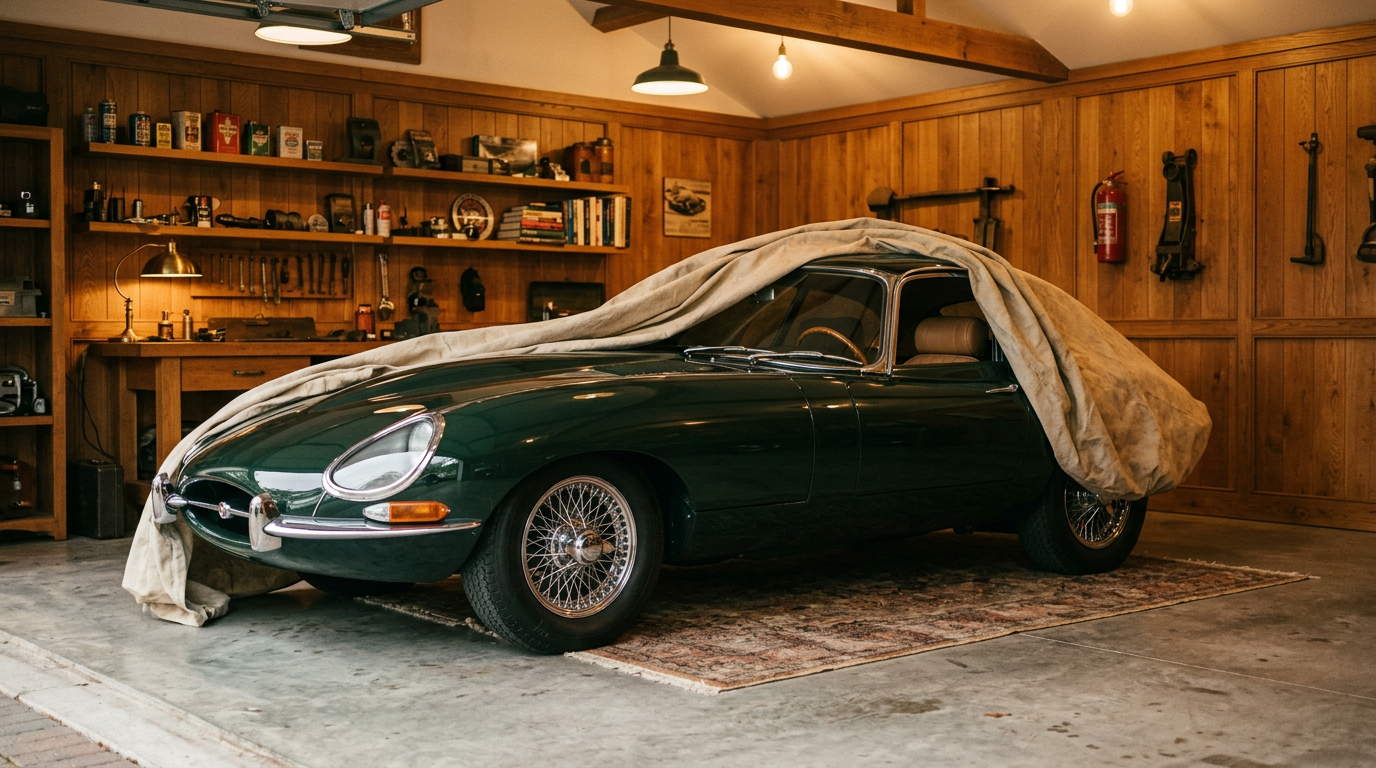
Insuring a classic car is not the same as insuring a modern daily driver. The value of a classic is not determined by a depreciation table - it is determined by rarity, condition, provenance, and the market's assessment of desirability. A standard motor policy, designed for cars that lose value every year, is structurally wrong for a car that gains value every year. Using one is a mistake that costs collectors thousands of euros when they need their policy most.
Classic car insurance in Europe is not one market - it is five or six, each with different rules. Here is how it works across Europe's major collector markets: what you need to know before buying a policy, and the specific provisions in Germany, the United Kingdom, Poland, France, and Italy that every collector should understand.
Why Classic Car Insurance Is Different
Three fundamental differences separate classic car insurance from standard motor insurance.
Agreed Value vs. Market Value
Standard motor policies pay out at "market value" in the event of a total loss - a figure determined by the insurer based on industry guides for mass-produced, depreciating vehicles. For a 2018 Volkswagen Golf, this works reasonably well. For a 1973 Porsche 911 Carrera RS, it is catastrophic. The insurer's "market value" assessment will almost certainly be far below the car's actual replacement cost.
Classic car insurance solves this with agreed value (also called "declared value" or "Marktwert-Vereinbarung" in Germany). At the start of the policy, you and the insurer agree on the car's value - supported by an independent valuation, recent comparable sales data, or a professional appraisal. In the event of a total loss, the insurer pays the agreed amount. No negotiation. No depreciation-based calculation. The agreed value reflects what the car is actually worth, and that is what you receive.
Agreed-value policies typically cost 20–40% more than standard classic car policies, but for any car worth more than €15,000, the additional cost is trivially small relative to the protection it provides.
Limited Mileage
Most classic car policies include mileage restrictions - typically between 3,000 and 10,000 km per year. This reflects the reality that most classics are not daily drivers. The limited mileage reduces the insurer's risk exposure and, in return, lowers the premium. If you plan to use your classic regularly, ensure the mileage allowance matches your actual driving. Some policies offer unlimited mileage, but premiums increase accordingly.
Storage Requirements
Many classic car insurers require that the vehicle is stored in a garage or enclosed space when not in use. Street parking - with its exposure to weather, theft, and damage - carries higher risk, and some insurers will not cover a car that is routinely left on the street. If you do not have garage space, check the policy terms carefully before committing.
Country-by-Country Overview
Search classic cars across 47 European countries.
Find your next classic - then insure it properly.
Germany - Oldtimer Versicherung
Germany's classic car insurance market is the most structured in Europe, closely integrated with the H-Kennzeichen historic vehicle registration system.
H-Kennzeichen discount. Cars registered with H-plates benefit from a flat annual vehicle tax of €191 (regardless of engine displacement) and significantly reduced insurance premiums. H-plate insurance is typically 50–70% cheaper than standard coverage for the same car. This is the single most important cost advantage for classic car owners in Germany.
Providers. Major German classic car insurers include OCC (Oldtimer-Centrum-Cöln), Mannheimer, Gothaer, and ADAC (for members). Most offer agreed-value policies with mileage limits of 6,000–9,000 km per year.
Youngtimer provisions. Cars between 20 and 30 years old - "youngtimers" - are not eligible for H-Kennzeichen but can often be insured on specialist classic car policies at intermediate rates. Several providers offer transitional policies for this category.
Key detail: German classic car policies typically require the owner to have a separate daily driver (Alltagsfahrzeug). This proves the classic is not a primary vehicle and justifies the reduced premium. Not all providers enforce this strictly, but it is a standard condition.
United Kingdom - Specialist Market Leader
The UK has the most competitive specialist classic car insurance market in Europe, with a range of dedicated providers offering tailored policies.
Key providers. Hagerty (market leader for valuation and insurance), Adrian Flux, Peter Best, Footman James, Lancaster Insurance, and ClassicLine. Competition between these specialists keeps premiums competitive and coverage comprehensive.
Agreed value is standard. Most UK specialist policies offer agreed-value coverage as default, supported by the insurer's own valuation database (Hagerty's Price Guide is the most widely used reference). Annual re-valuation is typical - ensuring the agreed value tracks market movements.
Multi-car policies. UK insurers frequently offer multi-vehicle policies covering an entire collection under a single policy. This simplifies administration and often reduces per-vehicle premiums. Collectors with three or more cars should always explore multi-car options.
Mileage limits. Standard allowances range from 3,000 to 5,000 miles per year. "Drive to events" provisions are common, allowing unlimited mileage for journeys to and from organised classic car events. Lay-up cover - reduced premiums during winter storage months - is widely available.
Worth knowing: UK policies typically include European touring cover for 30–90 days per year, allowing collectors to drive their cars on the Continent without separate coverage. Verify the duration and territorial limits before a European trip.
Poland - Emerging but Improving
The Polish classic car insurance market is less mature than Western European markets, but options are expanding as the domestic collector base grows.
Providers. PZU (Poland's largest insurer) offers agreed-value policies for historic vehicles registered with żółte tablice (yellow plates - Poland's historic vehicle registration). Wiener (Vienna Insurance Group), Compensa, and Generali also provide specialist classic car products, though coverage options are narrower than in Germany or the UK.
Historic vehicle registration. Cars registered as pojazd zabytkowy (historic vehicle) on yellow plates benefit from reduced OC (compulsory liability) premiums and exemption from periodic technical inspections. Agreed-value coverage is available but not universal - verify that your policy provides it.
Important: The Polish market is evolving quickly. As the domestic collector base grows (the Polish market is expanding at approximately 20% per year), insurance products are improving. Compare offerings from multiple providers, and consider requesting quotes from German or pan-European specialist insurers who may offer more comprehensive coverage.
France - Favourable Regulatory Environment
France offers one of Europe's most favourable environments for classic car ownership, and insurance reflects this.
Carte grise de collection. France's historic vehicle registration (available for cars over 30 years old) provides administrative simplicity and, in most cases, reduced insurance premiums. The carte grise de collection (collection registration document) is straightforward to obtain.
Providers. L'Equité, L'Auxiliaire, and specialist brokers affiliated with the FFVE (Fédération Française des Véhicules d'Epoque) offer tailored classic car policies. Agreed-value coverage is standard among specialist providers.
Import advantage. France charges zero import duty on vehicles over 30 years old and applies a reduced VAT rate of 5.5% (compared to the standard 20%). This makes France one of the most attractive European markets for importing classics - and the insurance market supports this with competitive premiums for imported vehicles.
Italy - Passion Meets Paperwork
Italy's classic car insurance market is complex but navigable, with specific provisions for vehicles registered as auto storiche (historic vehicles).
ASI certification. The Automotoclub Storico Italiano (ASI) certifies vehicles as historically significant. ASI certification provides access to reduced insurance premiums, exemption from certain traffic restrictions, and - for vehicles over 30 years old - potential exemption from the annual vehicle tax (bollo auto).
Providers. Zurich, Allianz, and specialist brokers affiliated with ASI offer agreed-value classic car policies. The Italian market is less competitive than the UK or Germany, but coverage quality from specialist providers is good.
Note: Italy's insurance market operates regionally, and premiums can vary significantly between provinces. Northern Italian premiums tend to be lower than Southern Italian or Sicilian premiums due to differing risk profiles. For collectors buying in Italy, ensure the policy reflects the car's storage and usage location, not just the registration address.
Cross-Border Coverage - Driving Your Classic Across Europe
One of the great pleasures of owning a classic car in Europe is using it on the roads it was designed for: Alpine passes, Tuscan hill towns, the Côte d'Azur, and the autobahn. But cross-border driving raises insurance questions that every collector should address before departure.
EU Green Card system. Within the EU and EEA, your domestic insurance policy provides minimum compulsory liability coverage in all member states. This is automatic - you do not need a separate Green Card for travel within the EU (though some non-EU countries, such as Turkey and Morocco, still require one). However, minimum liability coverage is not the same as your full domestic policy. Verify with your insurer what coverage applies when driving outside your home country.
Comprehensive cover abroad. Most specialist classic car policies include European touring coverage for a specified number of days per year (typically 30–90 days). This extends your full comprehensive cover - including agreed value - to other European countries. Verify the duration, the countries covered, and any exclusions (some policies exclude track days, rallies, or specific countries).
Breakdown and recovery. Standard breakdown cover typically does not extend outside the home country. Specialist classic car breakdown providers - RAC European Breakdown Cover (UK), ADAC Auslandsschutz (Germany), and pan-European services - offer specific classic car recovery that includes flatbed transport and repatriation if the car cannot be repaired locally.
Event insurance. If you are entering a classic car rally, tour, or competition event in another country, verify that your policy covers the event's specific requirements. Some events require participants to carry minimum liability coverage above the legal minimum, and some insurers exclude competitive use - even for regularity rallies.
How to Choose the Right Policy
Track your classic in My Garage.
Document your collection, get value insights, and list when you're ready to sell.
Step one: get an agreed-value policy. For any classic car worth more than €10,000, agreed value is essential. The premium difference is modest; the protection difference is enormous.
Step two: match mileage to reality. Estimate your actual annual mileage honestly. Under-declaring saves money until you exceed the limit - at which point a claim may be reduced or rejected. Over-declaring wastes premium. Most collectors drive 3,000–6,000 km per year.
Step three: document your car's value. A professional valuation, recent comparable sales data, or a detailed photographic record of the car's condition supports your agreed-value declaration and strengthens your position in the event of a claim. Update the valuation annually - classic car values change, and your agreed value should track the market.
Step four: compare specialist providers. Standard motor insurers rarely offer the best classic car coverage. Specialist providers understand the market, offer appropriate products, and handle claims with an appreciation for the car's significance. Always obtain quotes from at least two specialist providers.
Step five: read the small print. Storage requirements, driver restrictions (some policies limit who may drive the car), event exclusions, and modification provisions vary between providers. A policy that excludes the specific use you intend - touring, rallies, occasional track days - is not the right policy.
Frequently Asked Questions
How much does classic car insurance cost in Europe? Premiums vary by country, car value, and usage. As a general guide: a €50,000 classic car on an agreed-value policy with 5,000 km annual mileage might cost €300–€600 per year in Germany (with H-Kennzeichen), €400–€800 in the UK, and €350–€700 in France. Italian and Polish premiums vary more widely.
Do I need agreed-value insurance for my classic car? If your car is worth more than €10,000, agreed-value insurance is strongly recommended. Without it, you are relying on the insurer's market-value assessment in the event of a total loss - which will almost certainly undervalue your car.
Can I drive my German-insured classic car in Italy? Yes. EU liability coverage is automatic across all member states. However, your comprehensive coverage (including agreed value) may be limited in duration or scope when driving abroad. Check your policy's European touring provisions before departing.
What is H-Kennzeichen insurance? H-Kennzeichen is Germany's historic vehicle registration for cars over 30 years old. Cars with H-plates benefit from a flat €191 annual tax and significantly reduced insurance premiums - typically 50–70% less than standard coverage.
Do I need a separate policy for each classic car? Not necessarily. Multi-car policies, available from most specialist providers, cover multiple vehicles under a single policy. This simplifies administration and often reduces per-vehicle premiums. If you own three or more classics, a multi-car policy is usually the most cost-effective option.
The Right Policy Protects What Matters
A classic car is not a depreciating asset. It is not a commodity. It is a specific, irreplaceable object with history, character, and personal meaning. The right insurance policy recognises this - protecting not just a vehicle but the time, knowledge, and passion that its owner has invested.
Getting that protection right is not difficult. It requires asking the right questions, choosing a specialist provider, and ensuring the agreed value reflects reality. The cost is modest. The peace of mind is considerable.
Start your search for classic cars across Europe on Carseto →
Related reading: Buying a Classic Car in Germany · European Classic Car Market Report 2026 · Mercedes W123 Buyer's Guide
This article is part of the Carseto Journal - market intelligence and stories from Europe's classic car world.