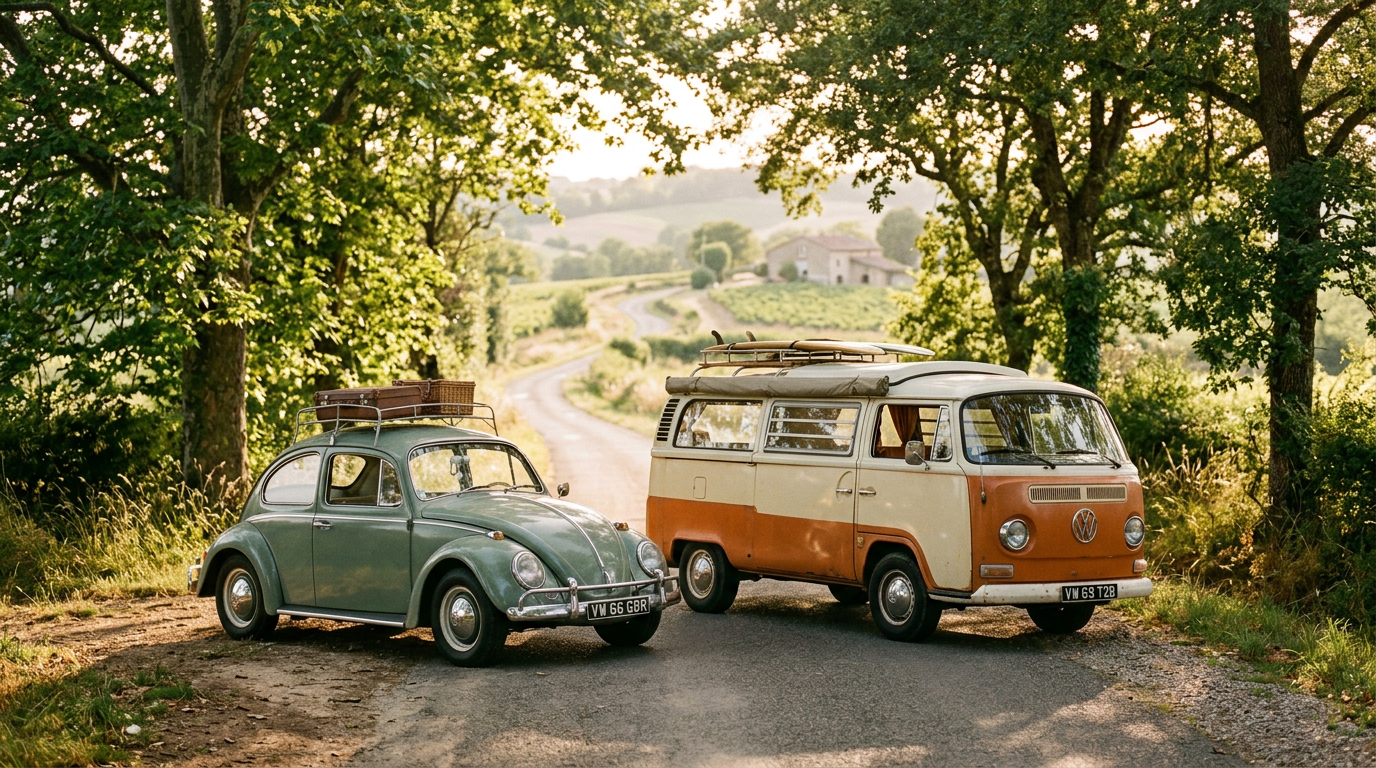
Il Volkswagen Maggiolino e il Volkswagen Bulli (Transporter) sono, insieme, le automobili più riconoscibili mai prodotte. Oltre 21 milioni di Maggiolino sono usciti dalle linee in sei decenni. Il Bulli - nelle varie generazioni del Type 2 - ha superato i 12 milioni di unità nel mondo. Non sono auto da collezione di nicchia. Sono icone culturali che travalicano del tutto l'universo automotive: oggetti di design, nostalgia, controcultura e una certa democraticità che nessun altro veicolo ha saputo incarnare altrettanto bene.
Sono anche, nel 2026, macchine da collezione sempre più serie. I tempi in cui si portava a casa un Maggiolino dignitoso con poco più del nulla stanno finendo. I Bulli "split-screen" superano di routine i 100.000 €. Persino l'umile 1303 - un tempo la classic più economica che si potesse comprare - oggi chiede 8.000-15.000 € per un esemplare solido. Il mercato delle Volkswagen raffreddate ad aria è maturato, e con esso cresce l'importanza di sapere cosa si sta comprando, quanto si deve pagare e dove in Europa conviene guardare.
Questa guida affronta sia il Maggiolino sia il Bulli, le varianti principali, i prezzi in Europa, l'inevitabile capitolo ruggine e la comunità delle VW ad aria che fa della proprietà qualcosa di più del semplice trasporto.
Sfoglia gli annunci Volkswagen su Carseto →
Il Maggiolino - una breve guida a ventuno milioni di auto
La gerarchia di valore
Non tutti i Maggiolino sono uguali, e il mercato traccia distinzioni nette.
Lunotto sdoppiato (pre-1953). I Maggiolino più antichi, con il caratteristico piccolo lunotto posteriore diviso da una barra centrale. Sono i Maggiolino di serie più rari e preziosi. Prezzi in Europa: 30.000-80.000 € per buoni esemplari. Esemplari eccezionali con storia documentata dei primi anni superano i 100.000 €.
Lunotto ovale (1953-1957). Il lunotto posteriore fu ingrandito in un'unica forma ovale - ancora piccola rispetto agli standard odierni, ma un cambiamento significativo rispetto allo sdoppiato. I Maggiolino a lunotto ovale occupano il punto dolce per i collezionisti seri: distintivi, relativamente rari e più accessibili degli sdoppiati. Prezzi in Europa: 15.000-40.000 € per buoni esemplari.
Modelli a parabrezza piatto (1958-1964). Il parabrezza anteriore divenne un'unica superficie piana (al posto dello schermo sdoppiato precedente). Queste vetture sono sempre più ricercate, in particolare nella versione 1200 con i fanalini posteriori piccoli. Prezzi in Europa: 10.000-25.000 €.
1300/1500/1600 (1966-1978). I Maggiolino "grande paraurti" con motori via via più grandi. Sono i Maggiolino classici più comuni e più abbordabili. Sono anche i più usabili: più potenza, freni migliori (a disco sui modelli tardi) e abitacolo più curato. Prezzi in Europa: 5.000-15.000 € per buoni esemplari. Le 1302S e 1303S con sospensione anteriore a McPherson sono i Maggiolino dal comportamento più moderno, ma i puristi preferiscono le precedenti a barre di torsione.
Produzione messicana e brasiliana (post-1978). Il Maggiolino restò in produzione in Messico fino al 2003 e in Brasile fino al 1996. Queste vetture di produzione tardiva non sono oggetto di collezione sul mercato europeo - anche se possono costituire basi economiche per progetti.
Cabriolet. Il Maggiolino Cabriolet costruito dalla Karmann fu prodotto dal 1949 al 1980 in varie versioni. Le cabriolet comandano un premio sostanziale sulle berline equivalenti - in genere dal 50 al 100%. Una buona cabriolet anni Sessanta parte da 25.000 €; esemplari eccezionali raggiungono 60.000 € e oltre.
Cosa controllare su un Maggiolino
Ruggine. La carrozzeria del Maggiolino poggia su un pianale/telaio separato - e arrugginiscono entrambi. Il pianale è la priorità: ispezionare i canali del riscaldamento (i tubi longitudinali che portano calore dal motore all'abitacolo - sono anche strutturali), la zona intorno ai punti di cric, i punti di attacco della sospensione anteriore e l'area del vano batteria. La carrozzeria arrugginisce alla base dei montanti anteriori, nelle parti basse delle portiere, nel vano ruota di scorta (anteriore) e nel raccordo tra parafango posteriore e paraurti.
Motore. Il boxer raffreddato ad aria è meccanicamente semplice e longevo. Controllare la pressione dell'olio (idealmente con un manometro), ascoltare bussate di biella (cuscinetti di biella) e valutare il fumo di scarico. Le revisioni sono lineari e relativamente economiche (1.500-3.000 € per una revisione standard).
Cambio. Il manuale a quattro marce è robusto. Verificare rumore di cuscinetti (fischio in quarta) e stato delle sincronizzazioni (crac in seconda).
Canali del riscaldamento. Meritano una menzione a parte perché sono strutturali, non estetici. Canali corrosi compromettono l'integrità del pianale. La sostituzione è un lavoro importante (500-1.500 € per lato solo di ricambi) ed è l'intervento maggiore più frequente su un Maggiolino.
Sfoglia gli annunci VW Maggiolino su Carseto →
Il Bulli (Transporter) - dall'icona hippie al collezionabile a sei cifre
Le generazioni del Type 2
T1 - Split-screen (1950-1967). Il Bulli Volkswagen originale, con il caratteristico parabrezza in due parti che gli dà il nome. Il T1 è l'icona - quello dei manifesti, quello che ha definito la controcultura, quello che oggi raggiunge i prezzi più alti tra le Volkswagen di serie.
Nella gamma T1, la Samba (ufficialmente Deluxe Microbus) è al vertice. Con le sue 21 o 23 finestre, il tetto apribile in tessuto e le tinteggiature bicolore, la Samba è tra i veicoli da collezione più ricercati in Europa. I prezzi europei per buone Samba partono da 80.000 € e possono superare i 150.000 € per esemplari da concorso.
I Bulli T1 standard - furgoni, kombi, pick-up a cabina singola - sono più accessibili ma richiedono comunque 20.000-60.000 € per esemplari solidi. T1 primi completamente restaurati superano spesso gli 80.000 €.
T2 - Bay Window (1967-1979). Il T2 sostituì lo split-screen con un'unica superficie curva e introdusse una linea più moderna. È più grande, più pratico e - per molti - più usabile del T1. Il T2 fu prodotto in una straordinaria varietà di allestimenti: Kombi, camper Westfalia, furgone, pick-up a cabina singola o doppia, ambulanza.
Il camper Westfalia - con tetto a soffietto, cucinotto interno e letto apribile - è la variante T2 più desiderata. Westfalia T2 in buone condizioni si collocano tra 25.000 e 60.000 €. Kombi T2 standard si scambiano a 12.000-35.000 € per buoni esemplari.
I T2 tardi (1973-1979, le "late bay") hanno fanalini posteriori più grandi e, in molti mercati, motori a iniezione. Sono più abbordabili e più usabili delle prime "bay", e rappresentano il punto d'ingresso pratico alla proprietà di un Bulli.
T3 - Vanagon / Wedge (1979-1992). Il T3 (noto come Vanagon in Nordamerica) sostituì la linea arrotondata del Bay Window con un design più angolare e moderno. Inizialmente a motore raffreddato ad aria, il T3 ricevette in seguito unità raffreddate ad acqua (Wasserboxer). Il T3 è il meno collezionato delle tre generazioni - ma i valori salgono, in particolare per la variante Syncro (trazione integrale) e per la configurazione camper Westfalia.
Prezzi in Europa: 5.000-20.000 € per T3 standard. Syncro Westfalia: 20.000-40.000 € per buoni esemplari.
Cosa controllare su un Bulli
Ruggine. Il Bulli arrugginisce almeno quanto il Maggiolino, con l'aggravante di una carrozzeria più ampia e giunzioni più complesse. Aree prioritarie:
- Longherine e punti di cric (strutturali)
- "Outrigger" del telaio (strutturali, sotto il pianale)
- Passaruota anteriori e posteriori
- Zona intorno al bocchettone carburante (T1 e T2)
- Guide e canali della porta scorrevole (T2 e T3)
- Vano batteria (T1: sotto il sedile posteriore; T2/T3: vano motore)
- Il pannello "a banana" - la lamiera curva sotto il parabrezza sui T2, nota trappola per la ruggine
Motore. I boxer raffreddati ad aria dei Bulli lavorano più duramente che sui Maggiolino per il maggior peso. Il surriscaldamento è una preoccupazione maggiore - soprattutto in coda o in salite lunghe. Controllare il radiatore dell'olio, le valvole di scarico e il funzionamento del termostato. Un motore ben mantenuto può superare i 100.000 km tra una revisione e l'altra. Uno trascurato può richiedere interventi molto prima.
Integrità strutturale. I Bulli trasportano passeggeri e carico su una scocca che non era sovra-dimensionata per il compito. Telaio e carrozzeria devono essere solidi - un Bulli con elementi strutturali compromessi è un problema di sicurezza, non solo economico.
Sintesi dei prezzi in Europa
| Modello | Condizione | Fascia di prezzo (€) |
|---|---|---|
| Maggiolino lunotto sdoppiato | Buono-Eccellente | 30.000-80.000+ |
| Maggiolino lunotto ovale | Buono-Eccellente | 15.000-40.000 |
| Maggiolino 1300/1500/1600 | Buono-Eccellente | 5.000-15.000 |
| Maggiolino Cabriolet | Buono-Eccellente | 25.000-60.000+ |
| T1 Samba | Buono-Eccellente | 80.000-150.000+ |
| T1 Kombi/Furgone | Buono-Eccellente | 20.000-60.000 |
| T2 Westfalia | Buono-Eccellente | 25.000-60.000 |
| T2 Kombi | Buono-Eccellente | 12.000-35.000 |
| T3 Standard | Buono-Eccellente | 5.000-20.000 |
| T3 Syncro Westfalia | Buono-Eccellente | 20.000-40.000 |
La comunità delle VW raffreddate ad aria
Trova la tua VW raffreddata ad aria su Carseto
Cerca Maggiolino e Bulli in 47 Paesi europei. Confronta i prezzi, filtra per anno e trova quella che ti aspetta.
Uno degli argomenti più solidi a favore della proprietà di una Volkswagen raffreddata ad aria è la comunità che la circonda. La scena VW ad aria è tra le più grandi, attive e accoglienti del mondo delle classiche - e si estende in ogni Paese europeo.
Club, raduni e incontri durano tutto l'anno. European Bug-In, raduno VW di Bad Camberg (Germania), Ninove International VW Meeting (Belgio), VolksFest (Regno Unito) e decine di manifestazioni regionali più piccole offrono un calendario sociale che pochi altri marchi possono eguagliare.
L'ecosistema ricambi è altrettanto solido. Aziende come Wolfsburg West (USA, spedizioni mondiali), Just Kampers (UK), Van Cafe, BBT (Belgio) e centinaia di specialisti più piccoli hanno in stock tutto, dai ricambi di servizio alle lamiere per restauro completo. Le VW ad aria sono tra le classiche meglio supportate al mondo per disponibilità di parti.
Per chi ama mettere le mani in pasta, la VW ad aria è ideale. Il boxer è semplice, ben documentato e raggiungibile nel vano motore (o, nel caso del Maggiolino, dietro). Un meccanico hobbista capace può eseguire la maggior parte della manutenzione e molte riparazioni senza attrezzi specializzati.
Dove trovare in Europa le VW raffreddate ad aria
Le migliori VW ad aria spesso sono oltre confine
Documentazione tedesca, esemplari scandinavi ben conservati, clima secco portoghese: cercale tutte in un unico posto.
La Germania è il mercato naturale e offre la scelta più ampia. L'offerta di Maggiolino e Bulli è consistente e la cultura della manutenzione fa sì che le auto tedesche arrivino spesso con documentazione completa. Gli appuntamenti annuali di Hessisch Oldendorf e Bad Camberg sono tra i migliori in Europa per trovare auto e ricambi.
Svezia e Scandinavia sono una riserva nascosta di esemplari ben conservati. Il clima nordico è freddo ma spesso asciutto nelle zone interne, e i proprietari svedesi tendono a curare le proprie VW con standard elevati. Le auto scandinave sono spesso meno ossidate di equivalenti olandesi o belgi.
Portogallo e il Sud Europa offrono sopravvissuti di clima secco - i Bulli in particolare. T1 e T2 di mercato portoghese possono essere sorprendentemente solidi, anche se la vernice può aver sofferto decenni di sole. Il Brasile esportò molte Kombi in Portogallo: verificare l'origine del veicolo.
I Paesi Bassi hanno una delle scene VW ad aria più vivaci d'Europa. Gli specialisti olandesi sono molto stimati e il mercato è competitivo.
Il Regno Unito vanta una comunità VW vasta e appassionata, con specialisti, eventi e club in ogni regione. I prezzi nel Regno Unito tendono a essere leggermente più alti rispetto al continente, in particolare per i camper Westfalia T2 (forte domanda interna legata al campeggio e ai festival).
Cerca annunci Volkswagen in tutta Europa su Carseto →
Domande frequenti
Quanto costa in Europa un Maggiolino classico? I Maggiolino classici entry level (1300/1500/1600, 1966-1978) partono da 5.000-8.000 € per auto solide da usare tutti i giorni. I modelli a lunotto ovale vanno da 15.000 a 40.000 €. I Maggiolino a lunotto sdoppiato partono da 30.000 €. Le cabriolet comandano un premio del 50-100% rispetto alle berline equivalenti.
Quanto costa un Bulli VW? Kombi T2 Bay Window: da circa 12.000 € per buoni esemplari. Camper Westfalia: 25.000-60.000 €. Bulli T1 split-screen: da 20.000 € per versioni standard; le Samba partono da 80.000 €. I T3 offrono l'ingresso più economico da 5.000 €.
Le VW raffreddate ad aria sono affidabili? Con manutenzione regolare, sì. Il boxer è semplice, i ricambi sono ovunque e la comunità offre supporto eccezionale. La chiave è la manutenzione preventiva - in particolare cura del raffreddamento e regolazioni valvole periodiche.
Qual è la migliore prima VW raffreddata ad aria da comprare? Un Maggiolino tardo (1302S o 1303S) o un Kombi T2 Bay Window. Entrambi sono abbordabili, ben supportati e usabili. Insegnano le basi della proprietà ad aria senza le esigenze di restauro dei modelli precedenti.
Dove conviene comprare in Europa una VW raffreddata ad aria? Germania per scelta e documentazione. Scandinavia per esemplari ben conservati. Portogallo per Bulli di clima secco. Paesi Bassi per preparazione da specialisti. Cercare oltre confine per la migliore combinazione di condizioni e prezzo.
Più che automobili
Aggiungi la tua VW al Garage
Tieni traccia del Maggiolino o del Bulli nel tuo Garage Carseto: documenta la storia, monitora il valore e connettiti con altri appassionati di VW ad aria.
Il Maggiolino e il Bulli occupano uno spazio culturale che nessun'altra automobile condivide. Non sono definiti da velocità, lusso o prestigio. Sono definiti da accessibilità, semplicità e spirito democratico - l'idea che una macchina ben progettata e costruita con onestà possa dare gioia a chiunque, reddito ed esperienza permettendo.
Quello spirito resiste. La comunità delle VW ad aria lo dimostra ogni fine settimana, a ogni raduno, su ogni strada. Comprare un Maggiolino o un Bulli non significa solo comprare un'auto. Significa entrare in qualcosa di più grande.
Inizia la ricerca su Carseto →
Letture correlate: Guida all'acquisto BMW E30 · 10 classiche sotto i 30.000 € · Comprare un'auto classica in Germania
Questo articolo fa parte del Carseto Journal - intelligence di mercato e storie dal mondo delle classiche europee.