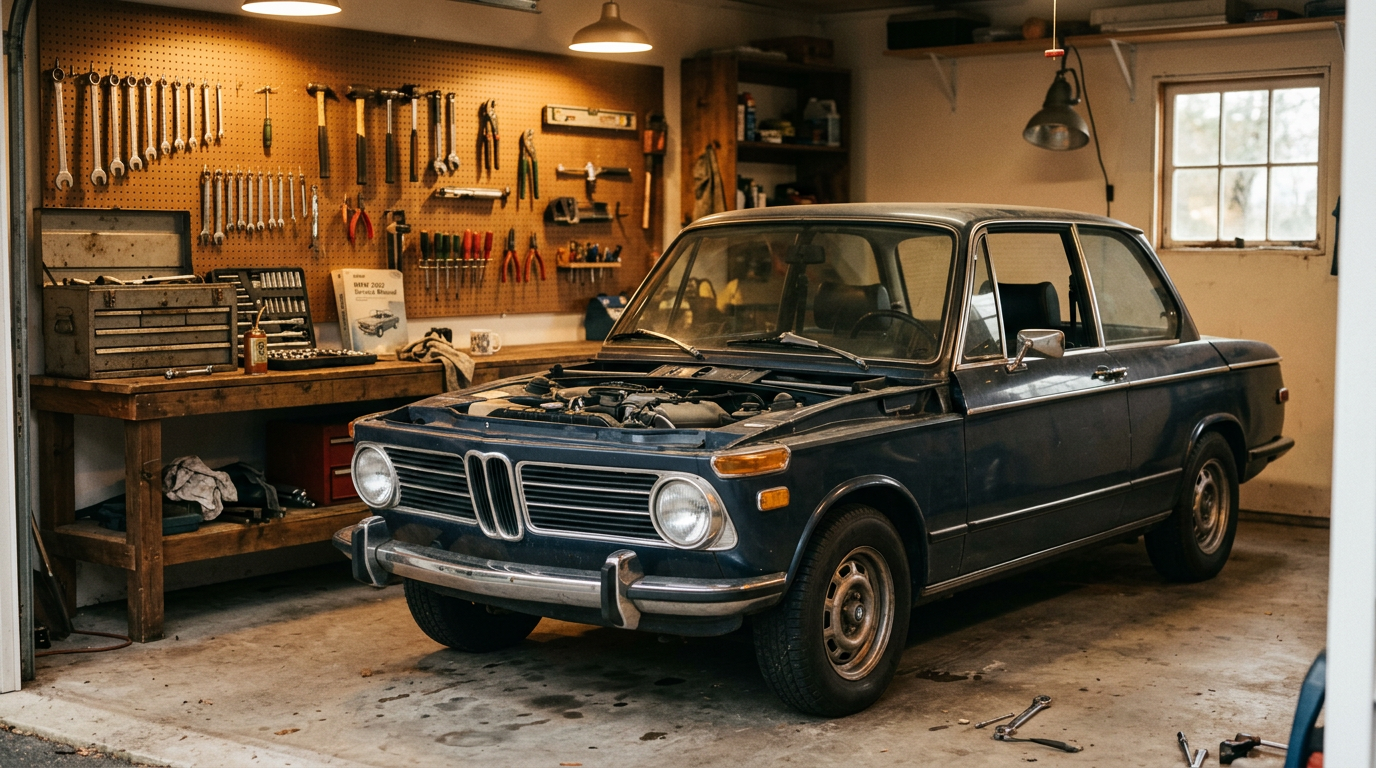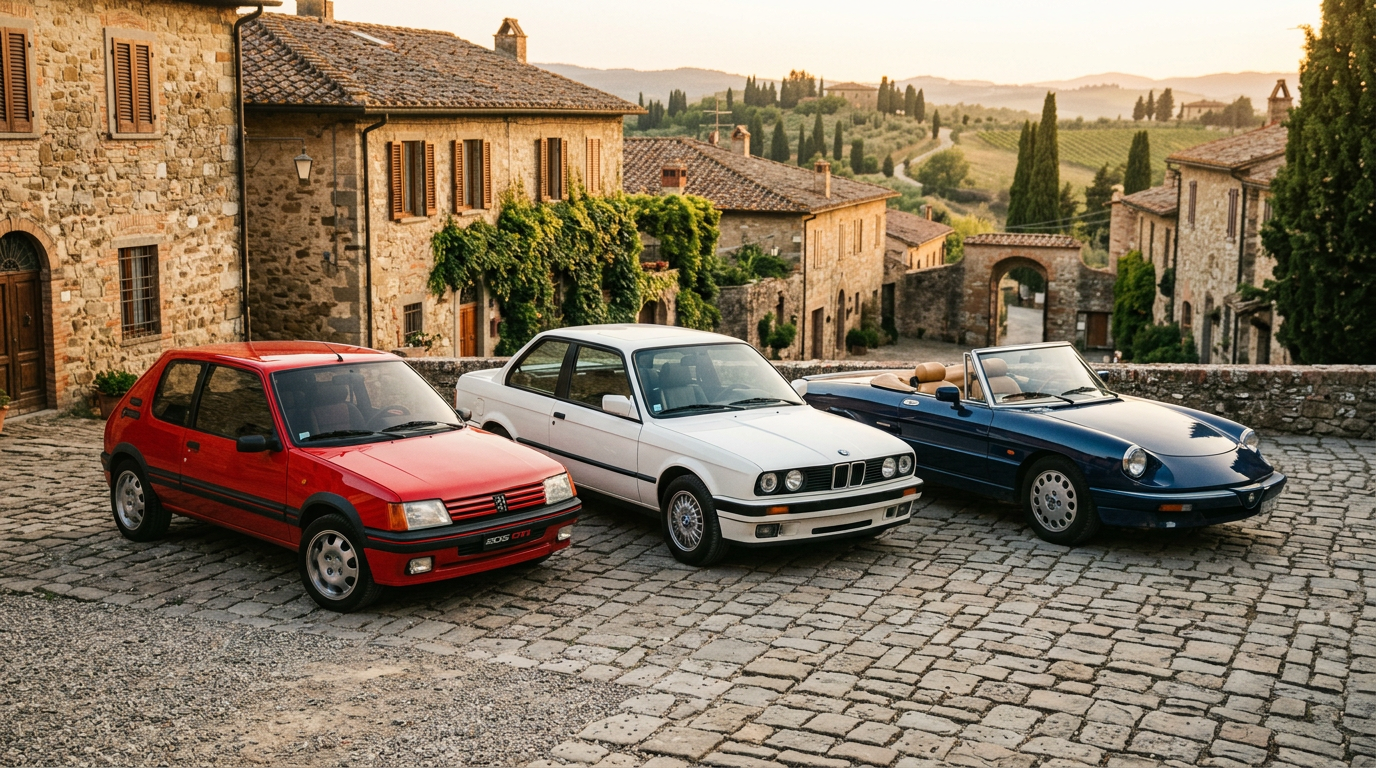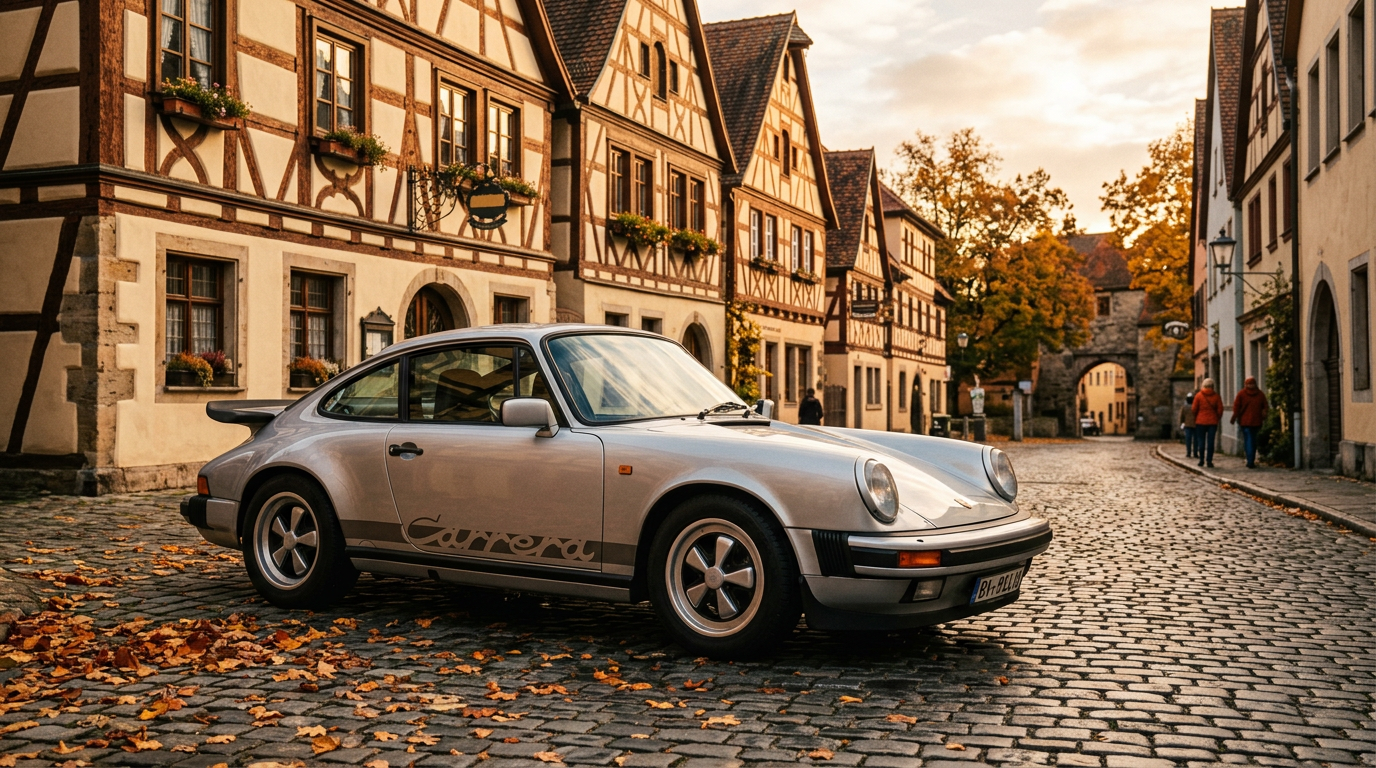
Every classic car buyer faces the same question sooner or later: restore or buy restored? The answer depends on numbers - and the numbers in classic car restoration are among the most consistently underestimated in any hobby.
This guide provides honest, current cost data for the major categories of restoration work across the European market. It draws on workshop rates, parts pricing, and the accumulated experience of specialists across Germany, the UK, Italy, and Poland. The aim is not to discourage you from restoring a classic car - restoration is one of the most rewarding pursuits in the collector world - but to ensure you enter the process with open eyes, a realistic budget, and a clear understanding of where the money goes.
The single most important number in this article is this: a full, professional restoration of a typical European classic car costs between €20,000 and €80,000, depending on the car, the condition of the starting point, and the standard of finish required. For many models in the sub-€30,000 collector car market, a full restoration costs more than the finished car is worth.
The Five Categories of Restoration Cost
1. Bodywork and Structural Repair
Search classic cars across Europe on Carseto.
Find project cars, barn finds, and restoration candidates from Germany, Italy, Poland, and beyond.
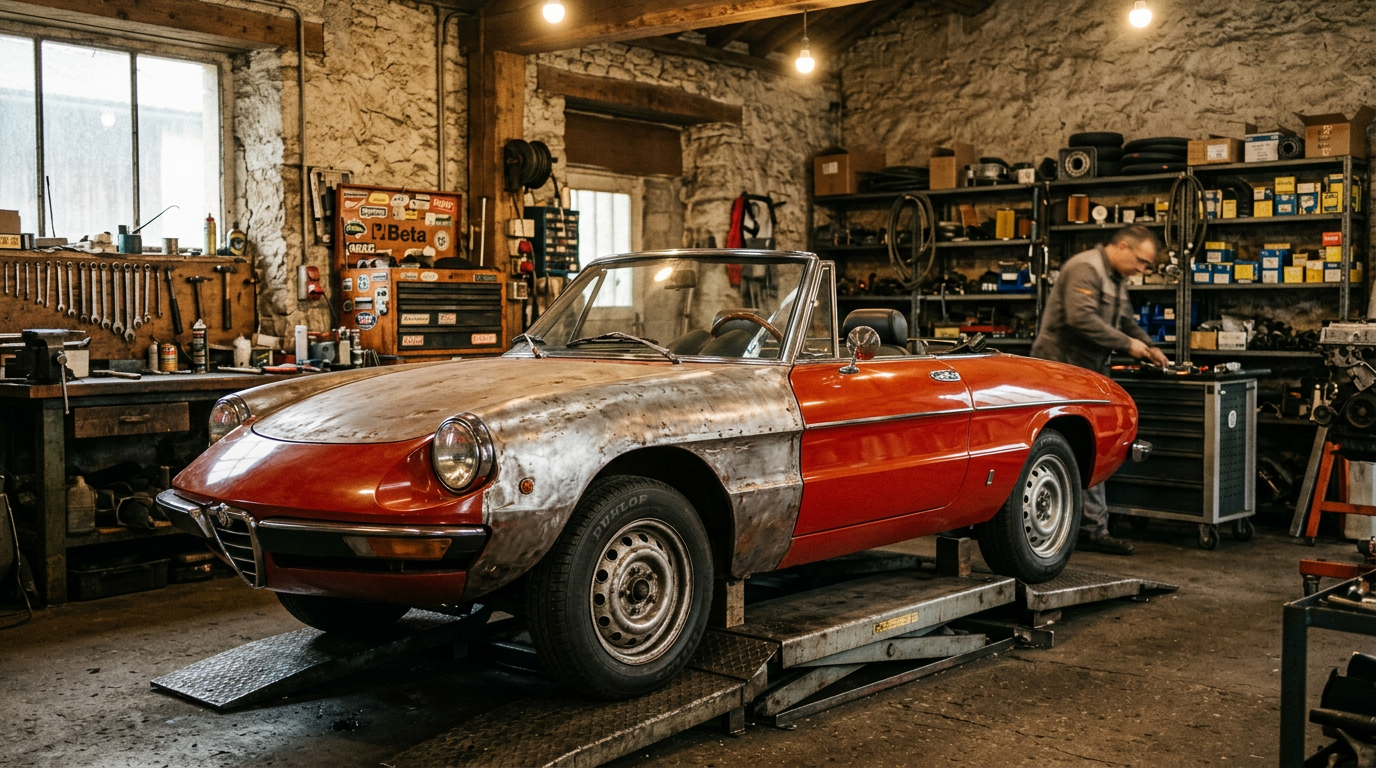
This is where the money goes. Bodywork - specifically, corrosion repair - is the single largest cost in almost every classic car restoration. The reason is simple: rust does not confine itself to convenient, accessible areas. It hides inside box sections, behind panels, under seam sealant, and in structural members that require the car to be stripped to a bare shell before the damage can even be assessed.
Typical costs by severity:
| Scope | Description | Cost Range |
|---|---|---|
| Minor rust repair | Small patches, surface corrosion, single panel sections | €500–€2,000 |
| Moderate rust repair | Sill replacement, floor pan patches, 2–3 panel areas | €2,000–€8,000 |
| Major structural repair | Full sill replacement both sides, floor pans, inner arches, subframe mounts | €8,000–€20,000 |
| Full shell restoration | Strip to bare metal, media blast, repair all corrosion, replace panels | €15,000–€35,000+ |
Labour rates vary significantly by country:
- UK: £60–£100/hour at a specialist bodyshop
- Germany: €60–€90/hour
- Italy: €30–€60/hour (FIVA data indicates Italy has among the lowest average restoration costs in Europe at approximately €1,188 per intervention)
- Poland: 100–200 zł/hour (€22–€44) - among the most competitive in Europe
The labour rate difference is substantial. A sill replacement that costs £2,500 at a UK specialist might cost €1,200 in Poland or €1,800 in Italy. For major structural work, the saving from choosing a specialist in a lower-cost market can be €5,000–€15,000 - enough to justify the logistics of transporting the car.
The hidden cost: Discovery. You will not know the full extent of corrosion until the car is stripped and blasted. Every restoration shop has stories of cars that looked presentable from the outside but required double the estimated metalwork once the paint was removed. Budget a 30% contingency on any bodywork estimate.
2. Paint
A quality respray on a classic car is not the same as a quick job at a budget bodyshop. Classic car paintwork requires proper preparation (bare metal or sound existing paint, filler-free where possible), the correct paint type for the era (single-stage for many pre-1980 cars, base/clear for later), and the patience to achieve a finish that suits the car's character.
Typical costs:
| Standard | Description | Cost Range |
|---|---|---|
| Budget respray | Single colour, basic preparation, acceptable from 3 metres | €1,500–€3,000 |
| Quality respray | Proper preparation, correct colour matching, good finish | €3,000–€6,000 |
| Show-quality | Bare metal preparation, multiple coats, colour-sanded and polished, concours standard | €6,000–€15,000 |
Colour matching is a particular challenge for classic cars. Period colours fade, original paint codes may not correspond exactly to modern formulations, and the expectation is that the finished car looks correct for its age - not like a brand-new vehicle with a fifty-year-old body. A good classic car painter understands this distinction. A bad one does not.
3. Mechanical Restoration
Engine, gearbox, suspension, brakes, cooling, fuel system, exhaust - the mechanical systems that make the car drive.
Engine rebuilds:
| Engine Type | Scope | Cost Range |
|---|---|---|
| Four-cylinder (Fiat, Alfa, BMW M40/M42) | Full rebuild: new bearings, rings, seals, gaskets, machine work | €1,500–€4,000 |
| Inline-six (BMW M20, Mercedes M110/M130) | Full rebuild | €3,000–€6,000 |
| Flat-six (Porsche air-cooled) | Full rebuild | €6,000–€15,000 |
| V8 (various) | Full rebuild | €5,000–€12,000 |
| Air-cooled flat-four (VW, Fiat 126p) | Full rebuild | €800–€2,500 |
Gearbox rebuilds:
- Four/five-speed manual: €800–€2,500
- Automatic (simple, e.g. Mercedes 722.3): €1,500–€3,000
- Automatic (complex, e.g. ZF): €2,000–€5,000
Suspension refresh (bushes, ball joints, dampers, springs): €800–€2,500 for most European classics. Transforms the driving experience and is often the single best investment on a driver-quality car.
Brake overhaul (discs/drums, pads/shoes, callipers/cylinders, lines, master cylinder): €500–€2,000.
Cooling system (radiator, hoses, thermostat, water pump): €300–€800.
4. Interior Restoration
The interior is where restoration costs can escalate rapidly - or be managed carefully depending on the car's purpose.
Typical costs:
| Item | Cost Range |
|---|---|
| Full seat retrim (pair, leather) | €2,000–€5,000 |
| Full seat retrim (pair, vinyl/cloth) | €800–€2,000 |
| Dashboard restoration/repair | €500–€2,000 |
| Headlining replacement | €300–€800 |
| Carpet set replacement | €200–€600 |
| Full interior retrim (seats, door cards, headlining, carpet) | €3,000–€10,000 |
The pragmatic approach: For driver-quality cars, a clean, functional interior is sufficient. Worn but intact original materials are often preferable to a mediocre retrim. For concours cars, a correct retrim in period materials (MBTex for Mercedes, Connolly leather for British cars, Alcantara for Lancia) is essential - and expensive.
5. Chrome and Trim
Rechroming is one of the most frequently underestimated costs in classic car restoration.
Typical costs:
| Item | Cost Range |
|---|---|
| Single bumper (rechromed) | €300–€800 |
| Full bumper set (front and rear) | €800–€2,000 |
| Complete chrome package (bumpers, grille, door handles, mirrors, window trim) | €3,000–€10,000 |
| Stainless steel trim polishing | €200–€500 |
Lead times for rechroming are significant - 6–12 weeks is typical at quality platers. Budget for this in your project timeline. Poor-quality chroming (insufficient copper base, inadequate polishing) will deteriorate within 2–3 years and need redoing.
The Total Cost of a Full Restoration
Combining all five categories, here is what a full restoration looks like for three representative European classics:
Example 1: Fiat 126p (Poland)
| Category | Cost (zł) |
|---|---|
| Bodywork (moderate rust, floor pans, sills) | 5 000–10 000 |
| Paint (quality respray) | 3 000–6 000 |
| Engine rebuild (air-cooled 650cc) | 1 500–3 000 |
| Interior (seats, carpet, headlining) | 1 500–3 000 |
| Chrome and trim | 500–1 500 |
| Total | 11 500–23 500 zł |
| Value when finished | 20 000–35 000 zł |
At the lower end, the restoration pays for itself. At the upper end, you are spending more than the car is worth - unless it has exceptional provenance or rarity.
Example 2: BMW E30 325i (Germany/UK)
| Category | Cost (€) |
|---|---|
| Bodywork (moderate rust - sills, arches, boot floor) | 3 000–8 000 |
| Paint (quality respray) | 3 000–5 000 |
| Engine rebuild (M20, if needed) | 2 000–4 000 |
| Suspension refresh | 1 000–2 000 |
| Interior (seats, dashboard, carpet) | 1 500–3 000 |
| Total | 10 500–22 000 |
| Value when finished | 15 000–28 000 |
A moderate restoration on a solid base makes financial sense. A full nut-and-bolt restoration on a heavily corroded shell does not - you will spend more than the car is worth.
Example 3: Porsche 911 SC (Germany/UK)
| Category | Cost (€) |
|---|---|
| Bodywork (moderate rust - typical for age) | 5 000–12 000 |
| Paint (show quality) | 5 000–10 000 |
| Engine rebuild (3.0 flat-six) | 6 000–12 000 |
| Gearbox rebuild | 1 500–3 000 |
| Interior (full retrim, leather) | 3 000–6 000 |
| Chrome and trim | 1 000–2 000 |
| Total | 21 500–45 000 |
| Value when finished | 60 000–90 000 |
At the 911 SC level, restoration economics work - the finished value significantly exceeds the total investment. This is why project 911s continue to attract buyers willing to take on major work.
Restoration vs. Buying Restored
Track your restoration in My Garage.
Document every stage, log costs, and showcase the finished result.
The honest assessment: for most classic cars valued under €30,000 when finished, buying a car that has already been restored (or that needs only minor work) is financially smarter than buying a project and restoring it from scratch.
The exceptions:
- You have the skills to do the work yourself. A Wrench Turner who can do their own bodywork, mechanical work, and assembly saves 60–70% of labour costs. The economics change dramatically.
- The car is rare enough that the finished value justifies the investment. Porsche 911s, Ferrari Dinos, Lancia Stratos - cars where a professionally restored example commands a price well above restoration cost.
- You value the process as much as the result. Restoration is a deeply satisfying activity for those who enjoy it. The financial return is a secondary consideration.
For everyone else: buy the best car you can afford in the condition closest to what you want. The money you "save" by buying a cheap project will be spent - and then some - on the restoration.
Where to Restore in Europe
Poland offers the most competitive labour rates in the EU for quality classic car work. A growing network of specialists - particularly for Fiat, Mercedes, BMW, and Porsche - provides professional bodywork, mechanical, and paint services at rates 50–70% below Western European equivalents. Transport costs to and from Poland (€300–€600 from Germany, €600–€1,000 from the UK) are a fraction of the labour savings.
Italy provides exceptional artisan quality at moderate prices. Italian craftsmen - panel beaters, painters, upholsterers - maintain traditions of handwork that have become rare elsewhere. For Italian marques (Alfa Romeo, Lancia, Fiat, Ferrari), restoring in Italy also provides access to specialist knowledge and original parts that may not be available elsewhere.
Germany offers precision and thoroughness at a price. German restoration workshops produce work of consistently high quality, with documentation and process rigour that satisfies the most demanding Heritage Custodians.
The United Kingdom has the deepest specialist network for British marques and a strong tradition of classic car restoration. UK labour rates are the highest in Europe, but the quality and the range of available specialists is unmatched for Jaguar, Aston Martin, Bentley, and other British marques.
Frequently Asked Questions
How much does it cost to restore a classic car? A full professional restoration typically costs €20,000–€80,000 depending on the car, starting condition, and standard of finish. Bodywork and structural repair is the largest single cost category, followed by paint and mechanical work.
Is it cheaper to restore a classic car in Eastern Europe? Yes. Polish labour rates are 50–70% below UK and German rates for comparable quality work. Italy also offers competitive rates. Transport costs must be factored in, but the net saving on major restoration projects is typically €5,000–€15,000.
Should I restore or buy a restored classic car? For cars valued under €30,000 when finished, buying a car in good condition is usually more cost-effective than restoring a project. For higher-value cars where the finished value significantly exceeds the total investment, restoration can make financial sense - particularly for skilled owners who can do their own work.
How long does a full restoration take? A full nut-and-bolt restoration by a professional workshop typically takes 12–24 months. Owner-completed restorations take longer - 2–5 years is common. The most common cause of delay is waiting for parts (chrome, upholstery, specialist machining).
What is the most expensive part of restoring a classic car? Bodywork and structural repair - specifically, corrosion remediation. On a heavily rusted car, metalwork alone can exceed €15,000. The second-largest cost is typically paint, followed by engine rebuilding.
The Reward Is in the Result
Classic car restoration is not a shortcut. It is not a way to acquire a car cheaply. It is a process - sometimes long, sometimes frustrating, always educational - that produces something money alone cannot buy: a car you understand completely, because you have been involved in every decision that made it what it is.
If the numbers work, and the will is there, restoration is one of the most rewarding endeavours in the collector car world. But it begins - and succeeds - with honest budgeting.
Search classic cars across Europe on Carseto →
Related reading: Your First Classic Car: Beginner's Guide · Classic Cars Under €5,000 · Best Countries to Buy Classic Cars
This article is part of the Carseto Journal - market intelligence and stories from Europe's classic car world.