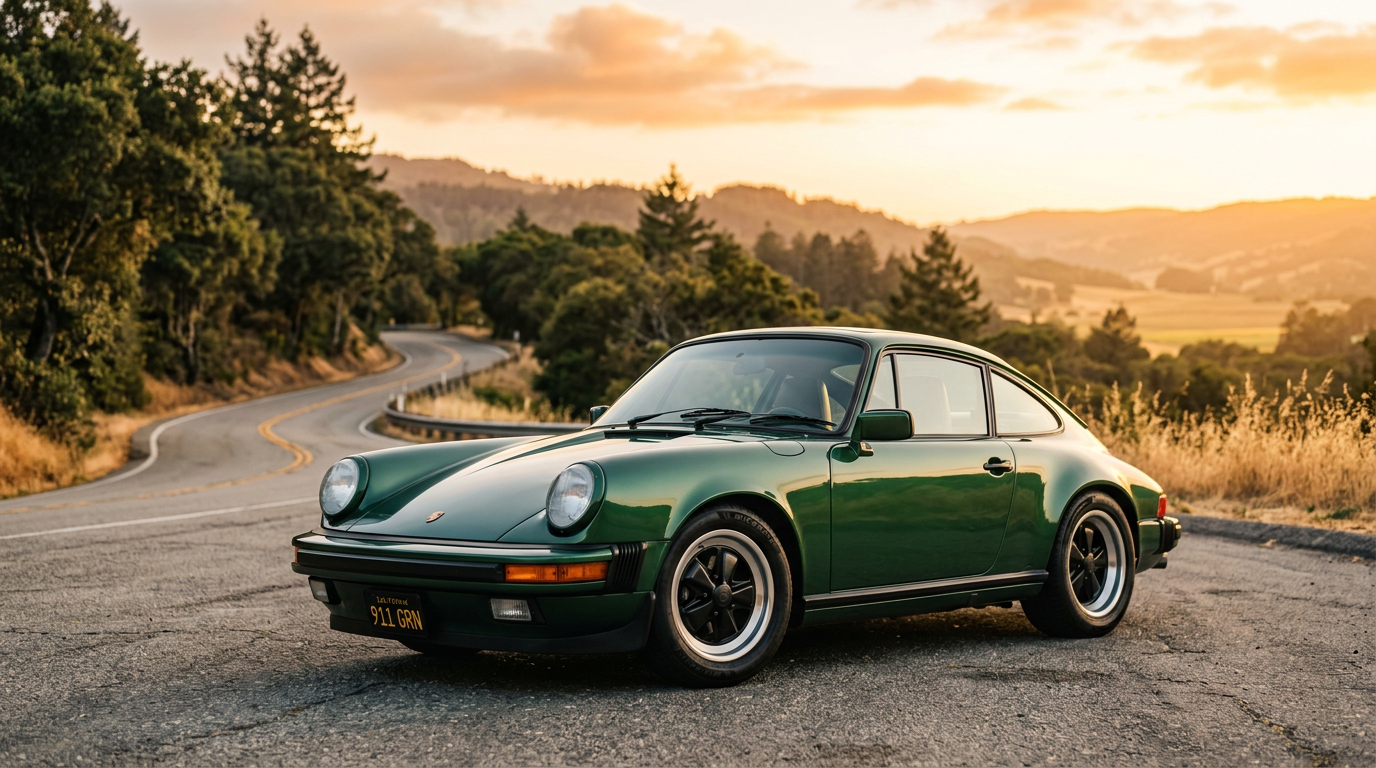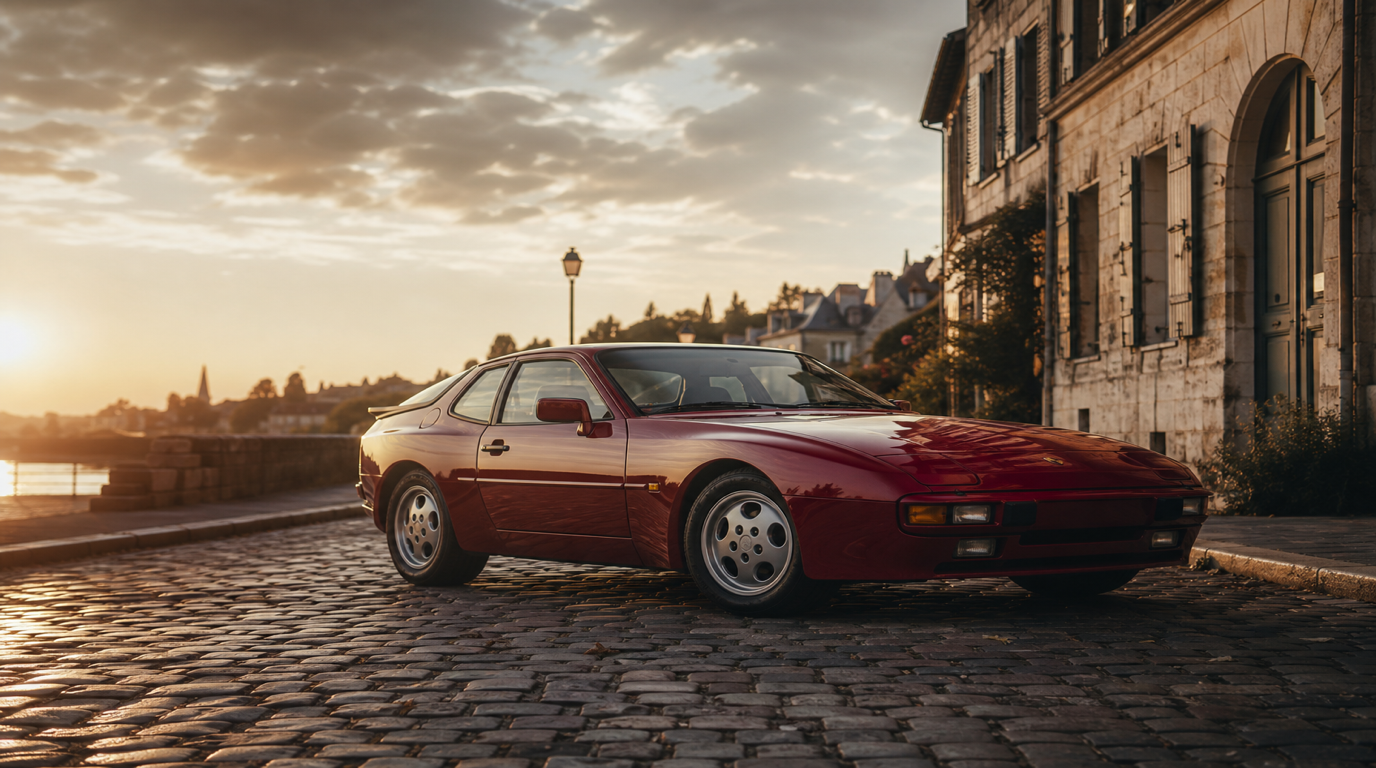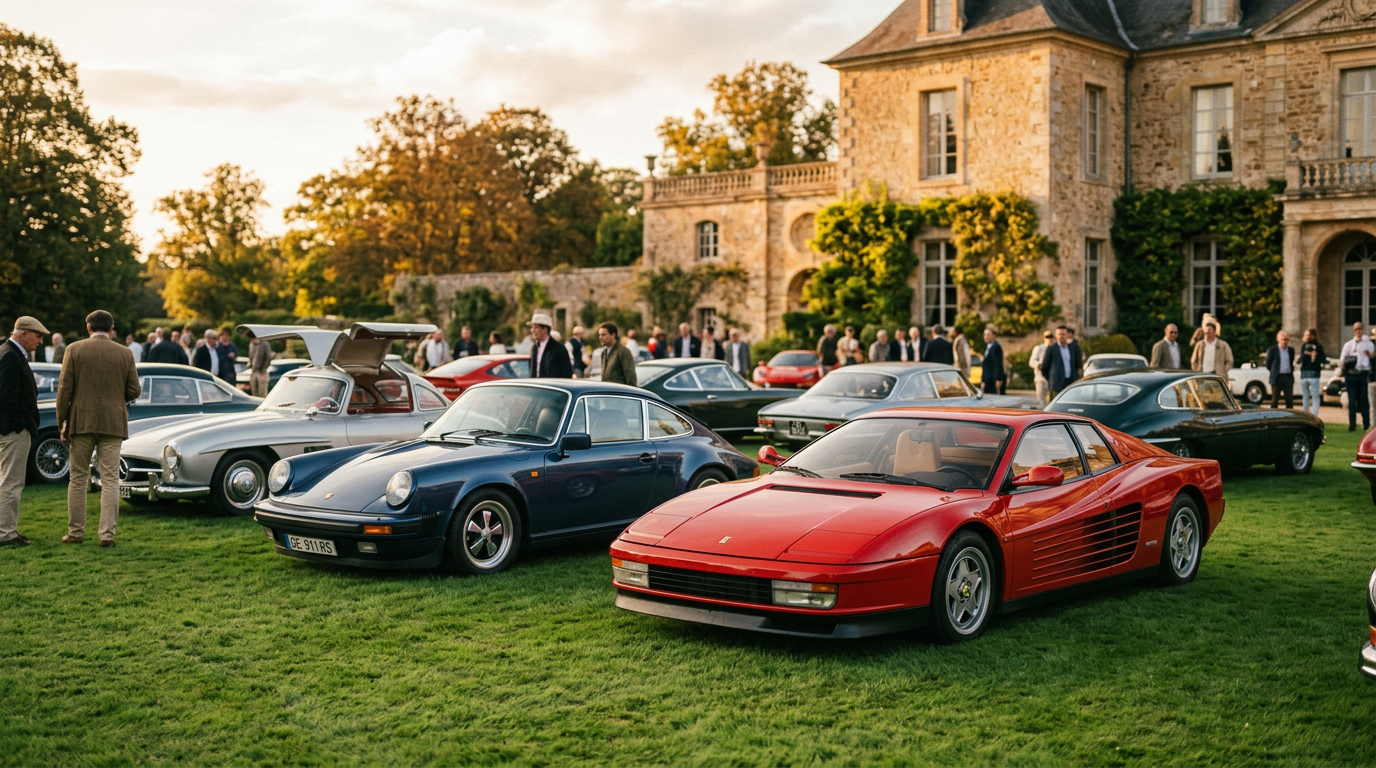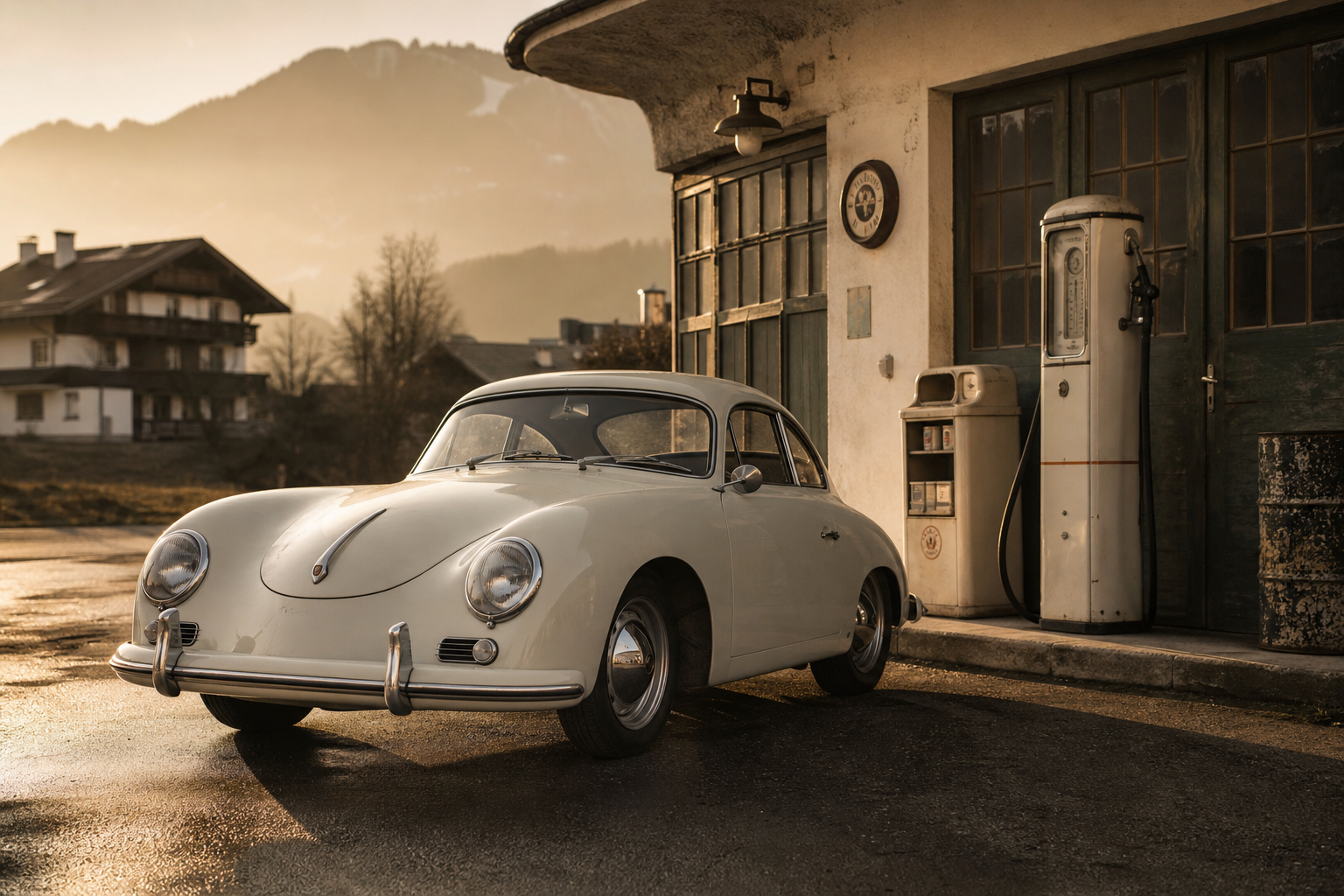
Before the 911, there was the 356. Ferry Porsche's first production car, air-cooled, rear-engined, and lightweight, was built on a conviction that a small, well-engineered sports car could compete with machines of far greater power. It established every principle that Porsche would follow for the next seven decades. The 356 is where the legend began, and it remains one of the most rewarding classic Porsches to own, drive, and collect.
Between 1948 and 1965, approximately 76,000 were built across four major variants. The car evolved from a hand-built Austrian prototype (the first 356 was assembled in Gmünd, Austria, in 1948) to a refined, series-produced sports car that dominated its class at Le Mans, the Carrera Panamericana, and the Targa Florio.
In the 2026 market, the 356 sits at the top of the air-cooled Porsche hierarchy. Not in price (the 911 Carrera RS 2.7 holds that position) but in purity. This is the Porsche reduced to its essence: engine, chassis, driver.
Browse Porsche 356 listings on Carseto →
The 356 Variants
Browse Porsche 356 listings across Europe on Carseto.
From 356 C Coupés to rare Speedsters in Germany, Switzerland, and the UK.
Pre-A (1950–1955)
The earliest production 356s, built before Porsche adopted letter designations. Pre-A cars are identifiable by their split windscreens (1950–1952) or bent single-piece windscreens (1952–1955), smaller bumpers, and simpler interior appointments. Engines range from 1,100cc (40 hp) to 1,500cc (70 hp in Super specification).
Pre-A 356s are the rarest and most valuable production variants. Split-windscreen cars are genuine collector pieces. European prices: €80,000–€200,000+ depending on body style, engine, and condition.
356 A (1955–1959)
The first major evolution. The 356 A introduced a curved, one-piece windscreen, a revised interior, and improved engines. The Carrera variant, with its four-cam Fuhrmann engine, is the motorsport derivative and the most sought-after 356 A.
Body styles include the Coupé, Cabriolet, and the legendary Speedster (1955–1958). With its cut-down windscreen, minimal interior, and lightweight construction, the Speedster is the most iconic 356 body style and one of the most valuable post-war Porsches of any type. Genuine Speedsters exceed €300,000 for good examples and can reach €500,000+ for concours cars.
European prices (non-Speedster): Coupé €70,000–€150,000. Cabriolet €90,000–€200,000. Speedster €300,000–€500,000+.
356 B (1960–1963)
The most produced 356 variant and the one most buyers encounter. The B introduced raised headlamps and bumpers (the "T5" body, later the "T6" with a larger rear window and engine lid), a more powerful engine range (up to 1,600cc, 75–130 hp), and improved build quality.
The Roadster (1960–1962), built by Drauz, replaced the Speedster as the open-air performance variant. The Super 90 specification (90 hp) is the sweet spot, offering spirited performance without the complexity of the Carrera's four-cam engine.
European prices: Coupé €60,000–€120,000. Cabriolet €80,000–€170,000. Roadster €150,000–€300,000. Carrera 2 (four-cam): €200,000–€400,000+.
356 C (1964–1965)
The final 356, produced for just two years alongside the new 911. The C featured disc brakes (a significant improvement over the B's drums), the most refined engine range, and the best overall build quality of any 356.
The 356 C is the most usable variant for regular driving. Disc brakes alone justify the choice for anyone who plans to use their car on modern roads. It is also the most affordable major variant, benefitting from higher production numbers and a perception among some collectors (incorrect, in many enthusiasts' view) that it is "less pure" than earlier cars.
European prices: Coupé €55,000–€110,000. Cabriolet €75,000–€150,000.
What to Look For
The Body
The 356's body is steel (some early cars used aluminium for specific panels). Rust is the primary concern, and it appears in predictable locations: floor pans (the most critical; lift all carpets and mats), longitudinal members (structural, carrying suspension loads), the battery box area, lower door edges, the front wing and headlamp area, and the rear quarter panels.
Matching numbers matter enormously. The chassis number, engine number, and gearbox number should be verifiable through the Porsche Certificate of Authenticity. A matching-numbers 356 commands a 20–40% premium over an otherwise identical car with a replacement engine.
Replica detection is also worth noting. The high value of early 356s (particularly Speedsters) has created a market for replicas built on VW Beetle floorpans. A genuine 356 has a unitised body/chassis structure that differs fundamentally from a Beetle. Any purchase should include verification through the Porsche factory archives or a marque specialist who can confirm authenticity.
The Engine
The 356's flat-four, descended from the Volkswagen unit but progressively developed by Porsche, is a mechanically simple and long-lived powerplant. Check for oil leaks (rear main seal, pushrod tube seals, cam cover gaskets), compression (even across all four cylinders), and excessive exhaust smoke.
The four-cam Carrera engine (type 547 and 692) is a different proposition entirely, a racing-derived unit that requires specialist knowledge to maintain. Four-cam engine rebuilds cost €10,000–€20,000 at a specialist. Do not buy a Carrera without verified service history from a four-cam specialist.
Gearbox
The 356's four-speed manual gearbox is robust but not indestructible. Synchromesh wear on second gear is the most common issue. The split-case design is expensive to rebuild if damaged, typically €2,000–€4,000 for a proper rebuild.
Running Costs
The 356 is less expensive to maintain than the 911. The engine is simpler, the car is lighter, and the mechanical systems are more straightforward. Annual servicing at a Porsche specialist runs €400–€800.
Parts availability is good through Porsche Classic, Stoddard Imported Cars (US, shipping worldwide), and European specialists. The 356 community has been supporting these cars for over fifty years, and the parts supply chain reflects that depth of commitment.
The 356 vs. the 911
See how 356 values compare to 911 on the Carseto Index.
Track air-cooled Porsche values over time and find the best entry points.
This is a comparison every prospective buyer considers, and the answer is simpler than it first appears.
The 911 is the faster, more capable, more versatile car. It has more power, better brakes, and from the 964 onwards, genuinely modern dynamics. The 911 can do everything: daily driving, touring, track days, concours, and long-term investment.
The 356 is the purer experience. Lighter, simpler, and more intimate, it communicates with its driver in a way that even the earliest 911 cannot quite match. The steering is lighter and more talkative. The engine sits lower and sounds different, a mechanical whirr rather than the 911's howl. The 356 asks you to drive with it, not against it.
If you want a Porsche that can do everything, choose the 911. If you want a Porsche that does one thing, connecting you to the act of driving, better than almost anything else, the 356 is the answer.
Where to Buy
Germany is the largest market. The 356's Swabian origins mean the car has deep roots in the Stuttgart-area enthusiast community, and German specialists maintain extensive expertise.
The United States has historically been the largest 356 market globally. US-market cars imported to Europe require specification assessment; US bumpers, lighting, and emissions equipment differ from European specification.
The United Kingdom, Netherlands, and Switzerland all have active 356 communities and competitive specialist infrastructure.
Search Porsche 356 listings across Europe on Carseto →
Frequently Asked Questions
Track your classic in My Garage.
Document your collection, get value insights, and list when you're ready to sell.
How much does a Porsche 356 cost? 356 C Coupé: €55,000–€110,000. 356 B Coupé: €60,000–€120,000. 356 A Coupé: €70,000–€150,000. Speedster: €300,000–€500,000+. Condition, matching numbers, and body style are the primary price drivers.
Is the Porsche 356 a good investment? The 356 has been one of the most consistent performers in the collector car market for decades. Matching-numbers cars with documented history in desirable body styles (Speedster, Cabriolet) have demonstrated long-term appreciation. The 356 C Coupé offers the most accessible entry point with genuine investment potential.
Which 356 is the best to buy? For usability: the 356 C (disc brakes, most refined). For character: the 356 A (purest proportions, Speedster availability). For value: the 356 C Coupé (most affordable of the major variants). For investment: the Speedster (proven appreciation, iconic status).
The Beginning
The Porsche 356 is where everything Porsche started. In 2026, it remains one of the most satisfying ways to experience what the name actually means. Not power, not technology, not prestige. Simply the act of driving a perfectly balanced, beautifully engineered sports car, as well as it can possibly be done.
Related reading: Porsche 911 Buyer's Guide · Porsche 944 Buyer's Guide · The Golden Age: 1960s & 1970s Classics
Questo articolo fa parte del Carseto Journal - intelligence di mercato e storie dal mondo delle classiche europee.