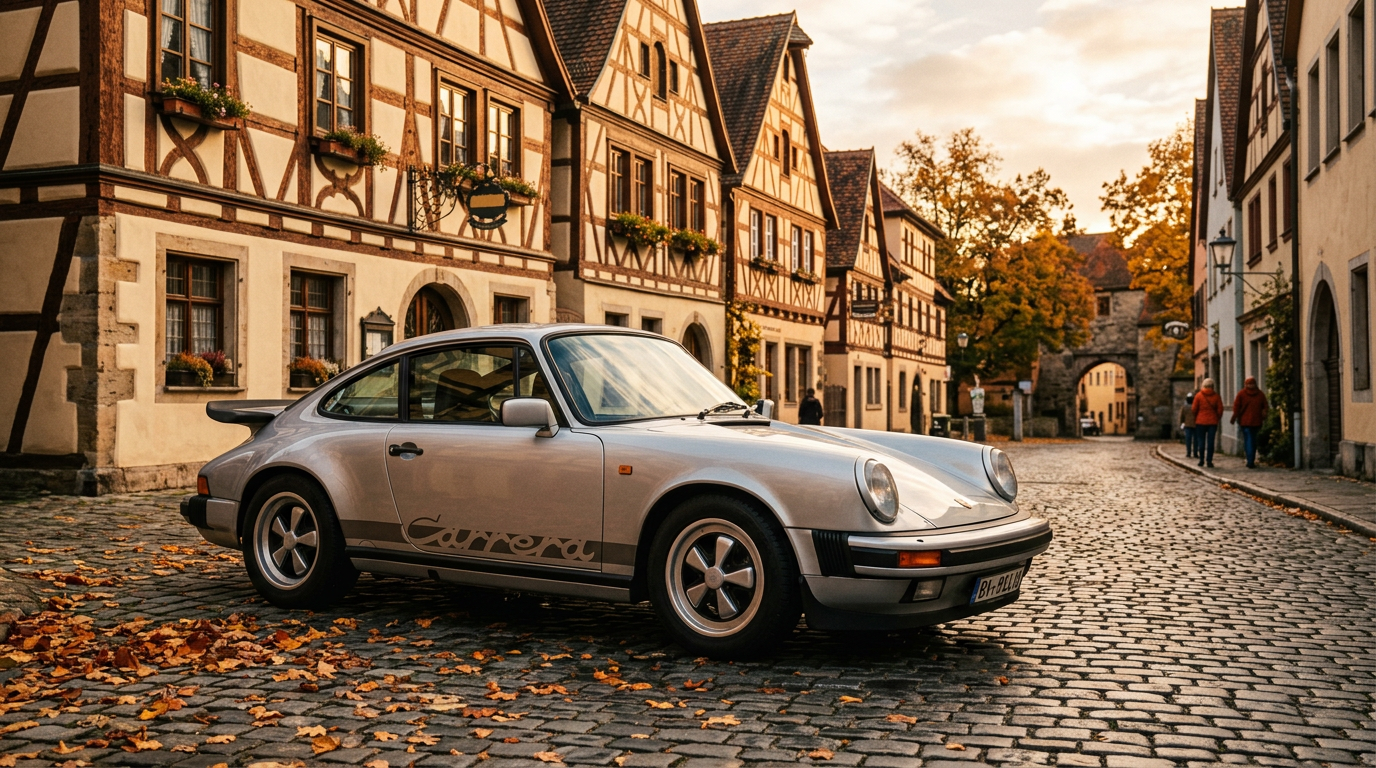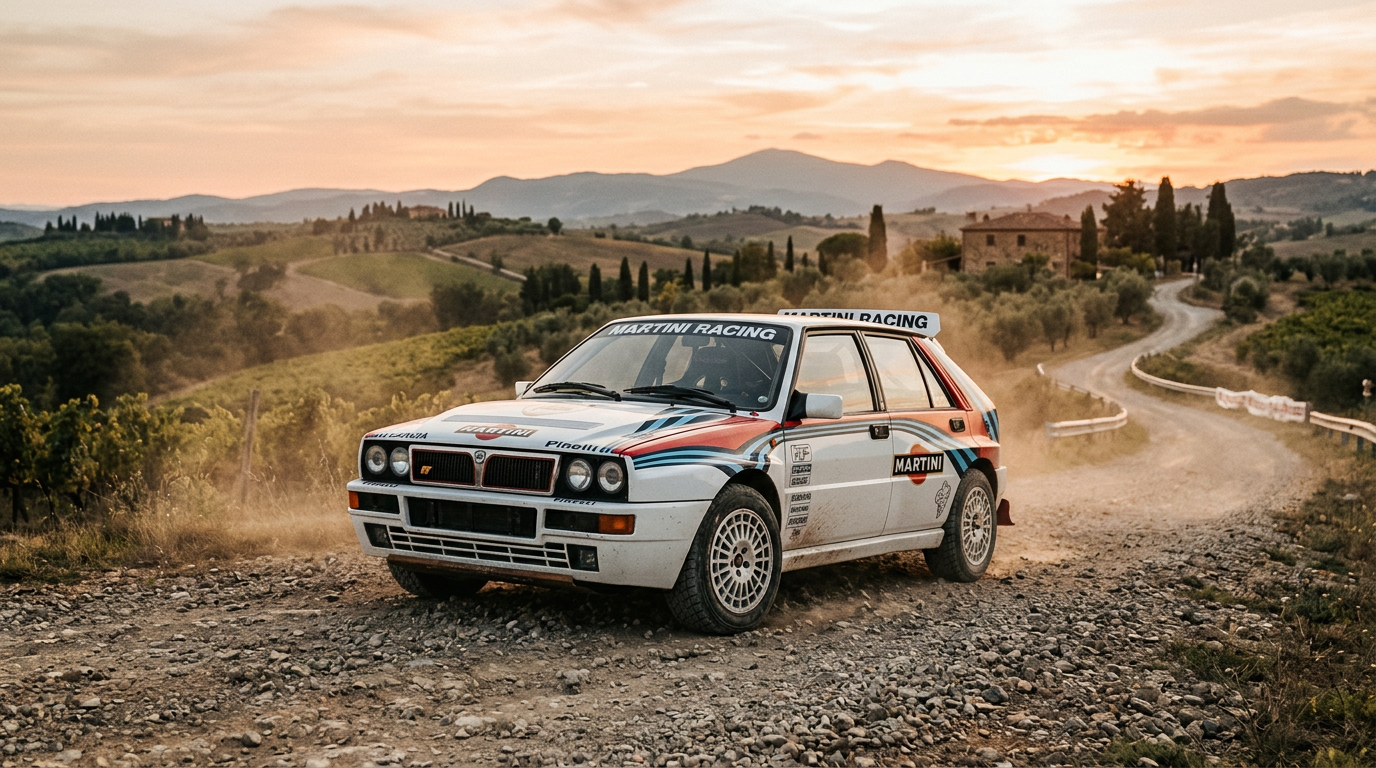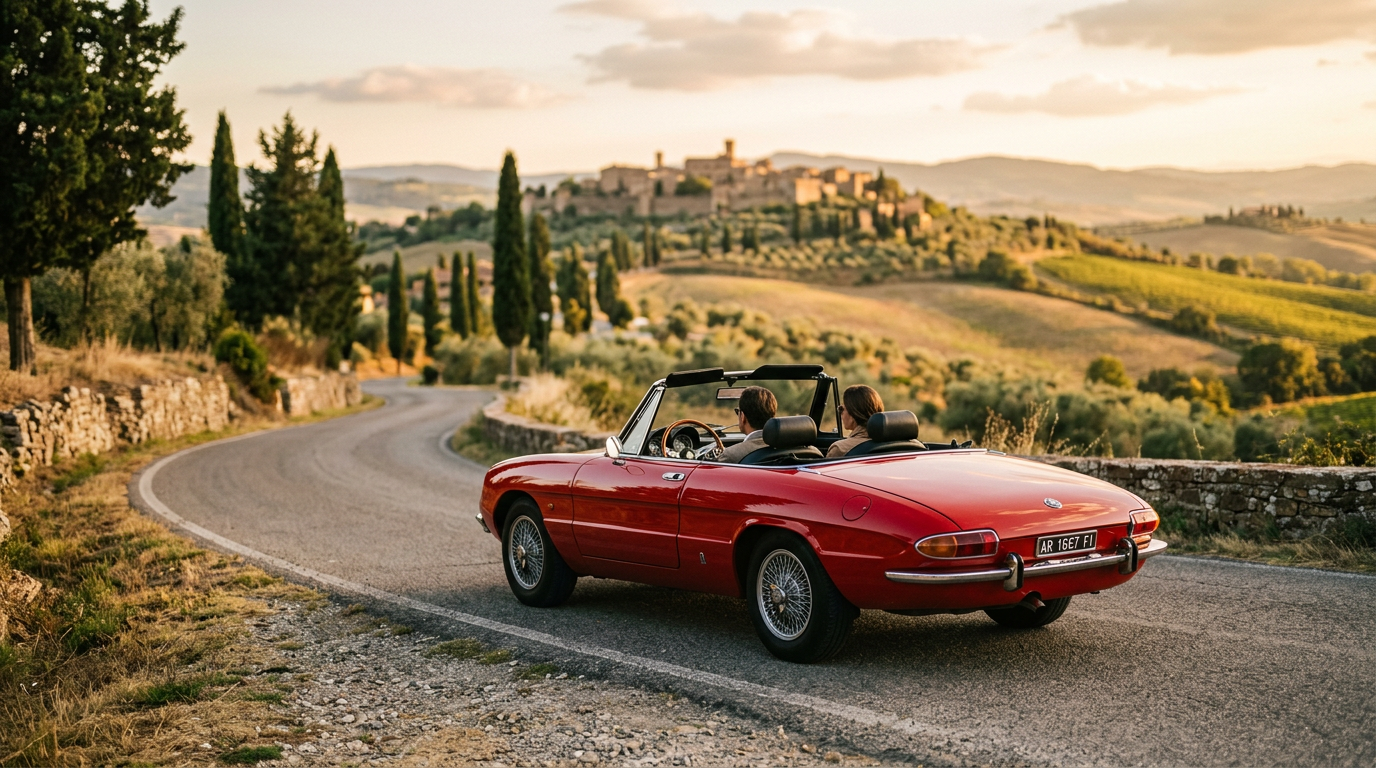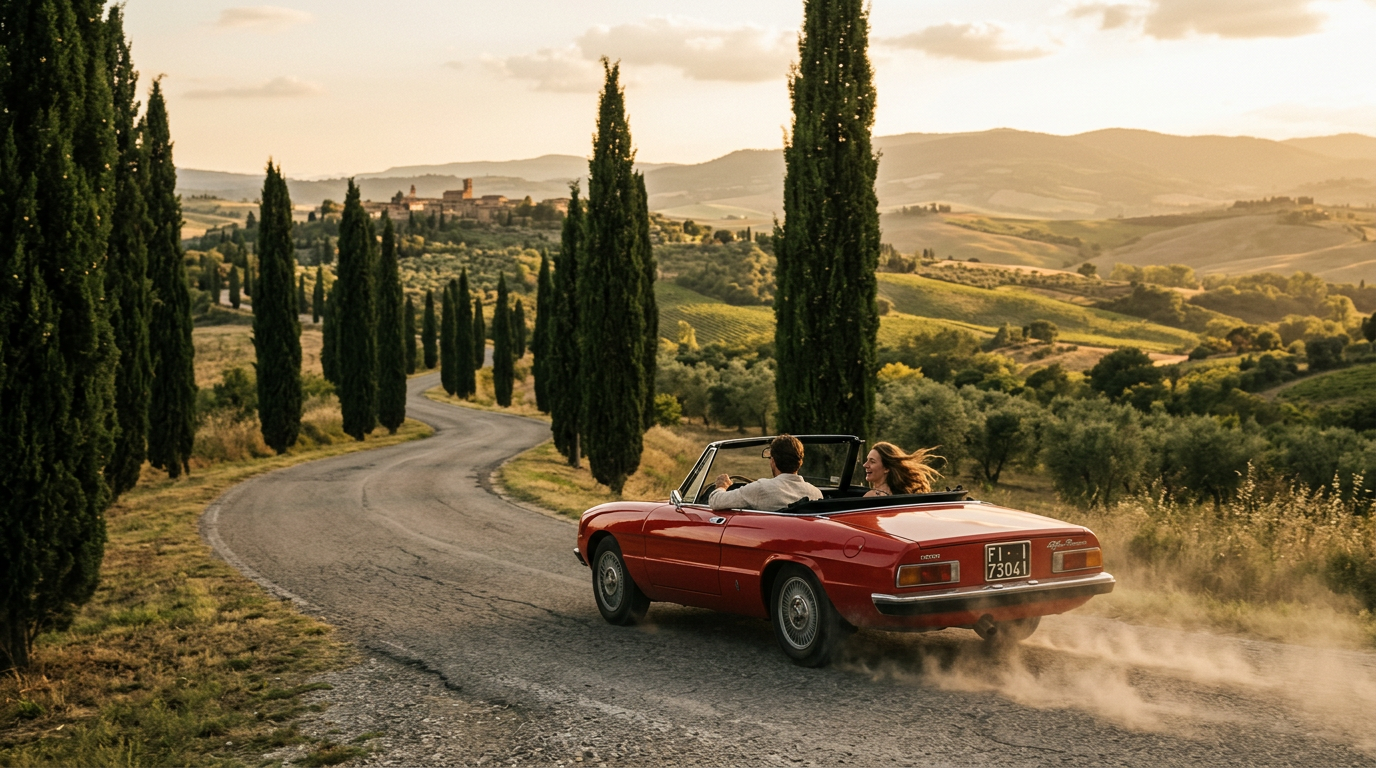
Italy is where the cars live. Not just Italian classics - though the concentration of Alfa Romeos, Lancias, Fiats, and Ferraris is naturally higher than anywhere else - but European classics of every nationality that have spent decades in the kind, dry Mediterranean climate that Northern Europe cannot offer. A Mercedes W113 that spent forty years in Milan will be structurally sounder than one that spent the same period in Hamburg. A Fiat 124 Spider from Sicily may have sun-damaged paint and a cracked dashboard, but it is far more likely to have a solid floor pan.
This is the Italian advantage, and it draws buyers from across the continent. The process of buying a car in Italy and bringing it home - to Germany, the UK, Poland, the Netherlands, or anywhere else in Europe - is not complicated, but it does require attention to detail. Italian bureaucracy has its own rhythm, and understanding it in advance saves time, frustration, and money.
Every step is here: where to find classic cars in Italy, how the buying process works, deregistration and export, transport options, taxes and duties, and the practical tips that make the difference between a smooth transaction and an Italian opera.
Search Italian classic car listings on Carseto →
The Italian Advantage - And Its Limits
Why Italy
Climate. Central and Southern Italy - Tuscany, Umbria, Lazio, Campania, Sicily - offer warm, dry conditions that dramatically reduce structural corrosion. Cars stored in garages in these regions can survive decades with minimal rust. This is the primary reason Northern European buyers look south.
Supply. Italy has a deep and varied classic car market. The country produced some of the greatest automotive designs in history - and many of those cars remain in Italy, in private garages, in collections, and in the hands of enthusiasts who have maintained them for decades.
Restoration costs. Italy offers some of Europe's lowest restoration costs. FIVA data indicates average restoration costs of approximately €1,188 per intervention in Italy, compared to over €4,000 in countries like Luxembourg. The Italian artisan tradition - skilled panel beaters, leather workers, painters - produces high-quality work at prices that surprise Northern European buyers.
Cultural provenance. For Italian marques - Alfa Romeo, Lancia, Ferrari, Maserati, Fiat - Italian-delivered cars carry provenance value. A car with Italian registration documents from new, maintained by Italian specialists, has a story that resonates with collectors.
The Limits
Sun damage. Italian sun is kind to metalwork and unkind to everything else. Paint fades. Dashboards crack. Rubber seals perish. Soft tops deteriorate. Interiors bleach. A rust-free Italian car may need significant cosmetic work - and cosmetic work is not cheap.
Documentation. Italian vehicle documentation can be less comprehensive than German or UK equivalents. Service book stamps may be absent. Maintenance records may be informal. The mileage shown may not be verifiable. Exercise the same due diligence you would in any market.
Communication. English is not universally spoken in the Italian classic car trade - particularly among private sellers outside major cities. Basic Italian, a translator app, or an Italian-speaking intermediary will smooth the process considerably.
Finding the Right Car
Browse classic cars for sale in Italy
Search thousands of classic car listings across Italy - from Piedmont to Sicily. Compare prices and find dry-climate survivors.
Online Marketplaces
Subito.it is Italy's largest classified advertising platform - the Italian equivalent of Gumtree or Kleinanzeigen. The "Auto" section contains a substantial selection of classic cars from private sellers across the country. Listings are in Italian. Filters include region, price, year, and fuel type.
AutoScout24.it offers structured listings with better search functionality than Subito. Both private and dealer listings appear. The interface is available in English for some functions.
Classic Driver maintains an Italian dealer presence with English-language listings. More expensive but more curated.
Carseto aggregates Italian listings alongside cars from 46 other European countries, providing cross-border pricing context that helps you assess whether an Italian car is genuinely good value versus its equivalent in Germany, the UK, or Poland.
Specialist Dealers
Italian specialist dealers tend to cluster around the regions historically associated with their marques. Alfa Romeo and Lancia specialists concentrate in Piedmont and Lombardy. Ferrari and Maserati specialists centre on Emilia-Romagna (Maranello, Modena). Fiat specialists operate across Piedmont and Campania.
Italian dealers are generally knowledgeable and passionate about their marques. Pricing tends to be negotiable - more so than in Germany. Dealers accustomed to foreign buyers can often assist with export paperwork.
Auctions
Aste Bolaffi (based in Turin) is Italy's leading classic car auction house. RM Sotheby's and Bonhams conduct Italian sales regularly (Lake Como, Milan). Artcurial is increasingly active in the Italian market.
The Personal Network
Italy's classic car world operates significantly through personal relationships. Club networks (Automotoclub Storico Italiano - ASI, Registro Italiano Alfa Romeo - RIAR, Club Italia), local enthusiast groups, and word-of-mouth are often the route to the best cars. If you are buying a specific Italian marque, engaging with the relevant marque club - even as a foreign member - can open doors to cars that never reach public advertising.
Browse classic cars for sale in Italy on Carseto →
The Buying Process in Italy
Viewing and Inspection
Arrange viewings directly with the seller. If travelling from another country, request detailed photographs - including the underside - before booking flights. Italian sellers are generally accommodating and happy to provide additional information, though response times can be more relaxed than in Germany or the UK.
For cars above €20,000, consider commissioning a local pre-purchase inspection. Italian classic car clubs can sometimes recommend inspectors, and several pan-European inspection services operate in Italy.
Negotiation
Italian sellers expect negotiation. An opening offer of 10-15% below the asking price is standard practice and will not cause offence. The negotiation culture is personal and conversational - not confrontational. If you cannot agree on price, a polite "ci penso" (I'll think about it) is entirely acceptable.
Payment
Bank transfer is standard. For high-value transactions, consider a notarised purchase agreement (atto di vendita). Cash payments above €5,000 are restricted under Italian anti-money-laundering regulations.
Documentation
Italian vehicle documentation consists of two documents:
- Carta di circolazione (libretto): The registration certificate, carried in the car.
- Certificato di proprieta (CDP): The ownership certificate, held by the PRA (Pubblico Registro Automobilistico). This must be transferred at the time of sale.
For an export sale, the seller handles the transfer at the local ACI (Automobile Club d'Italia) office. This can take several days - Italian bureaucracy operates at its own pace. Plan accordingly.
Deregistration and Export
Radiazione per Esportazione
To export a vehicle from Italy, it must be deregistered for export (radiazione per esportazione) at the local Motorizzazione (motor vehicle office) or ACI. The process requires:
- The carta di circolazione
- The certificato di proprieta
- The number plates (returned to the Motorizzazione)
- Payment of applicable fees (approximately €50-€100)
The seller typically initiates this process, but as the buyer, you should confirm that it has been completed before arranging transport. An underegistered vehicle cannot be legally registered in another country.
Temporary Export Plates
If you wish to drive the car home rather than transport it, Italian temporary export plates (targhe provvisorie per esportazione) are available. These require:
- Valid insurance (obtainable from Italian providers for short-term use)
- The radiazione documentation
- Your identification
Temporary plates are valid for a limited period (typically 60 days) and allow you to drive the car legally through Italy and - in most cases - to your home country via other EU member states. Verify insurance coverage for transit countries before departure.
Transport Options
For cars that are not roadworthy, too valuable to drive long distances, or when you prefer the security of enclosed transport:
- Shared open trailer: €600-€1,200 from Northern/Central Italy to Germany, the Netherlands, or Poland.
- Enclosed single-car transport: €1,200-€2,500 for the same routes.
- Drive-away services: €800-€1,500, with a professional driver delivering the car to your address.
Italian transport companies operating in the classic car sector include Corrado Trasporti, Ship My Car (pan-European), and various operators found through the ASI club network. Book in advance during spring and summer - the classic car buying season peaks between March and September.
Taxes, Duties, and Registration
Compare Italian prices to your home market
See the same car listed in Italy, Germany, and the UK side by side. Carseto aggregates listings from across Europe so you can find the best deal.
Intra-EU Transfers
For buyers within the EU, importing a classic car from Italy is a customs-free transaction. No import duty applies. VAT treatment depends on the seller:
- Private sale: No VAT is charged. Register the car in your home country and pay local registration taxes.
- Dealer (margin scheme): Italian VAT is included in the margin. No further VAT is due abroad.
- Dealer (standard): The dealer may zero-rate for intra-EU supply. You pay VAT in your home country.
UK Buyers (Post-Brexit)
Importing from Italy to the UK now requires customs clearance. Import duty of 6.5% applies (reduced rates may apply for vehicles over 50 years old). UK VAT (20%) is charged on the declared value plus duty. Factor these costs into your total budget - they can add 25-28% to the purchase price.
Registration in Your Home Country
Each country has specific requirements. In Germany, a TUV inspection is required before registration. In Poland, a technical inspection (przeglad techniczny) plus excise tax (akcyza) applies. In the Netherlands, a RDW inspection is required. In all cases, bring the Italian deregistration documents, the purchase contract, and your identification.
Practical Tips
Language. Learn a few key phrases: "Posso vedere la macchina?" (Can I see the car?), "Ci sono problemi noti?" (Are there known problems?), "Il prezzo e trattabile?" (Is the price negotiable?), "Ha la documentazione di manutenzione?" (Do you have maintenance records?). Italian sellers respond warmly to any effort with the language.
Timing. Italian sellers are more responsive during business hours (9:00-13:00, 15:00-19:00). August is holiday season - many dealers and private sellers are unreachable for the entire month. Plan purchases for spring or early summer.
The pranzo factor. Italy shuts for lunch. Between 13:00 and 15:00, do not expect responses to calls, messages, or emails. This is not rudeness. It is civilisation.
Inspect underneath. The Italian advantage is reduced corrosion - but "reduced" is not "absent." Cars stored near the coast, in Northern Italy (Milan, Turin), or used during winter months may have more rust than expected. Never skip the underside inspection, even on an Italian car.
Stellantis Heritage. For Alfa Romeo, Lancia, and Fiat classics, Stellantis Heritage (formerly FCA Heritage) offers Certificates of Origin and a "Reloaded by Creators" restoration programme. A Certificate of Origin confirms the car's original factory specification - valuable for provenance verification.
Frequently Asked Questions
Is it cheaper to buy a classic car in Italy? For Italian marques (Alfa Romeo, Lancia, Fiat), Italy often offers 10-20% lower prices than the UK or Northern Europe. The climate advantage - less rust - can also reduce total ownership costs by avoiding expensive structural repairs.
Do Italian classic cars have less rust? Generally, yes - particularly cars from Central and Southern Italy. However, "less rust" is not "no rust." Northern Italian cars (Milan, Turin, the Po Valley) experience cold, damp winters. Coastal cars suffer from salt air. Always inspect.
How long does it take to import a classic car from Italy? The buying and deregistration process can take 3-10 days depending on Italian bureaucratic timelines. Transport to Northern Europe takes 3-7 days. Registration in your home country takes 1-4 weeks.
Can I buy a car in Italy if I don't speak Italian? Yes, though basic Italian or an Italian-speaking intermediary helps considerably. Specialist dealers in tourist areas often speak English. For private sales outside major cities, language support is advisable.
What paperwork do I need to import from Italy? The radiazione per esportazione documents (confirming Italian deregistration), the purchase contract (atto di vendita or contratto di compravendita), and your identification. Some countries require additional documentation - check your home country's registration requirements before departing.
Worth the Journey
Find your Italian classic on Carseto
Alfa Romeo, Lancia, Fiat, Ferrari, Maserati - and everything else the Italian sun has preserved. Your next car might be parked in Tuscany.
Buying a classic car in Italy is not the fastest or the simplest cross-border transaction you can make. The bureaucracy has its moments. The pace of business is its own. The August shutdown is non-negotiable.
But Italy offers something that no other European market provides in the same combination: climate-preserved cars, competitive prices, a deep supply of the most desirable European marques, and the experience of buying a car in the country where automotive beauty was invented. The Italians made these cars. They know how to look after them. And for the buyer willing to navigate the process, the rewards are consistently worth the effort.
Search classic cars for sale in Italy on Carseto →
Related reading: Buying a Classic Car in Germany · Lancia Fulvia & Delta Buying Guide · Alfa Romeo Spider Buyer's Guide
This article is part of the Carseto Journal - market intelligence and stories from Europe's classic car world.