Nur wenige Autos der Nachkriegszeit vereinen Eleganz, Technik und dauerhafte Begehrlichkeit so perfekt wie der Mercedes-Benz W113 - allgemein als Pagode bekannt. Benannt nach seinem charakteristischen konkaven Hardtop-Dach, hat der W113 seit Jahrzehnten eine ruhige, aber unerschütterliche Position auf dem Sammlermarkt inne. Es handelt sich nicht um ein Auto, das in Spekulationsblasen wild hin und her schwankt. Er erfährt eine stetige Wertsteigerung, wird für originale Exemplare belohnt und zieht immer wieder neue Generationen von Sammlern an, die sich von dem vielleicht schönsten Mercedes-Benz aller Zeiten angezogen fühlen.
Dieser Leitfaden bietet eine umfassende Preisanalyse für den W113 in ganz Europa im Jahr 2026, die alle drei Motorvarianten, zustandsabhängige Bewertungen, die preisbestimmenden Faktoren und länderspezifische Marktvergleiche umfasst. Ganz gleich, ob Sie einen Kauf in Erwägung ziehen, den Wert eines Fahrzeugs, das Sie bereits besitzen, einschätzen oder den Markt für den richtigen Kaufzeitpunkt beobachten möchten - hier finden Sie die Zahlen und den Kontext dahinter.
Durchsuchen Sie die Mercedes W113 Pagode Inserate auf Carseto →
Die W113 Pagode - Ein Modellüberblick
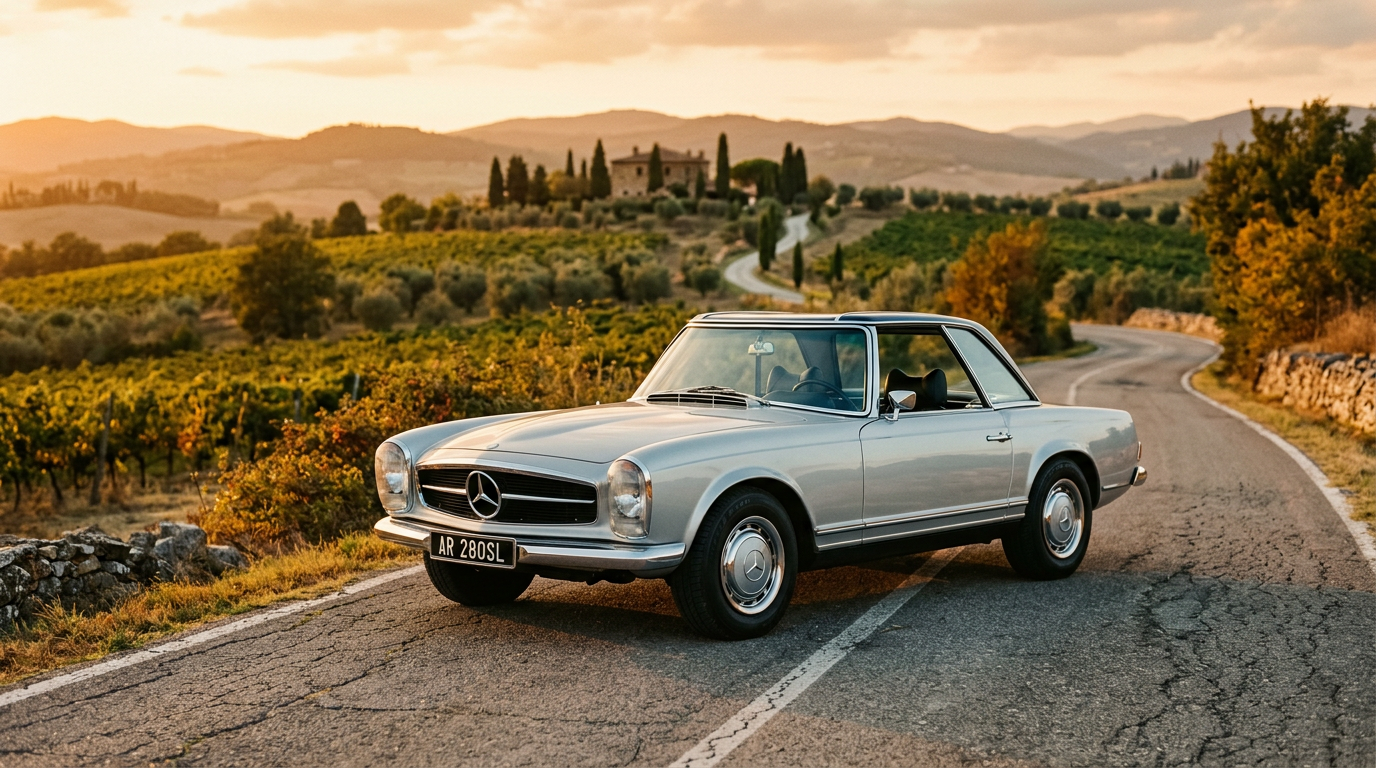
Paul Bracqs Entwurf für den W113, der 1963 auf dem Genfer Automobilsalon vorgestellt wurde, war ein Meisterstück an zurückhaltender Eleganz. Der Name "Pagode" - der von Mercedes-Benz nie offiziell verwendet wurde - leitet sich von der leicht konkaven Form des abnehmbaren Hardtops ab, das in der Mitte abfällt und an die geschwungenen Dachlinien der ostasiatischen Pagodenarchitektur erinnert. Das Design wurde aus der Not geboren: Die konkave Form sorgte für die notwendige strukturelle Steifigkeit, um die Anforderungen an die Überschlagsicherheit zu erfüllen und gleichzeitig die Dachlinie niedrig zu halten.
Zwischen 1963 und 1971 produzierte Mercedes-Benz im Werk Sindelfingen rund 48.912 Pagoden in drei Motorvarianten.
Der 230 SL (1963-1967) ist die erste Variante, angetrieben von einem 2,3-Liter-Reihensechszylinder M127 mit 150 PS. Er prägte den Charakter des Wagens: geschmeidig, kultiviert und schön gebaut. Etwa 19.831 Exemplare wurden produziert, was ihn zur häufigsten frühen Pagode macht.
Der 250 SL (1967-1968) war ein Übergangsmodell, das nur ein Jahr lang produziert wurde. Sein 2,5-Liter-M129-Motor leistete 170 PS und bot ein verbessertes Drehmoment und eine sanftere Leistungsentfaltung. Es wurden nur etwa 5.196 Exemplare gebaut - damit ist sie die bei weitem seltenste Variante der Pagode. Trotz dieser Seltenheit erzielt der 250 SL nicht immer die höchsten Preise; der Markt tendiert dazu, den 280 SL zu bevorzugen, weil er ein breiteres Publikum anspricht.
Der 280 SL (1968-1971) ist die endgültige Pagode. Sein 2,8-Liter-M130-Motor leistete genauso viel wie der des 250 SL (170 PS), hatte aber ein höheres Drehmoment und eine entspanntere Ausstrahlung. Etwa 23.885 Exemplare wurden gebaut, und es ist die Variante, die die meisten Käufer suchen. Der 280 SL profitiert von der am weitesten entwickelten mechanischen Spezifikation und der besten Teileversorgung der drei Modelle.
Alle Varianten wurden entweder mit einem Viergang-Schaltgetriebe oder einer Viergang-Automatik angeboten - und die Mehrzahl der überlebenden Pagodas, insbesondere die ursprünglich für die US-amerikanischen und europäischen Luxusmärkte gelieferten, sind Automatikfahrzeuge. Exemplare mit Schaltgetriebe machen weniger als zehn Prozent der überlebenden Fahrzeuge aus und sind mit erheblichen Preisaufschlägen verbunden.
Erkunden Sie Mercedes-Benz Angebote auf Carseto →
Aktuelle europäische Marktpreise nach Variante
Die nachstehenden Preise spiegeln den europäischen Markt zu Beginn des Jahres 2026 wider und basieren auf abgeschlossenen Transaktionen, Preisvorstellungen von Händlern und Auktionsergebnissen. Alle Zahlen sind in Euro angegeben.
230 SL Preise
Der 230 SL bildet den Einstieg in den Pagodenmarkt. Sein kleinerer Motor und sein früheres Produktionsdatum machen ihn etwas weniger begehrt als den 280 SL, aber frühe Exemplare in außergewöhnlichem Zustand erzielen hohe Preise.
- Projekt-/Restaurierungskandidat: €40.000-€70.000. Dies sind Autos mit erheblichem Rost, unvollständigen mechanischen Systemen oder schlecht ausgeführten früheren Restaurierungen. Am unteren Ende ist mit strukturellen Arbeiten zu rechnen, deren Behebung mehr als den Kaufpreis kosten wird.
- Fahrerqualität: €80.000-€120.000. Lauffähig, straßentauglich, vorzeigbar - aber kein Concours. Rechnen Sie mit einigen kosmetischen Mängeln, einer früheren Neulackierung oder einer Innenausstattung, der man ihr Alter ansieht. Dies sind die Autos, die die meisten Leute tatsächlich fahren und genießen.
- Exzellent / völlig in Ordnung: €120.000-€160.000. Gut restaurierte oder außergewöhnlich gut gewartete Originalfahrzeuge mit korrekten Farben, gutem Chrom und dokumentierter Geschichte.
- Concours / Ausstellungsqualität: €160.000-€220.000. Werkskorrekte Restaurierungen oder bemerkenswert gut erhaltene Originale mit übereinstimmenden Nummern, originaler Datenkartenbestätigung und einem Zustand, der auf jeder Ausstellung gut aussehen kann.
250 SL Preise
Die kurze Produktionszeit des 250 SL - nur etwas mehr als 5.000 Exemplare - macht ihn zur seltensten Pagode, aber Seltenheit allein bestimmt nicht immer den Preis. Der 250 SL wird zu einem Preis gehandelt, der etwa 5 bis 10 % über dem des gleichwertigen 230 SL liegt, was seine Attraktivität für Sammler widerspiegelt, ohne die breite Marktnachfrage, die der 280 SL genießt.
Das Wertversprechen des 250 SL ist subtil: Er ist die Pagode des Kenners. Sammler, die das Modell verstehen, schätzen seine Übergangsposition und seine mechanischen Verbesserungen gegenüber dem 230 SL. Für Käufer, die mehr Wert auf Seltenheit als auf bloße Begehrlichkeit legen, bietet der 250 SL eine stille Unterscheidung.
280 SL Preise
Der 280 SL erzielt die höchsten Preise in der Pagodenpalette - eine Funktion der Nachfrage, nicht der Seltenheit. Es ist das Modell, das die meisten Käufer suchen und das am ehesten auf einer Auktion angeboten wird.
- Projekt-/Restaurierungskandidat: €50.000-€80.000.
- Fahrerqualität: €90.000-€140.000.
- Exzellent / vollständig sortiert: €140.000-€200.000.
- Concours / Ausstellungsqualität: €200.000-€300.000+.
Aufschlag für Schaltgetriebe: Für einen verifizierten 280 SL mit Schaltgetriebe müssen Sie 15-25% zu den oben genannten Beträgen hinzurechnen. Diese sind wirklich selten - die überwiegende Mehrheit der in Europa ausgelieferten Pagodas verließ das Werk mit Automatikgetriebe - und die Prämie steigt weiter an, da das Angebot schrumpft.
Die besten 280 SL mit Automatikgetriebe - nummerngleich, in Originalfarbe, mit vollständiger Dokumentation und geringem Kilometerstand - haben auf europäischen Auktionen die 300.000-Euro-Marke überschritten. Manuelle Exemplare in gleichem Zustand haben 350.000 Euro überschritten.
Siehe den W113-Preisführer auf Carseto →
Was treibt die Pagodenpreise
Neben der Modellvariante und dem Zustand haben mehrere Faktoren einen erheblichen Einfluss auf den Wert des W113.
Jeder W113 verließ das Werk mit einer Datenkarte - einem Dokument, das die Originalfarbe des Fahrzeugs, die Innenausstattung, die Motornummer, den Getriebetyp und die werkseitig eingebauten Optionen angibt. Diese Datenkarte, die über das Mercedes-Benz Classic Center in Stuttgart überprüft werden kann, ist das Äquivalent zur Geburtsurkunde der Pagode. Ein Auto, das in jeder Hinsicht - Originalmotor, Originalgetriebe, Originalfarbe - mit der Datenkarte übereinstimmt, erzielt einen hohen Preis. Umlackierte Fahrzeuge in nicht originalen Farben oder Fahrzeuge mit ausgetauschten Motoren werden 10 bis 20 % unter dem Preis für nummerngleiche Fahrzeuge gehandelt.
Farbe. Die historischen Farben von Mercedes-Benz haben einen hohen emotionalen und finanziellen Wertzuwachs. Horizon Blue (DB 906), Papyrus White (DB 658) und Anthracite Grey (DB 190) gehören zu den begehrtesten. Rote, silberne und dunkelblaue Exemplare sind häufiger anzutreffen und werden in der Mitte ihrer Preisklasse gehandelt. Nicht-originale Farben - insbesondere moderne Metallic-Farben, die bei Restaurierungen aufgetragen werden - verringern die Begehrlichkeit.
Das Hardtop Alle W113 wurden ab Werk sowohl mit einem Stoffverdeck als auch mit dem charakteristischen Pagoden-Hardtop ausgeliefert. Ein fehlendes Hardtop mindert den Wert um 5.000 bis 10.000 €, da nachgebaute Hardtops nicht billig sind und Puristen das Original verlangen.
Schaltgetriebe vs. Automatikgetriebe. Dies ist das größte binäre Preisunterscheidungsmerkmal auf dem Pagoda-Markt. Autos mit manuellem Getriebe sind deutlich seltener, angenehmer zu fahren und bei Autofahrern durchweg begehrter. Der Aufschlag beträgt 15-25% und wächst weiter.
Eine Pagode mit einer lückenlosen Dokumentationskette - Servicerechnungen, Zulassungsunterlagen, TÜV-Bescheinigungen - gibt dem Käufer die Gewissheit, dass das Fahrzeug während seiner gesamten Lebensdauer ordnungsgemäß gewartet wurde. Autos mit "bekannter" Geschichte, insbesondere solche aus bedeutenden Sammlungen oder mit prominenter Provenienz, ziehen Auktionsaufschläge an.
Europäischer Preisvergleich nach Land
Der W113-Markt ist wirklich europaweit, aber die Preise variieren von Land zu Land erheblich.
Deutschland ist die natürliche Heimat der Pagode und der Markt mit dem größten Angebot. Deutsche Fachhändler wie Schönaich, Hemmels (mit Sitz in Cardiff, aber europaweit tätig) und die zahlreichen Werkstätten im Großraum Stuttgart bieten einen umfangreichen Bestand. Die Preise in Deutschland sind in der Regel wettbewerbsfähig - die Kombination aus einem großen Angebot und einer gut informierten Käuferbasis hält die Aufschläge in Grenzen. Für europäische Käufer, die einen günstigen Preis suchen, ist Deutschland oft die erste Anlaufstelle.
Das Vereinigte Königreich ist traditionell der teuerste europäische Markt für Pagodas. Rechtsgesteuerte Exemplare, die in geringerer Stückzahl produziert werden, erzielen einen Aufschlag von 10-15 % gegenüber vergleichbaren Fahrzeugen mit Rechtssteuerung. Die spezialisierte Infrastruktur im Vereinigten Königreich - angeführt von The SL Shop in Stratford-upon-Avon - ist hervorragend, aber die Käufer zahlen für den Komfort.
Frankreich und Italien bieten ein mittleres Preisniveau mit guter Verfügbarkeit von LHD-Fahrzeugen. Französische Pagoden sind oft gut gewartet, und Italiens trockenes Klima kann bemerkenswert rostfreie Exemplare hervorbringen - obwohl Sonnenschäden im Innenraum und am Lack häufig sind.
Die Niederlande und Belgien haben eine lebendige Oldtimer-Szene und wettbewerbsfähige Preise. Die Benelux-Region ist ein gutes Jagdrevier für preisgünstige Pagodas, insbesondere für Käufer aus dem Vereinigten Königreich, die die inländischen Prämien vermeiden wollen.
Polen und Osteuropa sind aufstrebende Märkte. Die Preise sind niedriger, aber der Käufer muss größere Vorsicht walten lassen, was die Qualität der früheren Restaurierung und die Dokumentation angeht. Immer mehr Pagodas werden in osteuropäischen Sammlungen entdeckt, da der Oldtimermarkt in dieser Region reift.
Die grenzüberschreitende Möglichkeit: Ein 280 SL, der im Vereinigten Königreich für £130.000 gehandelt wird, kann in Deutschland oder den Niederlanden oft für €110.000 bis €120.000 erworben werden. Selbst nach dem Transport, der Zulassung und den notwendigen Arbeiten zur Einhaltung der Vorschriften kann die Ersparnis zwischen 10.000 und 25.000 Euro liegen. Dies ist genau die Art von grenzüberschreitendem Wert, den eine europaweite Suche offenbart.
Pagoda-Preise europaweit vergleichen auf Carseto →
Preistrends - Ist die Pagode noch im Wert gestiegen?
Die W113 Pagode hat in den letzten fünf Jahren bei Exemplaren in exzellentem Zustand einen stetigen Wertzuwachs von 3-5% pro Jahr erfahren. Sie hat nicht die dramatischen Ausschläge erlebt, die bei einigen Porsche 911-Varianten oder Ferrari-Modellen zu beobachten sind - und sie hat auch nicht unter deren Korrekturen gelitten. In finanzieller Hinsicht ist die Pagode ein erstklassiger Klassiker: geringe Volatilität, konstante Nachfrage und eine Marktbasis, die durch die Schönheit des Fahrzeugs und die Abstammung von Mercedes-Benz gestützt wird.
Die Nachfrage wird immer größer. Eine neue Generation von Käufern - Sammler im Alter zwischen 45 und 55 Jahren, die mit Pagoden in historischen Filmen und auf europäischen Autotreffen aufgewachsen sind - drängt auf den Markt. Diese Käuferschicht ist gut informiert, finanziell abgesichert und bereit, für das Beste zu zahlen. Gleichzeitig schrumpft das Angebot an wirklich originalen, unrestaurierten Exemplaren weiter, da immer mehr Fahrzeuge restauriert werden (wodurch die Patina entfernt wird) oder durch Korrosion und Vernachlässigung verloren gehen.
Die Aussichten für den Pagodenmarkt sind ruhig und positiv. Das Auto ist zu schön, zu gut gebaut und wird vom Mercedes-Benz Classic Netzwerk zu gut unterstützt, um in Ungnade zu fallen. Die stärkste Wertschätzung werden weiterhin nummerngleiche, originalfarbene Fahrzeuge mit Schaltgetriebe erfahren - die begehrtesten und seltensten.
Eine Warnung: Pagodas in Projektqualität bergen ein erhebliches Risiko. Die Kosten für eine vollständige, hochwertige Karosserierestaurierung - einschließlich der Nachverchromung, die allein 8.000 bis 15.000 € kostet - können bei 230 SL-Projekten den Wert des fertigen Fahrzeugs erreichen oder übersteigen. Wenn Sie keinen Zugang zu günstigen Restaurierungseinrichtungen haben, ist der Kauf eines fertigen Fahrzeugs zu einem höheren Preis oft die bessere Lösung.
Worauf ist beim Kauf zu achten?
Rost ist die größte Schwachstelle des W113. Der Wagen wurde nach den Normen der 1960er Jahre nach außergewöhnlichen Standards gebaut, aber mehr als fünfzig Jahre europäische Winter fordern ihren Tribut. Untersuchen Sie die folgenden Bereiche mit besonderer Sorgfalt:
Bodenwanne - besonders unter den Gummimatten und Teppichen. Heben Sie alles an. Innenschweller - strukturell und teuer in der Reparatur. Kofferraumboden - hier sammelt sich Feuchtigkeit an, insbesondere wenn die Kofferraumdichtung beschädigt ist. Türböden - die unteren fünf Zentimeter jeder Türverkleidung sind anfällig. Radkästen - sowohl vorne als auch hinten. Hilfsrahmenbefestigungen - strukturell, sicherheitskritisch und oft durch Unterbodenschutz verdeckt.
Der Zustand des Chroms ist ein bedeutender Kostenfaktor. Eine komplette Neuverchromung eines W113 - Stoßstangen, Kühlergrill, Fenstereinfassungen, Türgriffe, Spiegel - kostet zwischen 8.000 und 15.000 € bei einem Qualitätsveredler. Angefressener Chrom ist nicht das Ende der Fahnenstange, aber planen Sie entsprechend ein.
Motor: Prüfen Sie auf Öllecks an der hinteren Hauptdichtung, den Ventildeckeldichtungen und dem Ölfiltergehäuse. Achten Sie beim Kaltstart auf Geräusche der Steuerkette. Bei 230 SLs sind Risse im Zylinderkopf ein bekanntes Problem - eine Kompressionsprüfung und eine Druckprüfung des Kühlsystems sind unerlässlich.
Automatikgetriebe: Die überwiegende Mehrheit der Pagodas hat ein Automatikgetriebe. Prüfen Sie die Farbe der Getriebeflüssigkeit (rot, nicht braun), die Schaltqualität (leichtgängig, kein Schlupf) und das Ansprechverhalten. Ein Umbau des Getriebes kostet zwischen 3.000 und 5.000 €.
Innenraum: Das richtige Material für einen W113-Innenraum ist MBTex - das Mercedes-Benz-eigene Vinyl. Leder war ab Werk keine Option. Ein mit Leder verkleidetes Auto mag zwar schön aussehen, ist aber nicht original, und das ist für die anspruchsvollsten Sammler wichtig.
Die Datenkarte: Jeder W113 hat eine. Fordern Sie vor dem Kauf eine Datenkarte über das Mercedes-Benz Classic Center an. Dies bestätigt die Original-Spezifikation und ermöglicht es Ihnen, die übereinstimmenden Nummern, die Originalfarbe und die Werksoptionen zu überprüfen.
Betriebskosten und Fachwartung
Eine jährliche Wartung bei einem unabhängigen Spezialisten kostet je nach Umfang zwischen 600 und 1.200 Euro. Der Reihensechszylinder des W113 ist ein robuster, gut verstandener Motor, für den es in jedem größeren europäischen Markt kompetente Spezialisten gibt.
Die Teileversorgung ist ausgezeichnet. Das Mercedes-Benz Classic Center führt ein breites Sortiment an Original-Ersatzteilen, und spezialisierte Anbieter - The SL Shop (Großbritannien), Pagoda SL Group (europaweit) und zahlreiche deutsche Spezialisten - halten umfangreiche Lagerbestände vor. Selbst Zierleisten, Gummidichtungen und Chromteile sind erhältlich.
Die Versicherung sollte auf einer vereinbarten Wertbasis erfolgen. Standard-Kfz-Policen werden eine Pagode unterbewerten, so dass der Besitzer im Falle eines Totalschadens aufgeschmissen ist. Britische Spezialisten wie Hagerty und Adrian Flux, deutsche Anbieter von Oldtimer-Policen und europäische Spezialmakler können einen angemessenen Versicherungsschutz bieten.
Die Lagerung sollte trocken und bei Exemplaren in Concours-Qualität im Idealfall klimatisiert sein. Das Chrom der Pagode ist in feuchter Umgebung anfällig für Lochfraß, und das Verdeck profitiert davon, in aufrechter Position gelagert zu werden, um Faltenbildung zu vermeiden.
Wo kann man eine W113 Pagode in Europa kaufen?
Verfolgen Sie Ihren Klassiker in My Garage.
Dokumentieren Sie Ihre Sammlung, erhalten Sie Einblicke in den Wert und listen Sie sie auf, wenn Sie zum Verkauf bereit sind.
Der Pagodenmarkt wird von spezialisierten Händlern in jedem größeren europäischen Land bedient, und das Fahrzeug wird regelmäßig auf Auktionen angeboten. Die meisten Transaktionen werden von Privatpersonen getätigt, was den Wert einer europaweiten Suche unterstreicht.
Fachhändler bieten Sicherheit - insbesondere für weniger erfahrene Käufer - aber die Preisgestaltung spiegelt ihre Vorbereitung, Garantien und Gemeinkosten wider. Auktionen bieten eine transparente Preisgestaltung und Herkunftsdokumentation, aber Käuferprämien von 10-15 % erhöhen die Kosten. Privatverkäufe bieten das beste Preis-Leistungs-Verhältnis, erfordern aber, dass der Käufer seine eigene Due-Diligence-Prüfung durchführt.
Für jede Pagode, deren Preis über 80.000 € liegt, sollten Sie eine unabhängige Inspektion vor dem Kauf in Auftrag geben. Die Kosten von 300 bis 500 € sind im Verhältnis zum Kaufpreis trivial, und ein spezialisierter Inspektor wird Probleme aufdecken, die selbst einem erfahrenen Enthusiasten entgehen könnten.
Suchen Sie W113 Pagoda Inserate in ganz Europa auf Carseto →
Häufig gestellte Fragen
Wie viel kostet eine Mercedes Pagode? In Europa werden fahrtaugliche 280 SLs zwischen €90.000 und €140.000 gehandelt. Concours-Exemplare können 300.000 € übersteigen. Der 230 SL bietet einen niedrigeren Einstiegspreis, wobei Fahrzeuge in Fahrerqualität bei etwa 80.000 Euro beginnen.
Was kostet ein Mercedes 280 SL von 1968? Ein fahrbereiter 280 SL von 1968 wird in Europa in der Regel für 100.000 € bis 140.000 € verkauft. Nummerngleiche Exemplare mit Originalfarbe und dokumentierter Geschichte erzielen Preise am oberen Ende dieser Spanne und darüber hinaus.
Wie viele W113 Pagodas wurden hergestellt? Mercedes-Benz produzierte zwischen 1963 und 1971 etwa 48.912 W113: 19.831 230 SL, 5.196 250 SL und 23.885 280 SL.
Ist die Mercedes Pagode eine gute Investition? Die Pagode gehört zu den beständigsten Fahrzeugen auf dem europäischen Sammlermarkt und verzeichnet bei guten Exemplaren jährliche Wertsteigerungen von 3-5 %. Sie gilt als erstklassiger Klassiker - weniger volatil als viele Sportwagen, unterstützt durch eine starke Nachfrage und das Mercedes-Benz Heritage-Netzwerk.
Was ist besser: 230 SL, 250 SL oder 280 SL? Der 280 SL ist das begehrteste Modell und erzielt die höchsten Preise, da er den stärksten Motor und die am besten entwickelte Ausstattung bietet. Der 250 SL ist der seltenste, wird aber oft in der Nähe des 230 SL gehandelt. Der 230 SL bietet den niedrigsten Einstiegspreis und den "ursprünglichsten" Charakter, da er dem ursprünglichen Design von Bracq am nächsten kommt.
Sollte ich eine Pagode mit Schaltgetriebe oder Automatik kaufen? Wenn der Fahrspaß im Vordergrund steht und das Budget es zulässt, sollten Sie ein Schaltgetriebe kaufen. Wenn Sie vorhaben, mit dem Auto auf Tour zu gehen, zu cruisen und es entspannt zu genießen, passt die Automatik perfekt zum Charakter der Pagode - und spart Ihnen 15-25% des Kaufpreises.
Eine bleibende Ikone
Die Mercedes W113 Pagode ist eines dieser seltenen Autos, die nicht nur für Sammler interessant sind. Sie ist heute noch genauso schön wie damals, als Paul Bracq sie 1963 zum ersten Mal unter den Lichtern des Genfer Messestandes glänzen sah. Es ist ein Auto, das Sorgfalt mit Treue belohnt, das seinen Wert mit ruhiger Zuversicht bewahrt und das in jedem Land Europas die Blicke auf sich zieht, ohne sich je zu sehr anzustrengen.
Finden Sie Ihre Pagode auf Carseto →
Möchten Sie Ihre Pagode verkaufen? Inserieren Sie sie bei Carseto →
Ähnliche Lektüre: Porsche 911-Käuferhandbuch - Mercedes W123-Handbuch
Dieser Artikel ist Teil des Carseto Journals - Markteinblicke und Geschichten aus der Welt europäischer Klassiker.