The European classic car market is valued at approximately €9.16 billion and growing at 11.24% annually. That single statistic contains an extraordinary story about what people choose to do with their money, their weekends, and their sense of identity in a world that is otherwise accelerating toward screens, subscriptions, and autonomy-by-algorithm.
The European collector car market in early 2026 is moving - and not uniformly. Drawing on auction results, dealer transaction data, insurance valuations, and the emerging signals from Carseto's Classic Car Index (CCI), here are the trends that matter most for collectors, investors, and enthusiasts across the continent.
The headlines: online auction sales overtook live auctions for the first time in 2025. Gen X now dominates insurance quote volumes. Eastern European markets are growing at twenty percent per year. And the models that are appreciating fastest are not the ones most people expect.
The State of the Market
The European classic car market in 2026 is characterised by two simultaneous truths that appear contradictory but are not.
Truth one: the market is healthy and growing. Transaction volumes are up. Online platforms - Collecting Cars, The Market by Bonhams, Bring a Trailer (now active in Europe) - are broadening access and increasing liquidity. Insurance data shows rising policy counts across all major markets. The €9.16 billion European market valuation reflects not just the high end but a deepening middle market where cars between €10,000 and €100,000 account for the majority of transactions.
Truth two: the market is correcting selectively. Not every car is appreciating. The speculative excess of 2021–2022 - when certain models were bid up by new entrants treating classic cars as alternative assets - has unwound. Hagerty's Best of British index sits at its lowest point since 2018. Jaguar values dropped 21.4% in 2025. Cars that were overpriced relative to their driving appeal, community support, and parts availability have given back their gains. Cars with genuine enthusiast demand, strong club networks, and usable character have held or increased.
This divergence is the defining theme of the 2026 market: the gap between "real" classics (cars people actually want to own, drive, and maintain) and "speculative" classics (cars bought as portfolio assets by people who never intended to turn the key) is widening. The former are doing well. The latter are not.
Five Key Trends Shaping the 2026 Market
Search classic cars across 47 European countries on Carseto.
From €5,000 projects to six-figure collectors' cars - the full European market in one search.
1. The Generational Handover Is Happening Now
Gen X - born between 1965 and 1980 - now accounts for the largest share of classic car insurance quotes and dealer enquiries across Europe. These are buyers in their mid-forties to early sixties, at the peak of their earning power, buying the cars they lusted after as teenagers. The Porsche 964, BMW E30 M3, Lancia Delta Integrale, and Mercedes 190E 2.3-16 are all beneficiaries of this generational wave.
Behind them, millennials (born 1981–1996) represent the fastest-growing segment of interest. Fifty-seven percent of millennials express strong interest in classic car ownership - the highest of any generation. But their buying behaviour is different: mobile-first research, online purchasing, a preference for usable rather than concours, and a comfort with cross-border transactions that older buyers often lack.
The wealth transfer from baby boomers is also reshaping the market. Inherited collections are entering the market in increasing numbers, often at scale. Some heirs keep and expand the collection; others liquidate. Both actions create market activity.
What this means for collectors: The cars Gen X wants - 1980s and 1990s sports cars, hot hatches, and Japanese imports - are the fastest-appreciating segment. The cars baby boomers collected - chrome-era American muscle, traditional British roadsters - are stabilising or softening.
2. Online Auctions Have Overtaken Live Auctions
Online auction sales surged twelve percent in 2025 to reach $2.5 billion globally, overtaking live auction sales for the first time. In Europe, platforms like Collecting Cars (UK-based), The Market by Bonhams, and the European expansion of Bring a Trailer have fundamentally changed how collector cars are bought and sold.
The implications are significant. Online auctions compress time (seven-day listings vs. months of dealer negotiations), expand the buyer pool (a car in Berlin is visible to a buyer in Lisbon), and create unprecedented price transparency (every result is public and permanent). For sellers, the platform fee is typically 5–6% versus 10–15% at a traditional auction house.
For Carseto, this trend validates the core thesis: a pan-European search that aggregates listings, auctions, and dealer inventory into a single platform serves the way collectors actually shop in 2026.
3. The "Usable Classic" Premium
The market is rewarding cars that their owners actually drive. The premium for concours-static examples is narrowing relative to well-sorted, mechanically excellent drivers. Collectors are increasingly choosing to use their cars - rallies, tours, Sunday drives, Cars & Coffee meets - rather than storing them as investments.
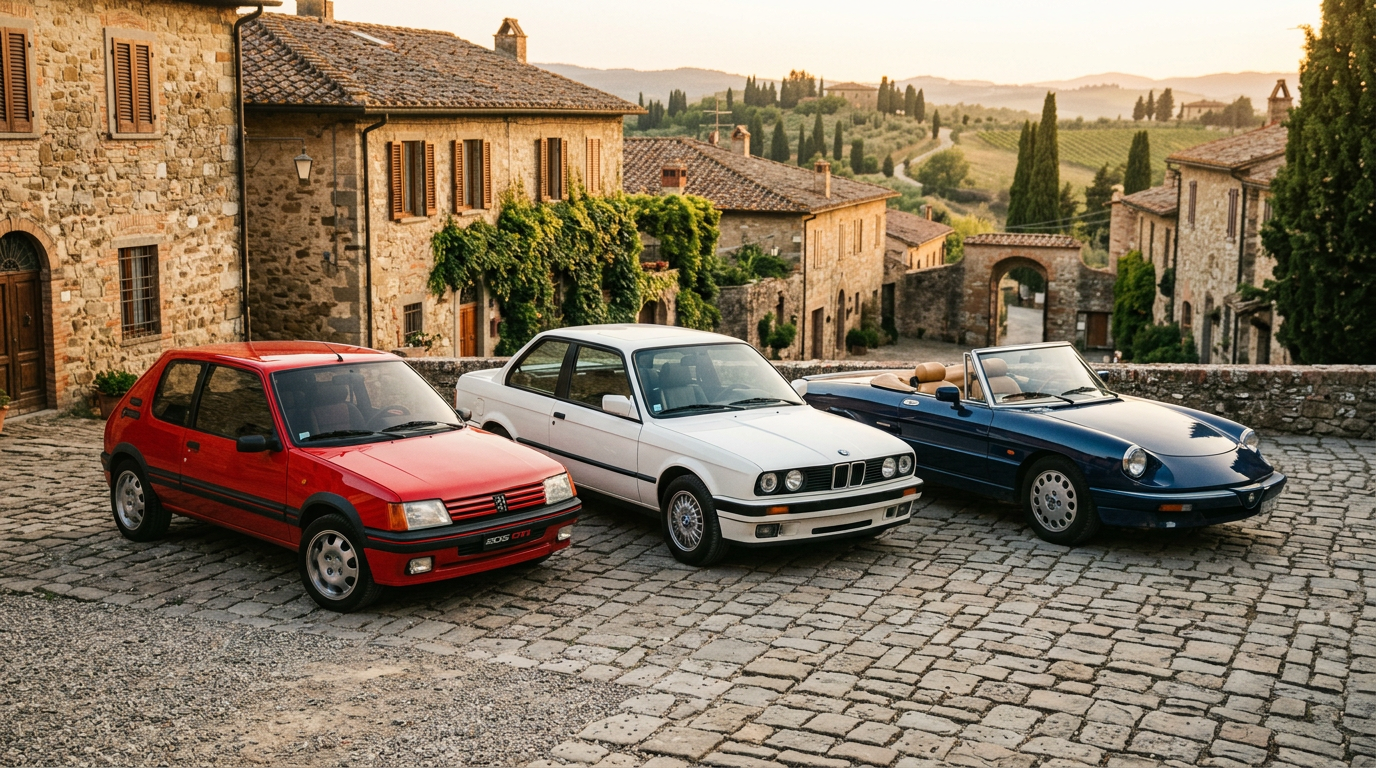
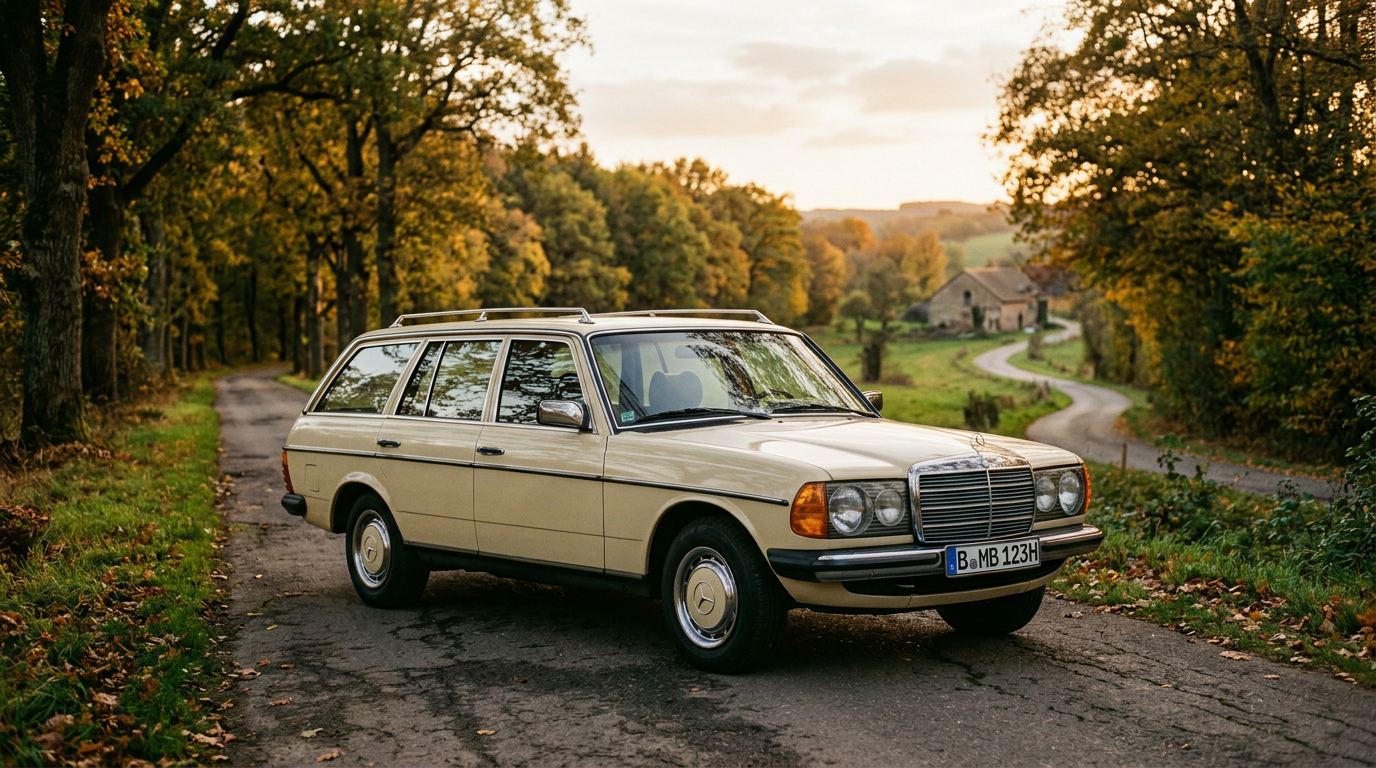
Models that benefit from this shift include the Porsche 911 SC and 3.2 Carrera (robust, well-supported, enjoyable at legal speeds), the BMW E30 325i (the ultimate everyday classic), the Mercedes W123 (indestructible touring companion), and the Alfa Romeo Spider Series 2 (pure open-air pleasure at accessible prices).
Models that suffer include high-value concours-only cars that are too expensive to use casually, and fragile exotics where every mile potentially reduces value. A pristine garage queen with 5,000 km is still worth more than a driver with 150,000 km - but the gap is closing.
4. Eastern Europe Is the Fastest-Growing Market
The Polish classic car market is growing at approximately twenty percent per year. The Czech Republic, Hungary, and the Baltic states are not far behind. This growth is driven by rising disposable incomes, a strong automotive culture, and a generation of enthusiasts who grew up with Eastern European classics (Fiat 126p, Polski Fiat 125p, Skoda, Trabant) and are now able to collect the Western European cars they once admired from a distance.
The implications are twofold. First, Eastern Europe is both a source market (well-preserved cars at lower prices) and a destination market (growing domestic demand). Second, models with cultural significance in Eastern Europe - the Fiat 126p (29,000 monthly searches in Poland), the FSO Polonez (23,000), the Mercedes W123 (a status symbol across the region) - carry disproportionate value in these markets relative to Western European pricing.
Browse classic cars by country on Carseto →
5. Cross-Border Price Arbitrage Remains Significant
The same car, in the same condition, can vary in price by fifteen to twenty-five percent between European countries. A Porsche 993 Carrera that costs €155,000 in the UK can be found for €130,000 in Germany or the Netherlands. A Lancia Delta Integrale that trades for €85,000 in the UK might be available for €70,000 in Italy.
This arbitrage exists because classic car markets remain nationally fragmented. Most buyers search within their own country. Language barriers, unfamiliarity with foreign registration processes, and the perceived complexity of cross-border transactions create friction that keeps prices uneven.
The opportunity for informed buyers is real and persistent. Pan-European search, combined with a clear understanding of import procedures and registration requirements, consistently yields better results than domestic-only searching.
Market Performance by Segment
Appreciating Strongly (10%+ over 24 months)
The strongest performers over the past two years share common characteristics: Gen X nostalgia appeal, usable driving character, strong community support, and limited production numbers.
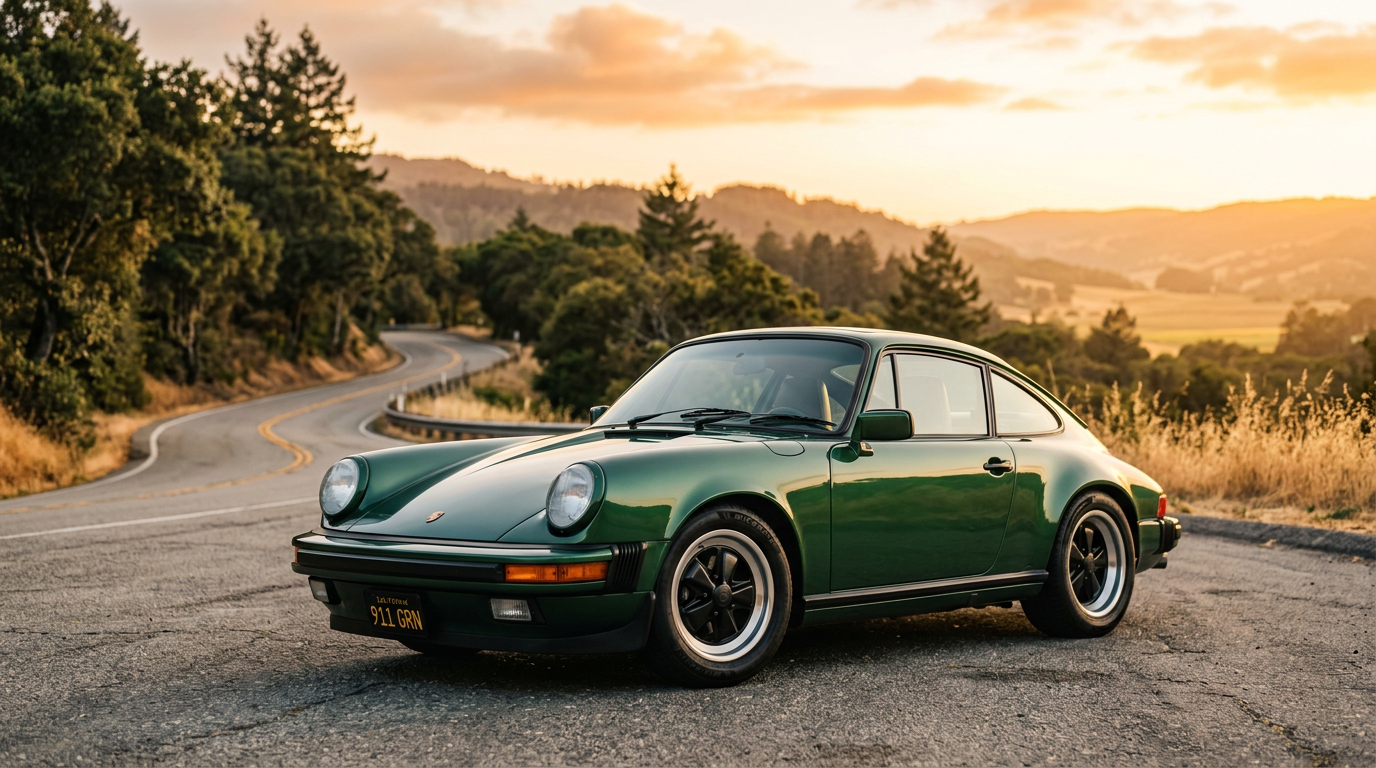
Porsche 964 and 993: The 964 has appreciated 25–40% since 2023. The 993 Carrera S is the standout, driven by "last air-cooled" demand and widebody aesthetics. Even the 993 Targa - once the least desirable 993 - is rising.
BMW E30 (all variants): Across the range - from 325i to M3 - E30 values have climbed 30–50%. The Touring estate is the fastest mover within the family, benefitting from a broader cultural embrace of practical classics.
Lancia Delta Integrale: Evo II models now regularly exceed €100,000 at auction. Even standard 8v and 16v cars, which were available for €30,000–€40,000 five years ago, now command €50,000–€70,000.
Hot hatches: The Peugeot 205 GTI, Volkswagen Golf GTI Mk1 and Mk2, and Ford Escort RS Cosworth are all appreciating strongly, driven by Gen X demand and increasingly limited supply.
Browse Porsche listings on Carseto →
Stable (Holding Value)
These are the established blue-chips - cars with proven demand, deep markets, and consistent collector interest.
Porsche 911 3.2 Carrera and 993 Carrera: Steady appreciation of 3–5% annually. These are the volume cars of the air-cooled 911 market, well-supported and liquid.
Mercedes W113 Pagoda: Appreciating at 3–5% per year for excellent examples. A market floor supported by the car's beauty, pedigree, and the Mercedes-Benz Classic network.
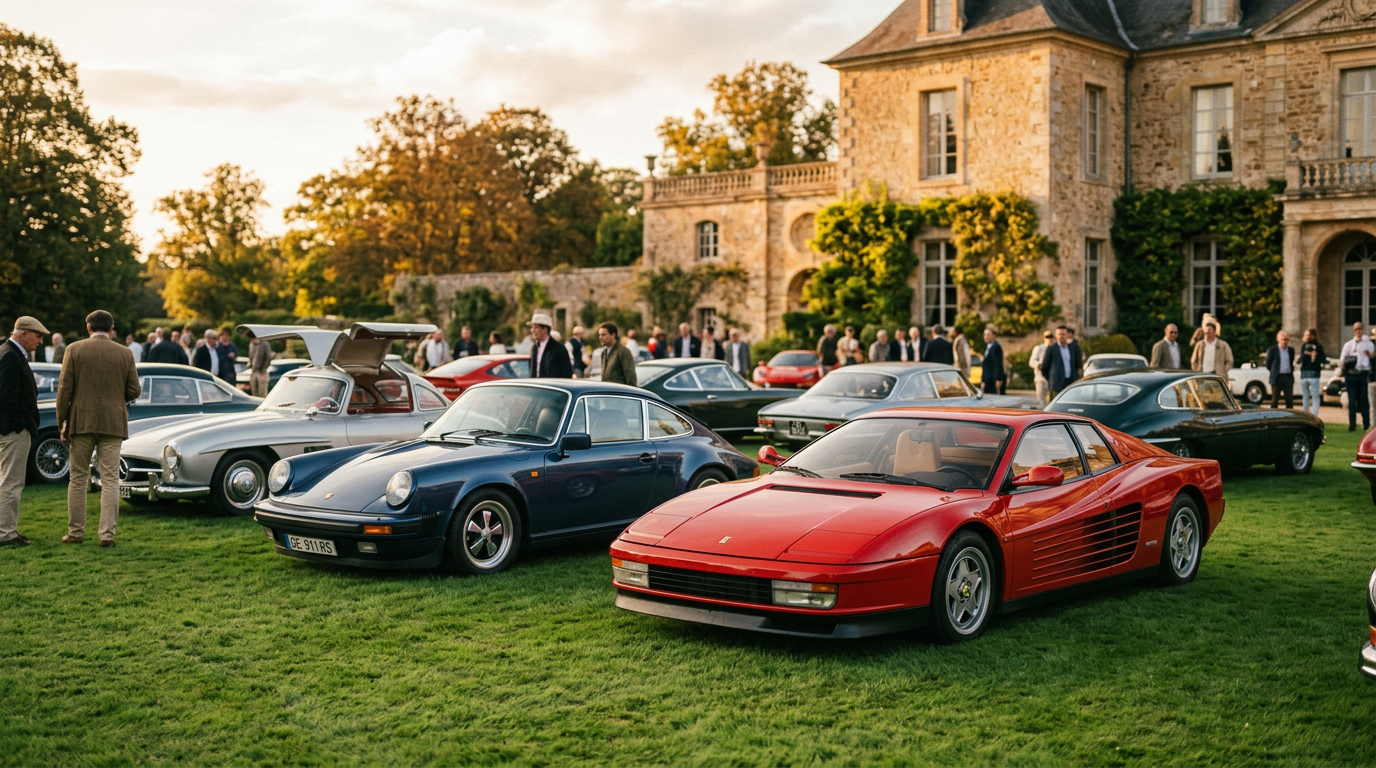
Ferrari Testarossa and 348/355: Stabilised after a speculative run-up. The Testarossa is now a genuine collector car rather than a speculative play, with prices reflecting its cultural significance.
Softening (Flat or Declining)
Jaguar: The most significant correction in the UK market. XK150, E-Type, and XJS values have all declined, with the E-Type Series 3 hit hardest. The E-Type Series 1 - the most beautiful of all - has held better, but the broader marque is out of favour.
American muscle in Europe: European demand for US-market classics has softened as import costs (shipping, duties, compliance) have risen and domestic European supply has deepened.
Over-restored cars: Concours restorations that exceeded original specification - better paint, upgraded interiors, non-period modifications - are selling at a discount to period-correct originals. Authenticity is winning.
Country-by-Country Outlook
Find classic cars in Germany, the UK, Italy, France, and Poland.
Cross-border search reveals prices 15–25% lower than domestic-only shopping.
Germany remains the largest and deepest European market, with over three million registered classic and youngtimer vehicles. The H-Kennzeichen system (historic registration for cars over 30 years old) provides tax and insurance benefits that support a thriving ownership culture. Volkswagen and Mercedes-Benz dominate German registrations. The "youngtimer" segment - cars between 20 and 30 years old - grew from 30% to 37% of the market between 2019 and 2024.
The United Kingdom holds approximately 27% of the European collector car market by value - the largest single-country share. Post-Brexit complications continue to affect cross-border trade: UK-to-EU trade faces VAT implications and potential customs duties that were absent before 2021. Despite this, the UK's specialist dealer and auction infrastructure remains the strongest in Europe.
Italy contributes emotional intensity and racing heritage that no other market matches. Restoration costs in Italy remain among Europe's lowest - averaging approximately €1,188 for typical work compared to over €4,000 in Luxembourg. For cars with Italian provenance (Alfa Romeo, Lancia, Ferrari, Maserati), Italy is both the spiritual and the practical home.
France offers among the most favourable regulatory environments in Europe: zero import duty for vehicles over 30 years old and reduced 5.5% VAT. Rétromobile, celebrating its 50th anniversary in 2026, remains arguably the world's premier classic car event.
Poland is the fastest-growing European market, with the Fiat 126p as its cultural anchor and an expanding appetite for German and Italian classics.
Browse classic cars by country on Carseto →
What to Watch in the Second Half of 2026
Add your car to My Garage.
Document your collection, track value trends, and list when you're ready to sell.
The 1996 model year crosses 30. Cars from 1996 become eligible for historic status in Germany (H-Kennzeichen) and many other European markets in 2026. This includes the Porsche 993 Turbo, BMW E36 M3, Mercedes C36 AMG, and the Alfa Romeo GTV. Expect increased interest and upward price pressure on the best examples.
Japanese classics go European. The JDM (Japanese Domestic Market) collector car wave that transformed the US and Australian markets is now reaching Europe. The Nissan Skyline GT-R (R32 and R33), Toyota Supra (A80), Honda NSX, and Mazda RX-7 (FD) are appearing in increasing numbers at European auctions. Supply remains limited, and prices reflect it.
The EV pressure debate continues. Proposed urban access restrictions for internal combustion vehicles in several European cities (Amsterdam, Brussels, Berlin low-emission zones) are a background concern for the collector car community. FIVA data shows classic cars account for just 0.2% of total vehicle mileage in Germany, and exemptions for historic vehicles are politically popular. But the conversation is ongoing, and regulatory risk - however small - is a factor in long-term market sentiment.
Data platforms reshape pricing. The emergence of transparent, public pricing data - from Bring a Trailer's permanent auction archive to Carseto's Classic Car Index - is gradually reducing information asymmetry in what has traditionally been an opaque market. Buyers are better informed, sellers face greater price discipline, and the days of dramatic overpayment (or under-selling) are narrowing.
Frequently Asked Questions
Is the classic car market going up or down in 2026? The market is up overall - the European collector car market is growing at 11.24% annually. However, performance varies significantly by model, condition, and market segment. Usable classics with strong community support are performing well. Speculative purchases and marques with weak enthusiast bases are correcting.
What are the best classic cars to invest in right now? Models with Gen X nostalgia appeal, limited production, and strong club networks are the strongest performers. The Porsche 964, BMW E30 (particularly M3 and Touring), and Lancia Delta Integrale lead the field. For accessible entry points, the Peugeot 205 GTI, VW Golf GTI Mk2, and Alfa Romeo Spider S2 offer strong prospects under €30,000.
Is it a good time to buy a classic car in Europe? For buyers of genuine quality - original, well-documented, well-maintained cars - the current market offers good opportunities. Speculative premiums have unwound, pricing data is more transparent than ever, and cross-border search makes the full European market accessible. The worst time to buy is during a speculative frenzy. The best time is when the market rewards quality over hype. We are in the latter phase.
How big is the European classic car market? Approximately €9.16 billion, encompassing vehicles over 30 years old across all European markets. Germany, the UK, France, Italy, and the Netherlands are the five largest markets by value.
Are classic car prices falling? Some are, some are not. Jaguar and traditional British marques have softened. Porsche, BMW, and Lancia are appreciating. The market is selectively correcting cars that were overvalued relative to their enthusiast appeal, while rewarding cars with genuine community demand.
The Market Rewards the Informed
The European classic car market in 2026 rewards knowledge, patience, and a willingness to look beyond borders. The collector who understands which models carry genuine demand - not speculative momentum - and who searches across the full European landscape rather than within a single country's listings will consistently find better cars at better prices.
The data supports this. The trends confirm it. And the opportunity - for those willing to do the work - has never been broader.
Start your search across 47 European countries on Carseto →
Related reading: Porsche 911 Buyer's Guide · BMW E30 Buyer's Guide · 10 Classic Cars Under €30,000
This article is part of the Carseto Journal - market intelligence and stories from Europe's classic car world.