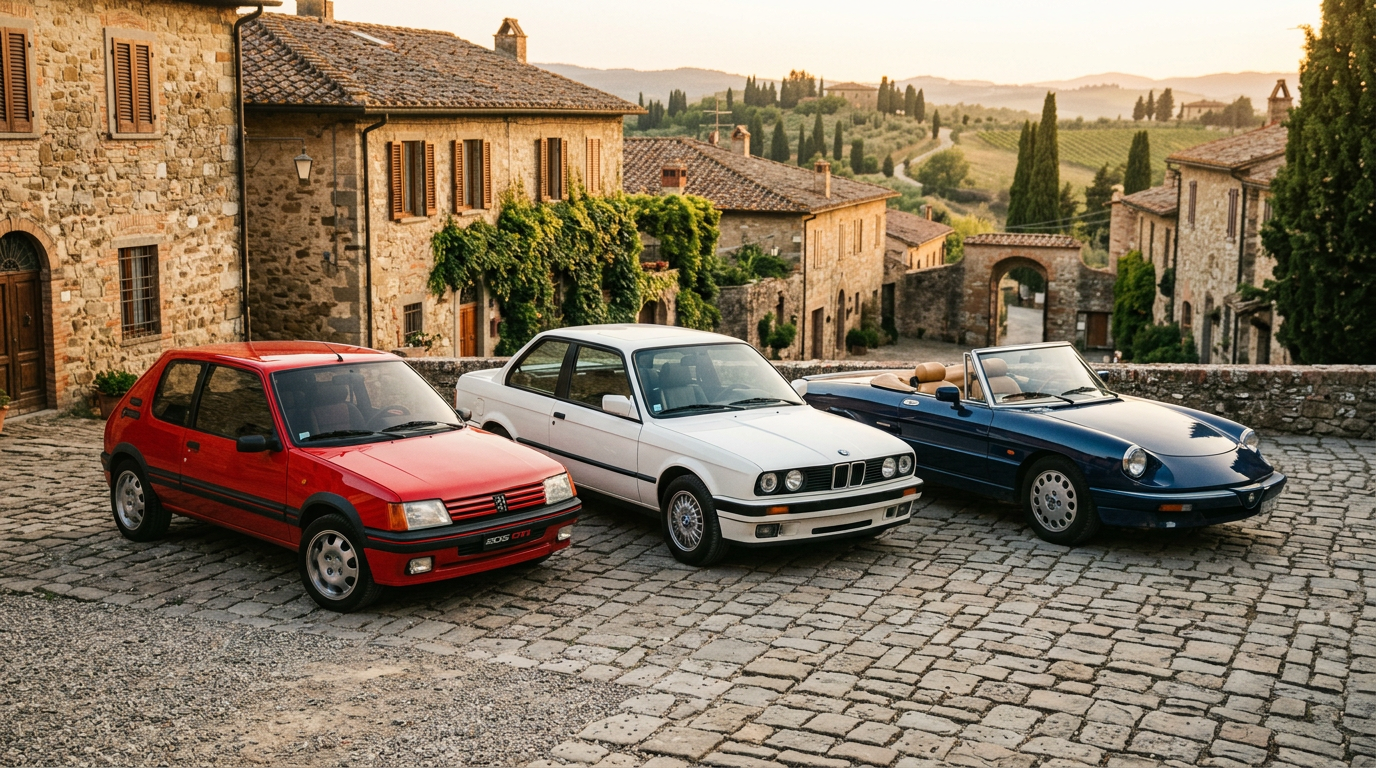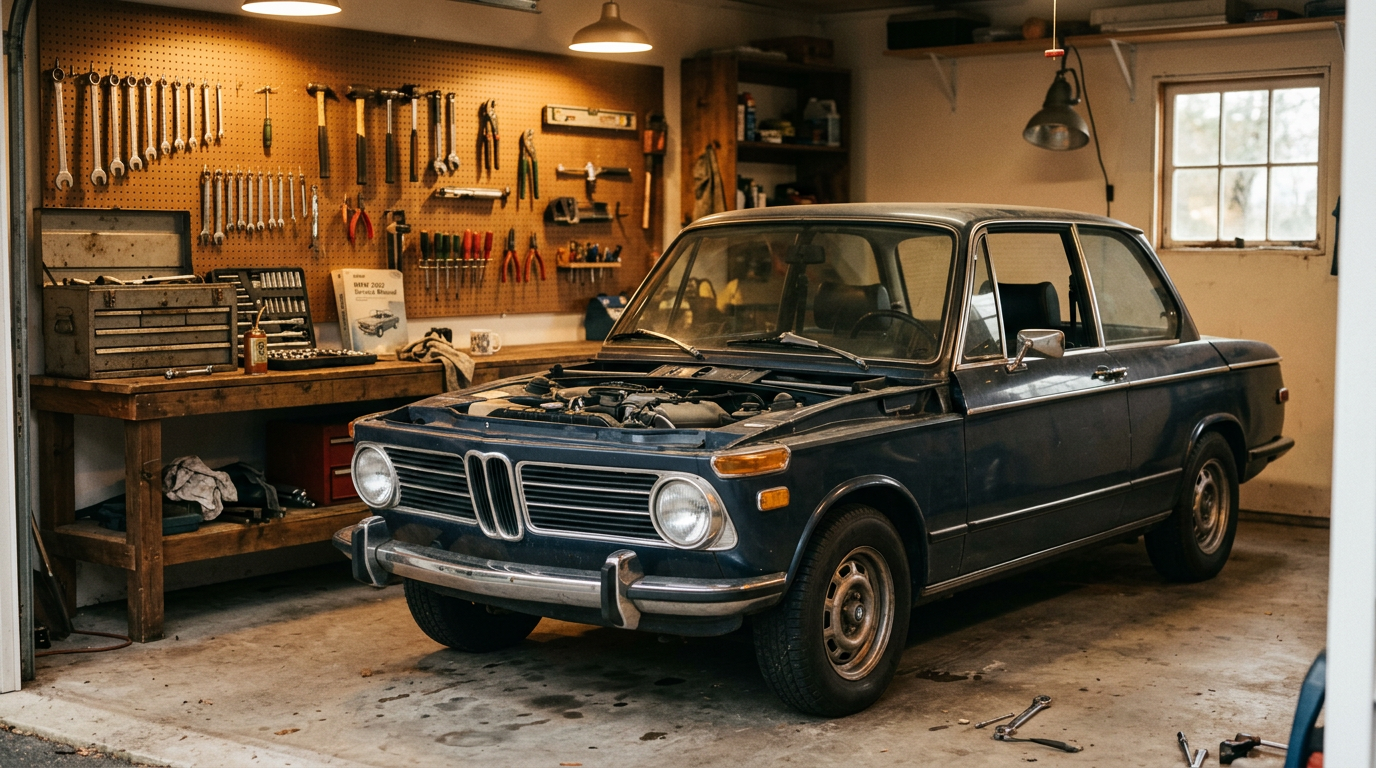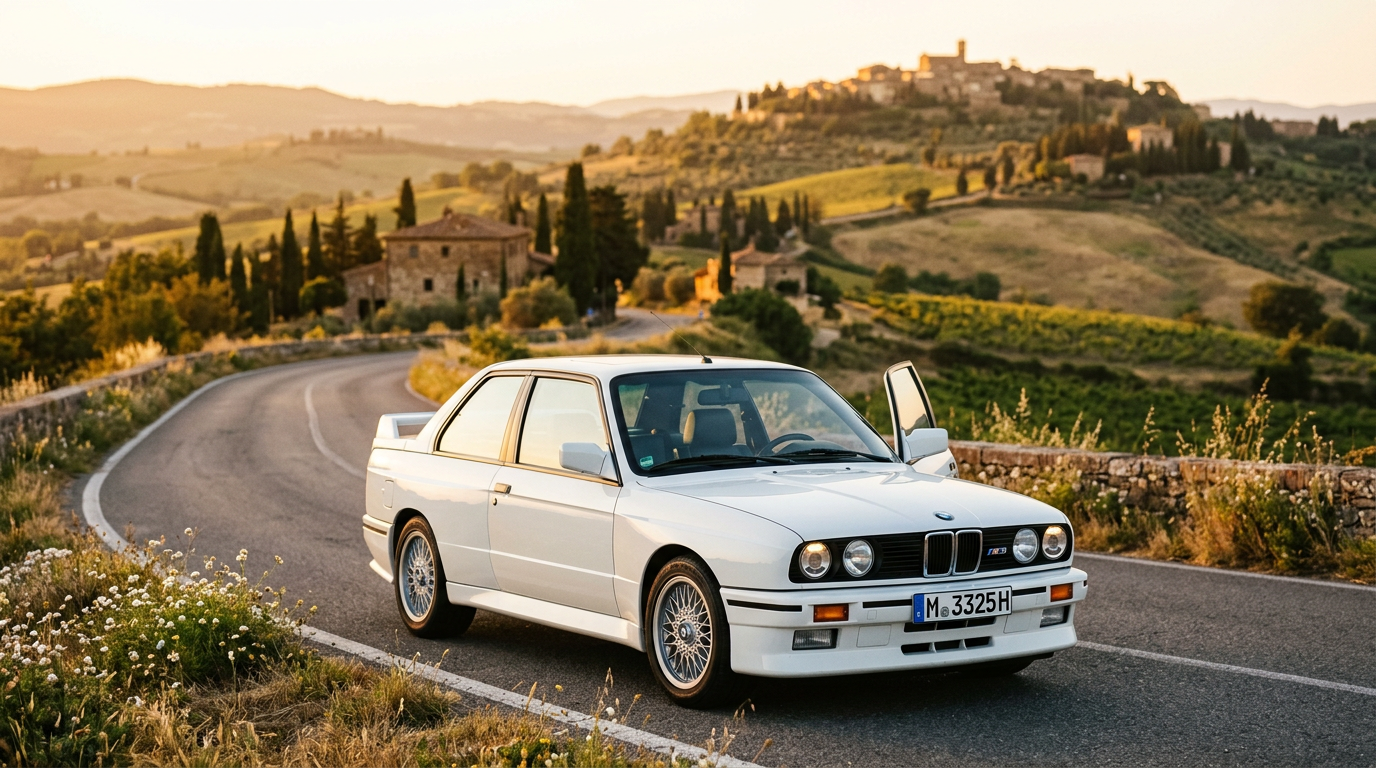
More people discover the world of classic cars through the BMW E30 than through almost any other model. The reasons are practical: the E30 is affordable to buy, rewarding to drive, simple enough to work on at home, and supported by one of the most active owner communities in Europe. The reasons are also emotional: there is something about the E30's proportions - low bonnet, upright greenhouse, compact dimensions - that feels immediately right. It is a car that flatters the driver without being precious about it.
Between 1982 and 1994, BMW built over 2.3 million E30s across four body styles: two-door saloon, four-door saloon, Touring (estate), and Convertible. At the top of the range sits the M3 - the most successful touring car of the 1980s and one of the most coveted sports cars of its era. But the E30's genius is not confined to the M3. A well-sorted 325i, a rev-happy 318iS, even a basic 316i - each offers a driving experience that modern cars, with their electronic filters and remote steering, cannot replicate.
Here is the full picture of the E30 as it exists in the European market in 2026: what to buy, what to pay, what to check, and where to find the best cars.
Browse BMW E30 listings across Europe on Carseto →
The E30 Range Explained
The second-generation 3 Series - internally designated E30 - debuted in 1982 as a replacement for the E21. It was built at BMW's Munich, Regensburg, and Rosslyn (South Africa) plants, with the Convertible produced by Baur in Stuttgart.
Four body styles covered every conceivable use case. The two-door saloon (often called the coupé, though BMW reserved that designation for later generations) is the definitive E30 - the one you picture when you hear the name. The four-door saloon offered family practicality without sacrificing the driving experience. The Touring (estate), introduced in 1988, added genuine luggage capacity and has since become a collector's item in its own right. The Convertible, with its fully powered soft top, brought open-air motoring to the compact sports saloon segment.
The E30's significance in BMW's history cannot be overstated. It was the car that established the 3 Series as the default choice for driving enthusiasts - a reputation that persists four decades later. And the M3 homologation special, developed for Group A touring car racing, set a template for BMW's M division that continues to define the brand.
Engine and Trim Guide
Browse E30s listed on Carseto right now.
From €5,000 projects to concours M3s across Germany, the UK, and the Netherlands.
The Entry Level - 316i and 318i
The 316i and 318i represent the bottom rung of the E30 ladder, but "bottom rung" on a BMW is still a rear-wheel-drive sports saloon with independent suspension and a well-balanced chassis.
The 316i was powered by either the 1.6-litre M10 (early cars, 90 hp) or the M40 (from 1988, 102 hp). The 318i received a 1.8-litre version of the same engines, producing 105–115 hp. Neither is fast. Both are honest.
The case for a four-cylinder E30 is simple: they are lighter than the six-cylinder cars by 40–60 kg, which sharpens turn-in and makes the most of the chassis. They are cheaper to buy, cheaper to insure, and cheaper to run. They teach you how to drive on the limit without punishing mistakes - because there is less power to get wrong.
European pricing sits at €5,000–€15,000 for good, rust-free examples. At the bottom of that range, the E30 represents one of the best-value rear-wheel-drive classic cars in Europe.
The Sweet Spot - 320i and 325i
This is where the E30 becomes the car everyone remembers.
The 320i carries a 2.0-litre M20 inline-six producing 125–129 hp. It is smooth, refined, and perfectly adequate for most driving. The 325i - with its 2.5-litre M20 producing 170 hp - is the enthusiast's default. The additional torque transforms the E30 from pleasant to genuinely exciting. It is fast enough to be entertaining on a B-road, tractable enough for motorway cruising, and characterful enough to make every journey feel like an event.
The 325i Sport (UK market designation) added Recaro front seats, BBS cross-spoke alloy wheels, a limited-slip differential, and sport suspension. It is the most sought-after non-M3 E30, and prices reflect this: well-sorted 325i Sports command €20,000–€30,000, with exceptional examples pushing beyond €35,000. Standard 325i models trade at €10,000–€25,000 depending on condition, body style, and history.
The 320i occupies a curious position. It is less desirable than the 325i - the smaller engine lacks the six-cylinder authority that defines the E30 experience - but clean, low-mileage 320is are becoming scarce, and prices are responding. At €8,000–€18,000 for good examples, it remains undervalued relative to the 325i.
The Hidden Gem - 318iS
The 318iS appeared in 1989 with BMW's new M42 engine: a 1.8-litre twin-cam four-cylinder producing 136 hp. It was the most modern engine fitted to the E30, with chain-driven cams, hydraulic tappets, and a willingness to rev that the M20 six-cylinder simply cannot match.
The 318iS is a different kind of E30. Where the 325i rewards a relaxed driving style - letting the torque do the work - the 318iS demands revs. It is lighter, more nimble, and feels more closely related to the M3's ethos of extracting performance through engine speed rather than cubic capacity.
The market has historically overlooked the 318iS, pricing it closer to the 316i than the 325i. At €8,000–€20,000, it is arguably the best-value driving E30 you can buy. As the classic car world increasingly values the driving experience over badge prestige, the 318iS may well be the next E30 variant to break out.
The Holy Grail - M3
The E30 M3 exists because BMW needed to homologate a car for Group A touring car racing. The result was a road car with a four-cylinder S14 engine producing 195 hp (200 hp in catalysed form), flared wheel arches, a deeper front spoiler, and a rear lip spoiler. Approximately 17,970 M3s were built across all variants, including the Evolution, Evolution II, and the legendary Sport Evolution (600 units, 238 hp).
The M3 dominated its era of motorsport: European Touring Car Championship, World Touring Car Championship, DTM, rally stages, and hillclimbs. That racing pedigree underpins everything about the car's collector status.
European pricing has settled after a period of rapid appreciation. Standard M3s in good condition trade between €60,000 and €120,000. Evolution models command €100,000–€180,000. The Sport Evolution, with its adjustable rear wing and higher-output engine, has breached €200,000 for the best examples.
The M3 reality check: Ownership is not for everyone. The S14 engine is expensive to rebuild (€8,000–€15,000 depending on specification). Parts are scarce and costly compared to the standard E30 range. The car demands mechanical sympathy and regular specialist maintenance. But for those who understand what they are buying, the E30 M3 is one of the definitive driver's cars of the twentieth century.
View the BMW E30 Price Guide on Carseto →
European Pricing Overview
See how E30 values trend over time on the Carseto Index.
Compare 316i, 325i, and M3 prices across Europe.
The E30 market is genuinely pan-European, with significant supply across Germany, the Netherlands, the UK, and Southern Europe.
Germany is the largest source market and typically offers the most competitive pricing. German E30s frequently come with complete Scheckheft (service book) histories, and the culture of meticulous maintenance means German-sourced cars tend to be mechanically well-cared-for. A 325i that costs €15,000 in Germany might list for €18,000–€20,000 in the UK.
The Netherlands has a strong BMW community and competitive prices for LHD cars. Belgian E30s are similarly priced.
Southern Europe - Italy, Spain, Greece - produces cars with less structural rust but more paint fade and interior sun damage. A Southern European E30 can be an excellent base for restoration, but inspect carefully for UV damage to rubber seals, dashboard, and headlining.
The United Kingdom is traditionally the strongest market for E30 Sport models and M3s. RHD examples carry a modest premium. UK specialists and the BMW Car Club (E30 Register) provide excellent support.
Poland and Eastern Europe offer lower prices but require careful inspection. E30s were immensely popular in Poland, and many surviving examples show the effects of hard use and improvised repairs. The best Polish E30s are exceptional value; the worst are deeply compromised. Inspect before you travel.
Compare E30 prices across Europe →
Rust - The E30's Achilles Heel
The E30 was galvanised from the factory in later production years, but the quality of that galvanising varied, and no amount of factory protection survives four decades of Northern European salt and rain without maintenance.
Rust attacks the E30 in predictable locations, and you should inspect every one before buying:
Sills and jacking points. This is the structural examination that matters most. The inner and outer sills, and the jacking point reinforcements welded between them, carry the car's torsional loads. Corroded sills compromise the entire structure. Push down firmly on each corner of the car - if the body flexes visibly around the B-pillar, the sills are gone. Professional replacement runs €1,500–€3,000 per side, plus paint.
Wheel arches. Front and rear, both lips and the inner arch panels. Mud and water accumulate in the arch liners and eat through the metal from behind. Bubbling paint along the arch edge is the early warning.
Boot floor and spare wheel well. Water ingress through deteriorated boot seals pools here. Lift the boot carpet and the spare wheel to inspect.
Front strut towers. Crucial - these carry the front suspension loads. Corrosion here is expensive to repair and compromises the car's handling geometry.
Battery tray. Acid spills from old batteries accelerate corrosion in a structurally relevant area. Check carefully, especially on RHD cars where the battery sits on the left side of the engine bay.
Door bottoms. The lower edge of each door traps moisture behind the door card. Bubbling paint or visible rust at the bottom of the door skin is common.
The underseal trap. Many E30s were factory-undersealed. This underseal was designed to protect the body - but over time, it can trap moisture against the metal and accelerate the corrosion it was meant to prevent. On any E30 with heavy underseal, inspect particularly carefully: the underseal may be hiding, not preventing, rust.
Rust-free E30 shells are becoming increasingly scarce. A solid body is worth a premium - always choose the most structurally sound car you can find, even if it costs more than a prettier car with hidden problems.
Other Common Issues
Cooling system. The M20 engine's cooling system is its weakest point. Radiators, thermostats, water pumps, and expansion tanks all degrade with age and should be treated as maintenance items. A full cooling system refresh - new radiator, thermostat, water pump, hoses, expansion tank - costs €300–€500 in parts and is the single best preventative investment you can make on any M20-powered E30. Overheating leads to head gasket failure.
Head gasket. The M20 head gasket is a known weakness. Symptoms include coolant loss without visible leaks, white exhaust smoke, and emulsion (milky residue) on the oil filler cap. A compression test and cooling system pressure test should be standard procedure on any pre-purchase inspection.
Timing belt (M40/M42 engines). These are interference engines - if the timing belt breaks, the pistons strike the valves and the engine is destroyed. Verify the timing belt service history. If there is no documentation, budget for an immediate replacement (€300–€500 fitted).
Gearbox. The Getrag 260 five-speed manual is robust and well-suited to the E30. Synchromesh wear on second gear is the most common complaint and manifests as a crunch or resistance when downshifting cold. Automatic transmissions are adequate but dull - they sap the E30 of much of its character and are significantly harder to sell.
Electrics. Window regulators (the cable-operated mechanism fails with age), instrument cluster pixel fade (a repairable but irritating condition), and central locking actuators are the most common electrical complaints. None is terminal.
Suspension. Standard rubber bushings deteriorate over time, introducing sloppiness into the E30's otherwise excellent chassis. A full suspension bush refresh - control arm bushings, subframe mounts, anti-roll bar links - costs €500–€800 in parts and transforms the car's handling from vague to precise. It is worth doing on any E30 you intend to keep.
Manual vs. Automatic
The short answer: manual. The E30's five-speed Getrag gearbox is a pleasure to use - the shift action is precise, the ratios are well-chosen, and the mechanical engagement it provides is central to the E30 experience.
The longer answer: automatic E30s are significantly cheaper to buy (20–30% less than equivalent manual cars) and perfectly adequate for touring and urban use. The four-speed automatic is smooth and predictable. If you plan to use the car primarily for relaxed cruising, an automatic E30 is a perfectly valid choice - and the savings allow you to buy a better-condition car.
However, automatics are harder to sell. The collector market overwhelmingly favours manual transmission, and an automatic E30 will appreciate more slowly and attract a smaller pool of buyers when you come to sell. If resale value matters to you, buy a manual.
The M3 was never offered with an automatic transmission. BMW understood what the car was for.
Investment Potential
The E30 has appreciated consistently over the past five years, with prices rising 30–50% across most models. This appreciation is driven by a structural shift: the generation that grew up with the E30 as an attainable new car is now the generation with the disposable income to buy one as a collector piece.
The M3 is the blue-chip investment. Limited production, racing heritage, and global recognition ensure continued demand. The best examples have more than doubled in value over the past decade, and there is no indication this trajectory is slowing.
The 325i is the "accessible appreciator." It is the E30 most people want, and clean, original examples are becoming scarce. The Sport variant (UK market) commands particular premiums. If you can find a low-mileage, unmodified 325i with documented history, it represents both an excellent driving car and a sound financial proposition.
The Touring is the emerging collectible. Fewer were built than the saloon, and estate cars are experiencing a broader cultural renaissance among younger collectors. Touring values have risen 40–60% in five years, and clean examples are now genuinely scarce.
One caution: Modified E30s are extremely common - lowered suspension, aftermarket wheels, engine swaps, roll cages. While modifications can enhance the driving experience, they generally reduce collector value. The market rewards originality. A standard, unmodified E30 in excellent condition will almost always outperform a modified example over time.
The best investment strategy is simple: find the most original, lowest-mileage, best-documented example you can afford, and maintain it properly. The E30 rewards this approach consistently.
Where to Find an E30 in Europe
Germany is the mother lode. More E30s exist in Germany than in any other European country, and the range of available cars - from €3,000 projects to €30,000 concours examples - is unmatched. German classic car dealers and private sellers are generally well-informed and honest about condition. English is widely spoken in the trade.
The Netherlands has a passionate BMW community and competitive prices. The Dutch E30 scene is active, well-organised, and produces excellent cars.
Southern Europe - particularly Spain and Italy - offers E30s with less structural corrosion but more UV damage. These cars can be excellent bases if you are prepared to address cosmetic issues.
The United Kingdom has Europe's strongest specialist market for E30 Sport models, M3s, and Convertibles. UK prices tend to be the highest, but the specialist infrastructure is excellent.
Tips for sourcing from Germany: BMW enthusiast forums (E30-Talk.com, BMW E30 Deutschland on Facebook) are active with private sales. Many German sellers list on Mobile.de and AutoScout24 as well as specialist platforms. A few useful German phrases and a willingness to travel can save thousands of euros compared to buying domestically.
Search BMW E30s across 47 European countries on Carseto →
Pre-Purchase Checklist
Track your classic in My Garage.
Document your collection, get value insights, and list when you're ready to sell.
Work through these ten points on every E30 you consider. For M3s and high-value examples, commission an independent specialist inspection.
- Sills - probe with a screwdriver, check jacking points, push down on each corner.
- Cooling system - pressure test. Check for coolant loss, hose condition, radiator leaks.
- Head gasket - compression test across all cylinders. Check oil cap for emulsion.
- Timing belt (M40/M42) - verify documented service history or budget for immediate replacement.
- Gearbox - run through all gears cold. Check for synchro crunch on second.
- Electrics - instrument cluster, window regulators, central locking, all lights.
- Suspension - check for play in bushings, listen for knocks over bumps, assess damper condition.
- Body panels - magnet test for filler. Check panel gaps for accident evidence.
- Interior - dashboard condition (cracks are common and expensive to repair), seat wear, headlining.
- Documentation - service book, invoices, MOT/TÜV history, ownership chain.
Frequently Asked Questions
Which BMW E30 is the best to buy? For most buyers, the 325i offers the best balance of performance, running costs, and collectibility. The 318iS is the best-value driver. The M3 is the ultimate E30, but at a significantly higher price and maintenance cost.
How much does a BMW E30 cost in 2026? Clean four-cylinder models (316i, 318i) start around €5,000–€10,000. A well-sorted 325i runs €10,000–€25,000, with Sport models reaching €30,000+. The M3 starts at €60,000 for standard models and exceeds €200,000 for the rarest variants.
Is the BMW E30 a good first classic car? Arguably the best. The E30 is mechanically straightforward, well-supported by specialists and the enthusiast community, affordable to maintain, and genuinely rewarding to drive. It teaches you the fundamentals of rear-wheel-drive dynamics without punishing mistakes. If you want to learn about classic car ownership, start here.
What is the difference between the E30 and E36? The E36 (1990–2000) is the E30's successor - larger, heavier, more technologically complex. The E30 is analogue where the E36 is semi-digital. The E30 has a more direct, mechanical driving feel; the E36 is more refined but less engaging. Both have their advocates. The E30 is more collectible; the E36 is cheaper (for now).
Which E30 engine is most reliable? The M20 (2.0 and 2.5-litre six-cylinder) is the most common and best-understood. With proper cooling system maintenance, it is robust and long-lived. The M42 (318iS) is arguably the most modern and trouble-free. The S14 (M3) is the most highly stressed and the most expensive to maintain.
Is the BMW E30 M3 worth the money? If you understand what you are buying - a homologation special with high maintenance costs, scarce parts, and an engine that demands respect - then yes. The E30 M3 is one of the great driver's cars, and its investment trajectory speaks for itself. If your budget is tight and you want a daily driver, the 325i is the smarter choice.
The Car That Starts Something
The BMW E30 has a remarkable quality: it makes enthusiasts out of ordinary people. There is something about its combination of accessibility, character, and purity that transforms casual interest into genuine passion. It is a car you buy because you want to drive, and it is a car that keeps teaching you long after you have signed the paperwork.
The European market offers more E30s, more variety, and better value than any single country can provide. First classic, weekend companion, or long-term hold - the E30 is where the smart money starts.
Start your search on Carseto →
Thinking of selling your E30? List it on Carseto →
Related reading: Porsche 911 Buyer's Guide · Alfa Romeo Spider Buyer's Guide
This article is part of the Carseto Journal - market intelligence and stories from Europe's classic car world.