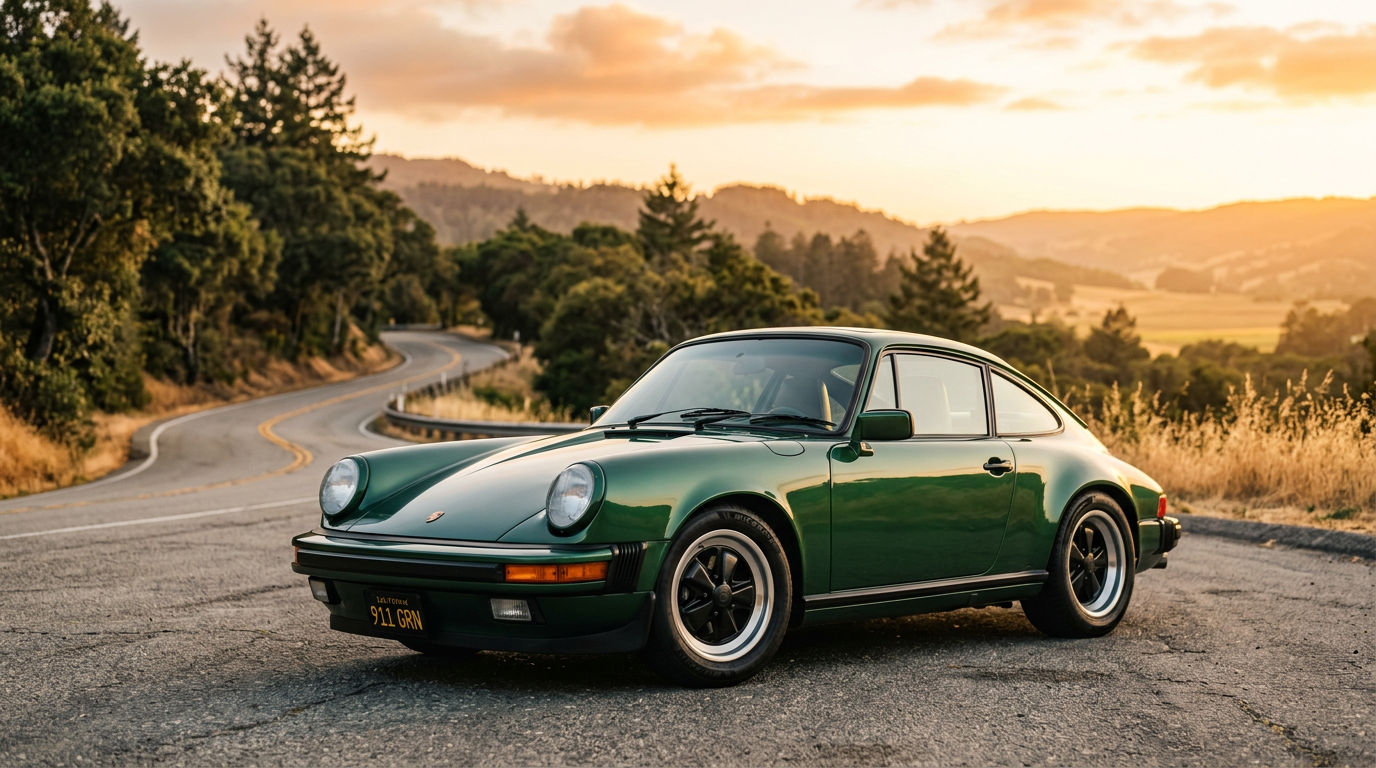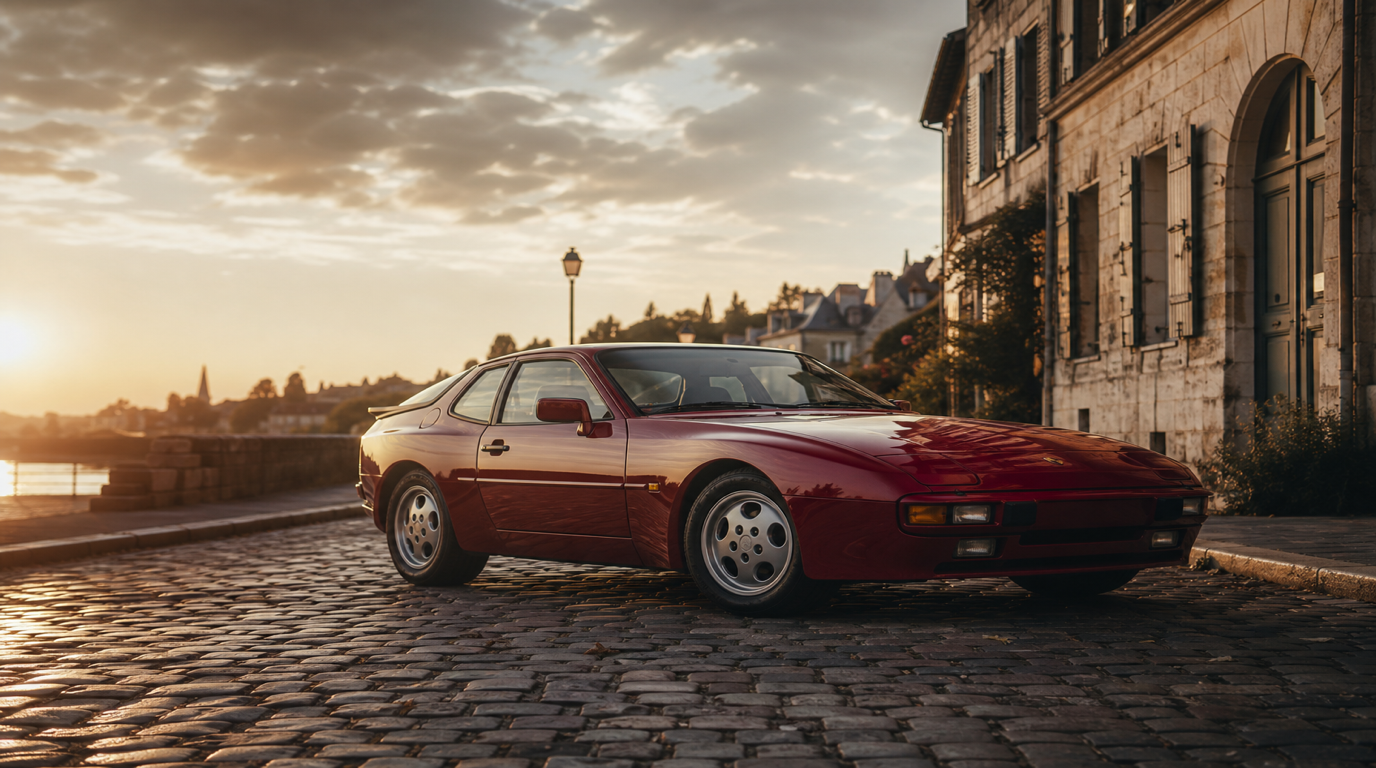
The Porsche 944 has spent decades as the wrong Porsche. Wrong engine position (front, not rear). Wrong cylinder count (four, not six). Wrong heritage (evolved from the Volkswagen-engined 924, not the hallowed 911 bloodline). For a generation of Porsche buyers who defined the marque by its air-cooled flat-six, the 944 was something to tolerate, not celebrate.
That era is ending. The market is discovering what Porsche's engineers always knew: the 944's front-engine, rear-transaxle layout delivers 50/50 weight distribution that the tail-heavy 911 of the same era simply cannot match. Its handling is precise, communicative, and forgiving in ways the 911 - brilliant but demanding - is not. And its price, relative to the experience it delivers, remains one of the great anomalies in the European collector car market.
This guide covers the full 944 family, from the base 2.5-litre through the Turbo S, with European pricing, the mechanical issues that matter most, and the investment case for buying one before the market corrects this anomaly.
Browse Porsche 944 listings on Carseto →
The 944 Family - Variant by Variant
Browse Porsche 944 listings across Europe on Carseto.
From affordable base models to sought-after Turbo S examples in Germany, the Netherlands, and beyond.
Porsche 944 Base (1982-1989)
A 2.5-litre naturally aspirated inline-four producing 163 hp, derived from half of the 928's V8. Not a refined engine by modern standards - it produces a utilitarian thrum rather than a spine-tingling howl - but it is robust and provides enough performance for genuine entertainment on European roads: 0-100 km/h in 8.3 seconds, 220 km/h top speed. The 1987 model gained a 2.7-litre engine with improved torque.
European pricing: €8,000-€18,000 for good examples.
Porsche 944 S (1987-1988)
A 16-valve cylinder head raises the 2.5-litre to 190 hp. The rev-happy character of the 16v engine - willing to spin to 6,800 rpm - gives the S a different personality. It is the driver's choice within the naturally aspirated range.
European pricing: €12,000-€22,000.
Porsche 944 Turbo / 951 (1985-1991)
The Turbo transforms the 944 from competent to rapid. A KKK K26 turbocharger raises output to 220 hp (250 hp in the Turbo S). Performance: 0-100 km/h in 6.3 seconds, 245 km/h. Uprated brakes from the 911 Turbo, stiffer suspension, wider wheels. The Turbo S (1988, approximately 1,635 built) is the pinnacle.
European pricing: €25,000-€50,000 (Turbo); €40,000-€70,000 (Turbo S).
Porsche 944 S2 (1989-1991)
The ultimate naturally aspirated 944. A 3.0-litre 16-valve engine producing 211 hp delivers power with a breadth and linearity the smaller engines cannot match. Available as a Cabriolet designed by Harm Lagaaij. Arguably the best-value variant in the range.
European pricing: €15,000-€30,000 (coupé); €18,000-€35,000 (Cabriolet).
Porsche 968 (1992-1995)
Technically the successor, but so closely related it belongs in this guide. VarioCam variable valve timing raises the 3.0-litre to 240 hp. The 968 Club Sport - stripped, lightweight, no compromise - is the most sought-after front-engine Porsche ever made.
European pricing: €20,000-€40,000 (standard); €50,000-€80,000 (Club Sport).
View the Porsche 944 Price Guide on Carseto →
What to Look For
The Timing Belt - The Non-Negotiable Check
The 944's engine is an interference design. If the timing belt breaks, the pistons strike the valves and the engine is destroyed. Replacement interval: every 48,000 km or four years, whichever comes first. Cost: €400-€800 including balance shaft belt, tensioner, and water pump.
This is the single most critical item on any 944. Verify documented service history before purchase. No documentation means budget for immediate replacement - or walk away entirely.
Balance Shaft Bearings
Twin counter-rotating balance shafts smooth the four-cylinder's inherent vibration. The bearings wear with age, producing a rumble or vibration often misdiagnosed as main bearing failure. Replacement: €800-€1,500 at a specialist. Far cheaper than the engine rebuild that follows if the bearing seizes and the belt jumps.
Rust
The 944 is galvanised from the factory - corrosion resistance is better than most 1980s sports cars. Vulnerable areas: rear hatch surround, front arches behind the bumper, door bottoms, sunroof drain channels. Structural rust is unusual on a 944 and suggests accident damage or extreme neglect.
The Transaxle Clutch
The 944's transaxle layout places the clutch inside the bellhousing at the rear of the car. Replacement requires separating the driveshaft tube, torque tube, and transaxle - a substantially larger job than a conventional front-engine clutch change. Budget €1,500-€2,500 for professional replacement. A slipping or juddering clutch should be reflected in the purchase price.
Dashboard Cracks
The pre-1986 dashboard is notorious for UV-induced cracking. Replacement (used): €300-€600. Professional repair: €400-€800. A cosmetic issue, not structural - but a valid negotiation point.
Pop-Up Headlamps
The 944's pop-up headlamps are a period-correct charm point - and a potential maintenance irritation. The vacuum-operated system (early cars) or electric motor system (later cars) can fail. Parts are available and repair is not complex, but verify operation during inspection. One headlamp that rises slower than the other is the classic symptom of a tired motor or stiff mechanism.
Running Costs
The 944 is one of the most affordable Porsches to own. Annual servicing at an independent specialist: €300-€600. The timing belt service every four years is the single largest routine expense at €400-€800. Everything else - oil, brakes, filters, fluid changes - is comparable to a contemporary BMW 3 Series of the same era.
Parts supply is excellent. Porsche Classic stocks over 60,000 parts for transaxle models, and the independent aftermarket is comprehensive. Many service items are shared with the 924 and 968, broadening the parts base further.
Insurance is competitive by Porsche standards. The 944's front-engine layout and relatively modest performance figures make it a lower-risk proposition for classic car insurers than a 911 of equivalent age.
The Investment Case
Track your classic in My Garage.
Document your collection, get value insights, and list it when you are ready to sell.
The 944 is in the early stages of a market correction. The Turbo has already moved - prices have doubled in five years. The 968 Club Sport has established itself as a €60,000+ collector car. The S2 and base 944 are next.
The driver of this correction is simple: a new generation of collectors values driving dynamics over badge hierarchy. The 944 delivers one of the purest Porsche driving experiences available at any price - balanced, communicative, rewarding at legal speeds. As this recognition broadens, pricing is following.
At €8,000-€30,000 for the non-Turbo range, the 944 represents what may be the last genuine bargain in the Porsche lineup. The window will not stay open indefinitely.
Where to Buy
Germany is the largest source market. Stuttgart - home to Porsche - has the densest concentration of transaxle specialists and inventory. The Netherlands has a passionate 944 community and competitive pricing. The UK offers good specialist support. Southern Europe provides dry-climate examples with excellent bodywork.
Search Porsche 944 listings across Europe on Carseto →
Frequently Asked Questions
How much does a Porsche 944 cost? Base: €8,000-€18,000. S: €12,000-€22,000. S2: €15,000-€30,000. Turbo: €25,000-€50,000. Turbo S: €40,000-€70,000. 968 Club Sport: €50,000-€80,000.
Is the Porsche 944 reliable? With proper timing belt maintenance - yes. The engine and transaxle are robust, well-documented units. The 944 is among the most reliable Porsches of its era.
Is the Porsche 944 a good investment? The Turbo has already proven itself. The S2 is widely expected to follow. Even the base 944 offers Porsche ownership at a fraction of 911 pricing - and the recognition gap is closing year by year.
Which 944 is the best to buy? The S2 for the best balance of performance, refinement, and value. The Turbo for speed and collectibility. The base 944 for the most affordable entry. The 968 Club Sport as the ultimate - at premium prices.
What is the most important thing to check on a 944? The timing belt service history. Belt failure destroys the engine. No documentation, no purchase.
Is the 944 better than the 924? The 944 is substantially more capable. The 924's original engine was a detuned Audi/VW unit; the 944's is a purpose-designed Porsche engine. The 944's wider body, improved suspension, and greater structural rigidity make it a different class of car. However, the 924 Carrera GT and 924 Turbo are distinct collectibles in their own right.
The Market Is Finally Understanding
The 944 was always the better-handling Porsche. It took the market thirty years to notice. For buyers who value what a car does over what it represents, the 944 is one of the most compelling classic sports cars available in Europe - at prices that, for now, still reflect yesterday's prejudice rather than today's reality.
Start your search on Carseto →
Thinking of selling your 944? List it on Carseto →
Related reading: Porsche 911 Buyer's Guide · 10 Classic Cars Under €30,000
This article is part of the Carseto Journal - market intelligence and stories from Europe's classic car world.