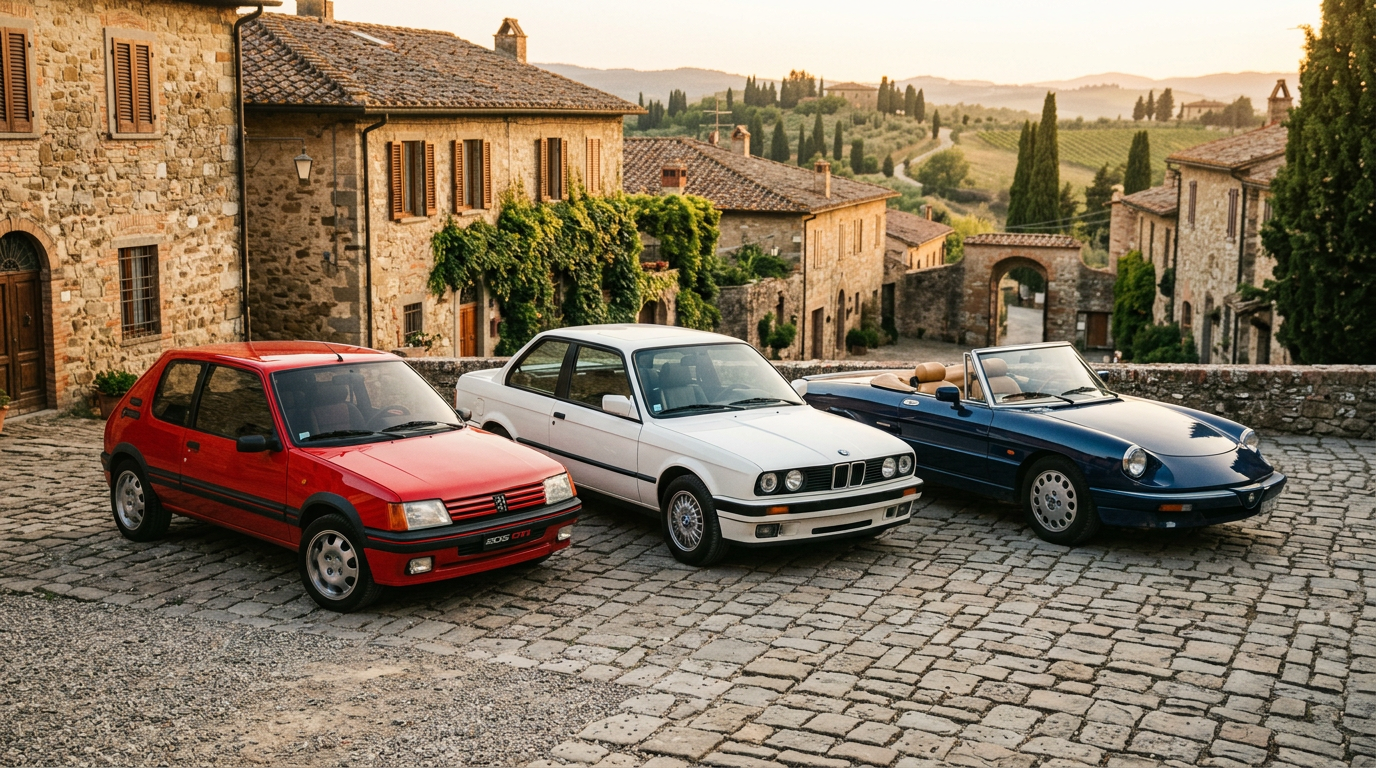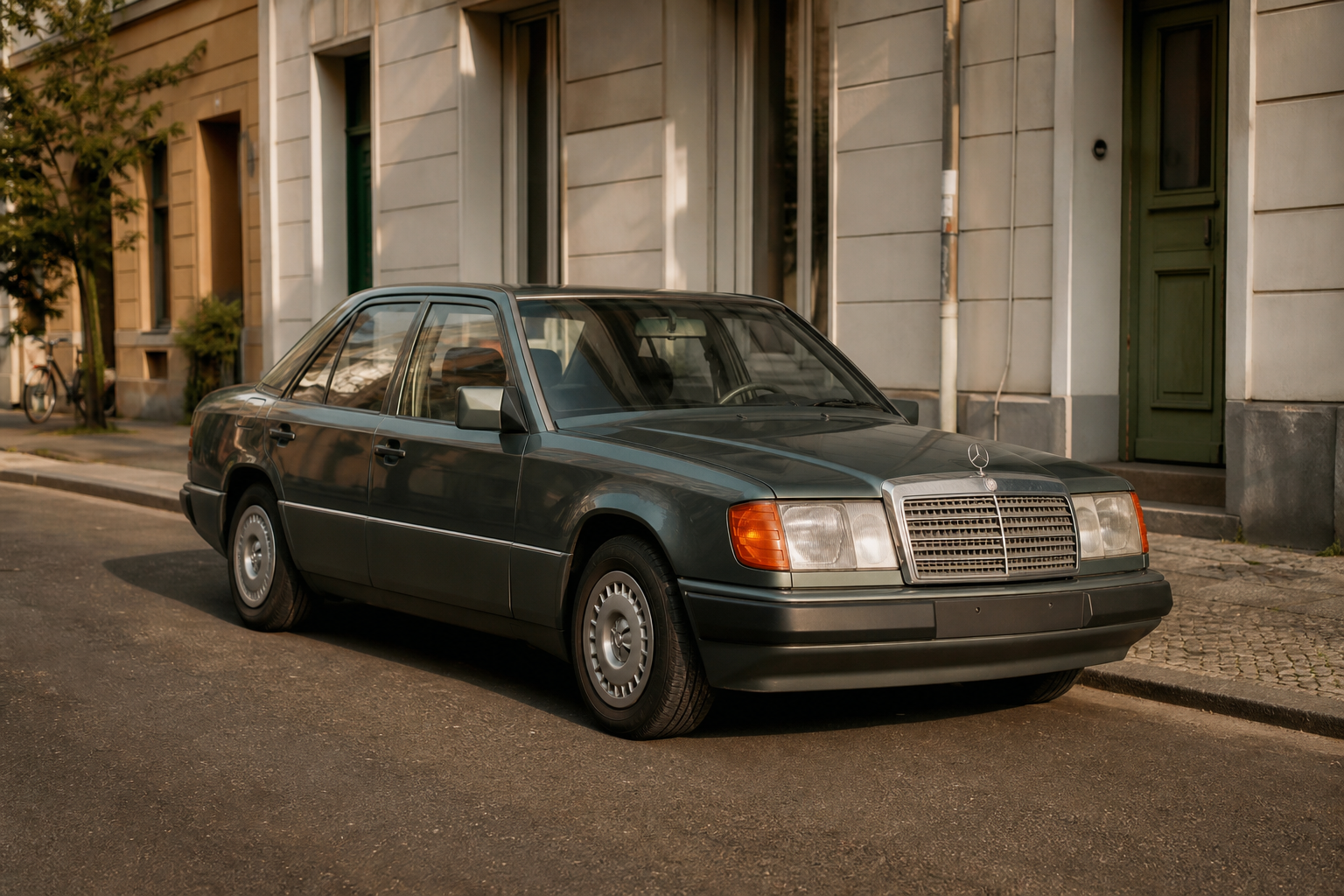
Five thousand euros no longer buys what it used to. But it does still buy a way into classic ownership - if you know exactly what you are doing. Here are the ten cars still worth having at that price, what they are genuinely worth, and how to tell a bargain from a trap.
Let us begin with an honest number. Of the many tens of thousands of classics listed across Europe on Carseto, only a few hundred sit below €5,000. The sub-€5,000 classic is not a rich hunting ground full of overlooked gems; it is a thin and shrinking band at the very bottom of the market, and most of what lives there is either a rough example of a good car or a good example of a car nobody wants.
That is not a reason to give up. It is a reason to be precise. Because the same data that reveals how thin this band is also reveals something more useful: what each of these cars is actually worth in decent condition. And that gap - between the €5,000 you might pay and the €7,000, €13,000, or €16,000 the model commands in good order - is the single most important thing a budget buyer can understand. It tells you whether the cheap car in front of you is a genuine bargain or a warning written in a low price.
This guide names ten cars still worth buying under €5,000. For each, it gives the honest picture: what it costs at the bottom, what it is worth in the middle, and the one thing that will decide whether you have bought well.
The €5,000 reality: you are shopping at the bottom
Here is the mechanism you must understand. The Carseto Index publishes a median value for each model - a figure that reflects the whole market, weighted toward cars in honest, usable condition. For almost every car in this guide, that median sits well above €5,000. The Mercedes 190 (W201) carries a Carseto Index median of around €16,575 (CCI, July 2026). The VW Golf Mk2 sits at around €13,500. The Peugeot 205 at around €13,593.
So what are the sub-€5,000 examples? They are the tail of the distribution: the highest-mileage cars, the roughest projects, the base-specification survivors, the ones needing work. Buying at €5,000 means buying the cheapest examples of cars that are worth considerably more in good order. That can be a brilliant strategy - you are buying a fundamentally good car at the point of maximum depreciation - or a painful one, if the reason the car is cheap is hiding somewhere you did not look.
The discipline, then, is simple: before you look at any €5,000 car, check what the model is worth in good condition on the Carseto Index. If a sound example is worth €13,000 and this one is €4,000, you know both the opportunity and the risk. That single habit separates the people who find bargains from the people who find money pits.
With that framing, here are the ten.
The sound bets: where €5,000 buys a genuinely good car
See what's listed under €5,000 across Europe.
From honest W124s to project Renault 5s - the whole budget market in one search.
These are the models where the whole market sits low enough that €5,000 gets you a usable, sound example rather than a project.
1. Mercedes-Benz W124 (1984-1993) - the standout
If you buy one car from this guide, make it this. The W124 - the E-Class before it was called the E-Class - is widely regarded as one of the best-built cars ever made, engineered in an era when Mercedes over-built everything without regard to cost. And here is the remarkable part: the Carseto Index puts it at a median of just €7,000 (CCI, July 2026) - and, alone among the mainstream picks here, it is rising, up 25.3% over three months across a robust 228 observations. Sub-€5,000 examples genuinely exist, with live asking prices in this band around €2,953.
You are buying a fundamentally excellent car near the bottom of an affordable and climbing market. Check for rust in the rear arches and jacking points, and favour a full service history. Diesels run forever; the straight-sixes are sweeter. See the current stock on the Mercedes-Benz hub.
2. Volkswagen Golf Mk3 and Mk4 (1991-2006)
The Golf Mk2 has already appreciated beyond this budget, at a Carseto Index median of around €13,500. But the Mk3 (1991-2000) and Mk4 (1997-2006) remain accessible, at Index medians of around €7,400 and €7,605 respectively (CCI, July 2026), both across large, high-confidence datasets. Sub-€5,000 buys a decent one, not a wreck. The Mk4 in particular, with its solid build and rising youngtimer status, is a sensible modern classic. Rust is less of an issue than on older cars; look for honest history and avoid thrashed examples. Browse the Volkswagen hub.
3. Volkswagen Polo (1980s-1990s)
The Golf's smaller sibling is one of the cheapest ways into air-cooled-era VW simplicity, with sub-€5,000 asking prices commonly around €2,674. A characterful, robust, cheap-to-run supermini that is only going to become more appreciated. The same VW build quality, at a fraction of the Golf's cost.
4. Škoda 105/120 (late 1970s-1980s)
For genuine Eastern-bloc character on a shoestring, the rear-engined Škoda 105 sits at asking prices around €3,128. Simple, quirky, and increasingly collectible as interest in Central European classics grows - the same nostalgia wave lifting the Trabant and Polonez. Mechanically elementary and cheap to keep. A left-field choice with real charm.
5. Renault Twingo (1993-2007)
The quirkiest pick, and the clearest future classic. The original Twingo - cheeky, clever, and utterly of its era - sits at sub-€5,000 asking prices around €3,500. It is not a classic yet in most eyes, which is exactly why now is the moment. Buy a clean one, keep it clean, and wait. See the Renault hub.
The projects with upside: buy the cheapest good one
These are the models worth substantially more in good condition, where €5,000 buys the entry point - a rougher car with genuine room to improve, provided you buy with your eyes open.
6. Mercedes-Benz 190 (W201) - the "baby Benz"
The W201 is the W124's smaller brother and shares its over-engineered, will-run-forever character. Its Carseto Index median is around €16,575 (CCI, July 2026), so a sub-€5,000 example (asking prices around €4,163) is firmly at the bottom of the range - a high-miler or a car needing cosmetic work. But the bones are exceptional, and a cheap, honest 190 that you improve is one of the smartest budget buys in motoring. The Index has softened around 10% over three months, which only helps the buyer. Check rust at the rear subframe mounts and jacking points.
7. Peugeot 205 (1983-1998)
The 205 is a genuine icon - the car that saved Peugeot, and in GTI form one of the great hot hatches. That GTI status pulls the whole model's Carseto Index median up to around €13,593 (CCI, July 2026), with the best GTIs far higher. At €5,000 (base cars around €3,605 asking) you are buying a standard 205, not a GTI - and that is fine. A clean, standard 205 is a delightful, light, characterful car, and the cheapest way into 205 ownership before values climb further. See the Peugeot hub.
8. Opel Kadett (1980s)
The Kadett is quietly one of the market's risers - the Index shows the Kadett E up around 37.7% and the older Kadett C up around 45% over three months (CCI, July 2026), albeit on smaller samples. Good examples now command €10,000-€14,000, which makes the sub-€5,000 cars (asking around €2,584) a genuine entry point into an appreciating model. A simple, honest 1980s saloon or hatch with real upside. Browse the Opel hub.
9. Renault 5 (1972-1996)
The original supermini icon. The Renault 5 Supercinq carries a Carseto Index median around €16,242 (CCI, July 2026) - with rare hot versions reaching into six figures - so sub-€5,000 cars (asking around €4,714) are projects or high-milers. But the 5 is a beloved, characterful car with a strong following, and a cheap honest one bought now sits at the bottom of a valuable range. Buy the best body you can find; mechanicals are cheap.
10. Mercedes-Benz W126 S-Class (1979-1991)
The most car for the money in the entire guide. The W126 S-Class was the best luxury saloon in the world when new, and sub-€5,000 examples exist (asking around €4,395). This is the definition of buying the cheapest good one - a magnificent, over-engineered car at banger money. The catch is running costs: everything about an S-Class is bigger and more expensive when it needs attention. Buy the most complete, best-documented example you can, never the cheapest.
Buying at this level: how to avoid the money pit
Know what a model is really worth before you buy.
Compare the €5,000 asking price against the market median on the Carseto Index.
The rules for buying under €5,000 are different from buying a €30,000 classic. Four principles will save you.
Check the real value first. Every car in this guide is worth more in good condition than its €5,000 price. Use the Carseto Index to know the gap before you view. A car far below its model's median is either an opportunity or a problem - your inspection decides which.
Buy the body, not the shine. At this level, mechanical faults are usually cheap to fix; rust and structural rot are not. A mechanically tired car with a sound body is a good buy. A shiny car hiding corrosion is a trap. Look underneath, always.
Documentation is worth more than polish. A cheap car with a full history and honest paperwork is worth far more than a cheap car with none. This is exactly where the Garage earns its place - a documented budget classic holds its value and sells more easily than an undocumented one, and at this price a good record is a genuine competitive advantage when you come to sell.
Do not fall for the appreciation dream. Some of these cars are rising - the W124, the Kadett, the Twingo as a future classic. Buy them because you want to own and use them, and treat any appreciation as a bonus. For a clearer view of which classics genuinely appreciate, the guide to classics with real upside under €30,000 sets this budget in context.
If this is your first classic of any kind, read it alongside the beginner's guide to buying your first classic car, which covers the practical mechanics of a first purchase.
The verdict
Track your classic in My Garage.
Document your collection, get value insights, and list when you're ready to sell.
Five thousand euros no longer buys a classic in top condition - the market has moved above it. What it buys now is the entry point: the roughest examples of genuinely good cars, and the sound examples of the cheapest ones. Bought with discipline, that is still a fine way in. The W124 is the standout - an exceptional car, still cheap, and quietly rising. The Golf Mk3 and Mk4, the VW Polo, and the little Škoda offer sound, usable classics for the money. And for the buyer willing to take on a project, the 190, the 205, the Kadett, and the Renault 5 sit at the bottom of ranges worth two or three times as much.
The one habit that matters more than any single pick: know what the car is really worth before you pay for it. At this end of the market, that knowledge is the entire difference between a bargain and a mistake.
You can see everything currently listed below €5,000 on the budget browse page.
Frequently asked questions
Can you still buy a good classic car for under €5,000 in 2026? Yes, but the choice is narrow - only a few hundred classics are listed below €5,000 across Europe at any time. At that price you are buying the cheapest examples of good cars or sound examples of the most affordable ones. The best value bets are the Mercedes W124, VW Golf Mk3/Mk4, VW Polo, and Škoda 105.
What is the best classic car for under €5,000? The Mercedes-Benz W124 is the standout. It is regarded as one of the best-built cars ever made, sits at a Carseto Index median of only around €7,000 (July 2026), and is actually rising in value - up around 25% over three months. Sub-€5,000 examples genuinely exist, making it a fundamentally excellent car near the bottom of an affordable, climbing market.
Why are some €5,000 classics worth so much more on the Carseto Index? Because the Index median reflects cars in good, usable condition, while €5,000 examples are the roughest end of the range. A Mercedes 190 has an Index median around €16,575 and a Peugeot 205 around €13,593 (July 2026), so a sub-€5,000 example is a project or high-miler. That gap tells you both the opportunity and the risk before you buy.
Are cheap classic cars a good investment? Some are rising - the W124, the Opel Kadett, and the Renault Twingo as a future classic all show upward movement. But you should buy a budget classic to own and enjoy, not purely to profit. Treat any appreciation as a bonus, and always factor in the cost of the work a cheap car will need.
What should I check when buying a classic car under €5,000? Buy the body, not the shine - rust and structural rot are expensive, while mechanical faults at this level are usually cheap to fix. Check the real value of the model on the Carseto Index first, look underneath the car for corrosion, and favour any example with a full history and honest paperwork over a shinier car with none.
Which cheap classic has the most upside? The Mercedes W124 combines an excellent car, a low entry price, and a rising market (up around 25% over three months, CCI July 2026). The Opel Kadett is also climbing strongly. Both let you buy at the bottom of a range that is moving upward.
Prices in this guide combine Carseto Classic Car Index values (median condition) with live asking prices in the sub-€5,000 band, current as of July 2026. Values move; check the live Carseto Index before making an offer.
This article is part of the Carseto Journal - market intelligence and stories from Europe's classic car world.