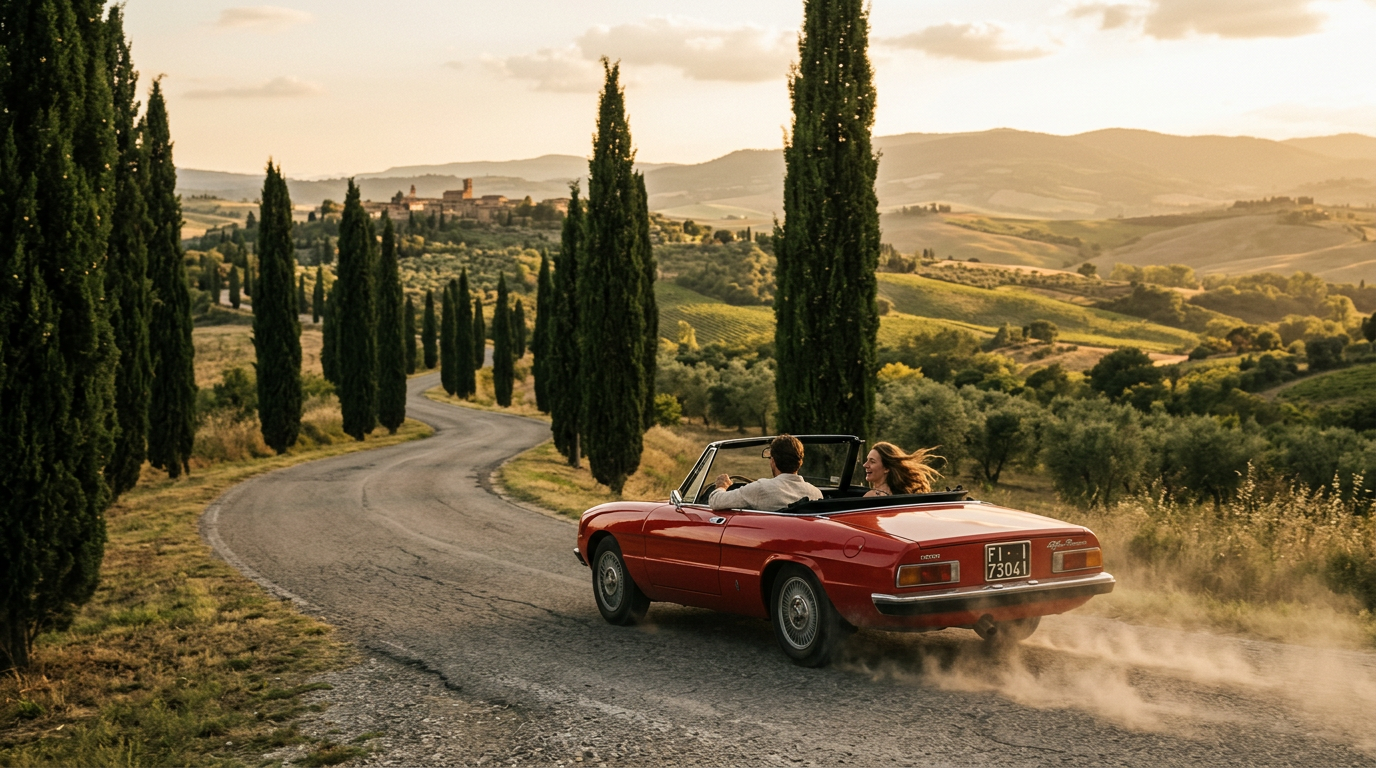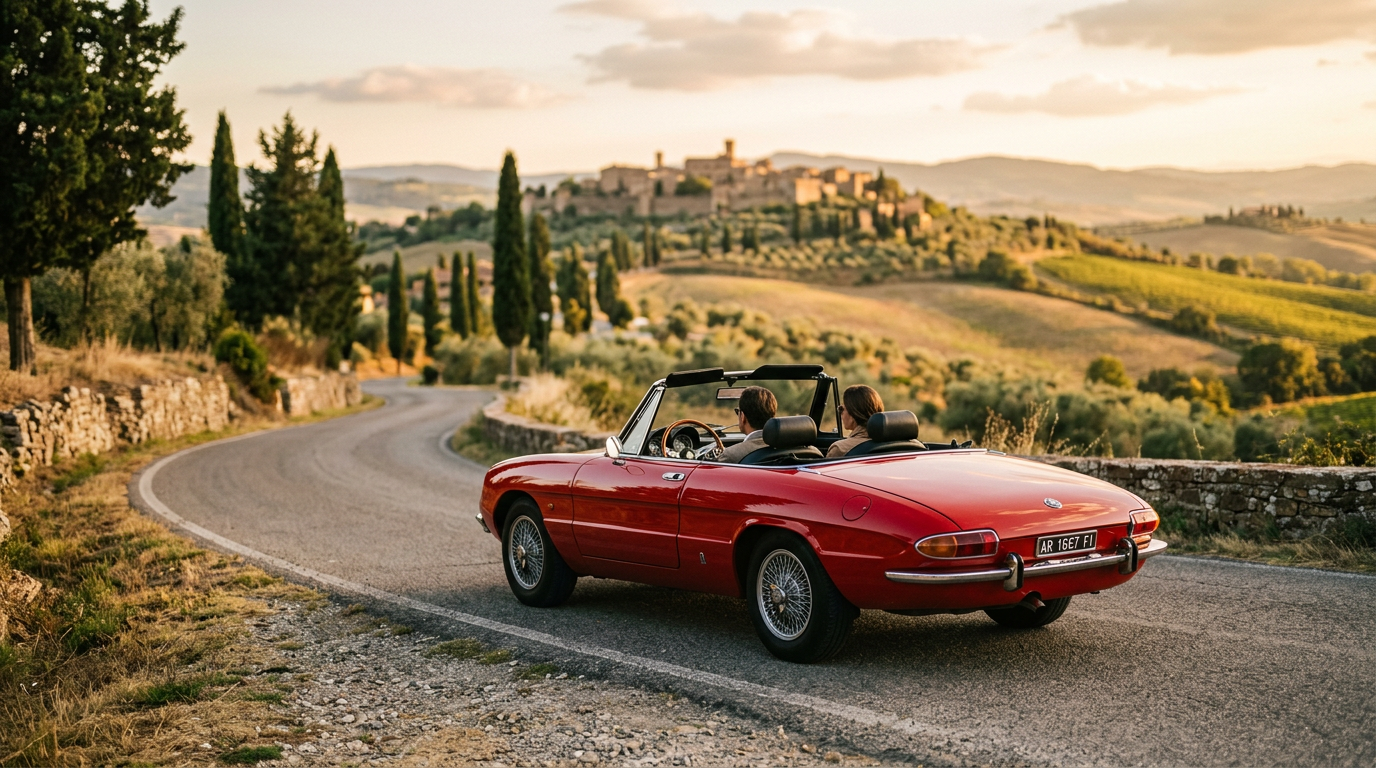
Il existe des voitures que l’on choisit avec la tête - raisonnables, en voie de valorisation, bien prises en charge par des réseaux de spécialistes - et des voitures que l’on choisit avec le cœur. L’Alfa Romeo Spider, elle, alterne entre les deux, selon le jour où l’on se pose la question. Par une soirée douce, capote baissée et le quatre-cylindres bicarburateur qui monte dans les tours au fil d’une vallée toscane, aucun tableur ne compte vraiment. Par une froide matinée de novembre, allongé sous la caisse avec une lampe de poche, en suivant la rouille dans un plancher, vous pouvez éprouver un sentiment bien différent.
Ce guide existe pour que votre cœur obtienne ce qu’il souhaite sans que votre tête ne paie plus cher que nécessaire. Il couvre toutes les séries de la Spider classique Tipo 105/115 (1966–1994), la Spider 916 ultérieure (1995–2006), ainsi que les niveaux de prix sur le marché européen, les priorités à l’inspection et des conseils francs avant de vous engager. L’Alfa Romeo Spider est l’une des voitures classiques les plus gratifiantes que l’on puisse posséder. C’est aussi l’une des plus faciles à mal acheter. Ce qui sépare ces deux issues, c’est la préparation.
Parcourez les annonces Alfa Romeo Spider sur Carseto →
Un bref historique : du Duetto à la fin d'une ère
En 1966, Alfa Romeo et Pininfarina dévoilent ce qui deviendra l’un des dessins de roadster les plus longtemps produits de l’histoire automobile. La Spider d’origine - connue officieusement sous le nom de « Duetto » après un concours de dénomination qui avait recueilli 140 000 propositions du public italien - affichait une poupe en « queue de bateau », des lignes fluides signées Pininfarina et le légendaire quatre-cylindres bicarburateur Alfa Romeo. Elle était belle, pleine de caractère et immédiatement iconique. Dustin Hoffman conduit une rouge dans Le Lauréat l’année suivante, et l’image de la voiture dans la culture populaire est fixée pour de bon.
La Spider évolue en quatre séries distinctes sur vingt-huit ans, toutes construites sur la même plate-forme de base. De la Duetto à l’arrière rond jusqu’à la Série 4 aux lignes plus anguleuses, le fond du personnage - moteur avant, propulsion, plaisir italien à ciel ouvert - ne change pas. La production s’achève en 1994, après plus de 124 000 Spider construites.
En 1995, Alfa Romeo lance une voiture entièrement nouvelle sous le nom de Spider : la 916, dessinée par Pininfarina sur la plate-forme GTV. Elle est à traction avant, moteur transversal, et fondamentalement différente de sa devancière. Controversée à sa sortie, elle a bien vieilli et entre aujourd’hui dans le registre des youngtimers.
Explorez toutes les annonces Alfa Romeo sur Carseto →
Guide d'achat série par série
Parcourez les Spider publiées sur Carseto dès maintenant.
Des projets de Série 3 aux Duetto de concours en Italie, en Allemagne et au Royaume-Uni.
Série 1 - la « Duetto » (1966–1969)
La Duetto est celle par laquelle tout commence. Sa poupe en queue de bateau, ses phares ronds et ses proportions délicates en font la Spider la plus visuellement marquante - et la plus recherchée sur le marché.
Le moteur est un quatre-cylindres bicarburateur de 1 570 cm³ développant 109 ch, accouplé à une boîte manuelle à cinq rapports. Ce n’est pas rapide selon les critères actuels, mais la volonté du moteur de monter dans les tours, la réactivité de l’accélérateur et la pureté de la mécanique font de la Duetto une voiture profondément satisfaisante à piloter, à n’importe quelle allure.
Environ 6 500 Duetto ont été produites - un chiffre modeste qui soutient une forte demande de collectionneurs. En Europe, les prix des beaux exemplaires se situent entre 40 000 € et 80 000 €, les voitures de niveau concours dépassant 100 000 €. Les premières Duetto avec le tableau de bord en acier d’origine (avant 1968) et une provenance italienne documentée commandent les primes les plus élevées.
Profil d’acheteur : aux gardiens du patrimoine et aux collectionneurs exigeants qui valorisent la provenance, la rareté et la romance du dessin d’origine. Ce n’est pas une voiture que l’on achète sur un coup de tête. Elle récompense la recherche attentive et la patience.
Points à vérifier : la rouille. Partout. La caisse de la Duetto n’était pas galvanisée, et plus de cinquante années de climat européen laissent des traces. Bas de caisse, plancher de coffre, planchers, ailes intérieures, bas de portes et encadrement de pare-brise sont autant de zones vulnérables. Une Duetto impeccable à dix mètres peut être structurellement fragilisée dessous. N’en achetez jamais une sans avoir vu le dessous sur un pont élévateur.
Série 2 (1970–1982)
La Série 2 introduit la « queue Kamm » - un arrière plus tronqué que les puristes contestèrent d’abord, mais qui est devenu pour beaucoup d’amateurs l’image de référence de la Spider. Le changement était pragmatique : il augmentait le volume de coffre et améliorait la stabilité aérodynamique à vitesse élevée.
La palette moteur s’étoffe sur les douze années de production de la S2. Les premières voitures utilisaient le bicarburateur 1 750 cm³ (118 ch), puis le 2 000 cm³ (131 ch) qui motorisera la Spider jusqu’à la fin. Les premières S2 (1970–1975) conservent les pare-chocs chromés et des moteurs à carburateurs, pour une expérience proche de la Duetto à une fraction du prix. Les S2 tardives (1975–1982) reçoivent l’injection mécanique Bosch Spica sur les versions destinées aux États-Unis, tandis que l’Europe reste majoritairement au carburateur.
La Série 2 est le compromis idéal pour de nombreux acheteurs. Elle offre ce qui se rapproche le plus du caractère de la Duetto - surtout en version début de série, pare-chocs chromés, 2 000 cm³ - tout en étant plus disponible et nettement plus abordable. En Europe, comptez entre 20 000 € et 45 000 € pour de bonnes voitures, les premières S2 chromées d’exception pouvant atteindre 55 000 €.
À qui elle s’adresse : aux conducteurs du week-end qui veulent une classique engageante qu’ils peuvent réellement utiliser. Les coûts d’usage de la S2 restent raisonnables, les pièces sont nombreuses, et la sensation de conduite est pure.
Priorités d’inspection : les mêmes zones de corrosion que sur la Duetto, avec la même gravité. La longue carrière de la S2 signifie que plus d’exemplaires ont survécu, mais les points faibles sont identiques. Portez une attention particulière aux longerons de châssis : s’ils sont compromis, la voiture représente un chantier majeur quelle que soit la présentation extérieure. Les installations électriques des voitures italiennes de cette époque sont fragiles : masses, commodos et instrumentation méritent toute votre vigilance.
Série 3 (1982–1989)
La Série 3 est la Spider que la presse spécialisée a tendance à négliger - et c’est précisément ce qui la rend intéressante. Les pare-chocs en caoutchouc remplacent le chrome, l’injection Bosch L-Jetronic devient la norme sur tous les marchés, et la voiture reçoit diverses évolutions en faveur du raffinement et de la qualité de fabrication.
Les pare-chocs en caoutchouc sont l’éléphant dans la pièce. Ils ne sont pas beaux. Ils alourdissent visuellement l’avant et l’arrière, et divisent nettement les opinions. Mais derrière se cache une Spider mécaniquement affinée, avec une meilleure injection, une protection anticorrosion améliorée (sans pour autant aller jusqu’à la galvanisation), et une tenue de route que de nombreux propriétaires jugent supérieure à celle de la S2.
La cote en Europe reflète l’ambivalence du marché face à l’esthétique de la S3 : 15 000 € à 35 000 € pour de bonnes voitures, ce qui en fait la porte d’entrée la plus abordable vers la Spider. À la borne basse de cette fourchette, difficile de trouver un roadster ouvert plus gratifiant pour le budget.
Idéal pour : à l’amateur pragmatique qui privilégie la conduite plutôt que les concours d’élégance. Si vous acceptez les pare-chocs - et beaucoup le peuvent, surtout une fois au volant - la S3 est la Spider au meilleur rapport plaisir / budget.
Avant d’acheter, vérifiez : la rouille, comme toujours. Les pare-chocs eux-mêmes vieillissent mal - décoloration, fissures, affaissement - et leur remplacement ou restauration alourdit la facture. Les systèmes d’injection sont globalement fiables mais exigent un carburant propre et des capteurs en état. Contrôlez tous les durits de dépression.
Série 4 (1990–1994)
L’ultime évolution de la Spider classique apporte des pare-chocs assortis à la carrosserie (un progrès notable face au caoutchouc de la S3), une direction assistée et un habitacle plus moderne. Le deux litres bicarburateur demeure, désormais avec pot catalytique et injection électronique. C’est la plus « civilisée » des Spider classiques et la plus simple à vivre au quotidien.
Les volumes de production sont inférieurs aux séries précédentes, et la S4 est longtemps restée la Spider oubliée - trop récente pour être « classique », trop ancienne pour être « moderne ». Cette période touche à sa fin. La S4 est désormais reconnue comme une voiture bien construite, pleine de caractère et de plus en plus rare, et les prix réagissent. En Europe, comptez 18 000 € à 40 000 € pour de bonnes voitures, les meilleurs exemplaires montant au-delà.
Le charme : à l’acheteur qui veut l’expérience Spider classique avec le minimum de compromis. La S4 démarre facilement, offre la direction assistée et constitue la version la mieux équipée pour un usage régulier.
Points critiques : l’état et le fonctionnement du pot catalytique (en cas de défaillance, remplacement ou suppression - lorsque la législation le permet - sont les options). Les pannes d’injection électronique sont moins fréquentes que sur la S3 mais peuvent coûter cher au diagnostic. Les pare-chocs peints masquent mieux les chocs que le chrome ou le caoutchouc : inspectez soigneusement dessous.
La Spider 916 (1995–2006)
La 916 est une voiture fondamentalement différente. Elle partage le nom Spider et le cabinet Pininfarina, mais rien d’autre avec sa devancière. Traction avant, moteur transversal et plate-forme Alfa Romeo moderne la placent dans une autre catégorie.
Le design était polarisant à la sortie - la forme en coin tranchant rompait radicalement avec les courbes pininfarinesques. Vingt ans plus tard, le vieillissement est remarquablement réussi. La 916 paraît affirmée et distinctive d’une manière dont beaucoup de sportives contemporaines ne disposent pas.
Les motorisations couvrent la gamme Alfa Romeo de l’époque : quatre-cylindres Twin Spark (1,8 ; 2,0), V6 (2,0 turbo, 3,0, 3,2) et une courte variante JTS. Le V6 3,0 est celui qu’il faut viser - le Busso offre 220 ch, un son magnifique et transforme la 916 d’un cabriolet de balade agréable en une sportive réellement rapide.
Les prix en Europe restent remarquablement accessibles : 5 000 € à 20 000 € couvrent l’essentiel du marché, seuls les meilleurs V6 3,0 et 3,2 atteignant le haut de fourchette. La 916 V6 compte parmi les voitures les plus sous-cotées pour le plaisir de conduite en Europe aujourd’hui.
Qui les achète : aux jeunes passionnés et aux conducteurs du week-end qui veulent une sportive italienne à ciel ouvert aux performances réelles, la bande-son du V6 Busso, et une étiquette de prix qui rend la possession réellement accessible.
Attention à : la rouille - oui, même sur une voiture de 1995. Les bas de caisse, les passages de roue arrière et le plancher de coffre de la 916 sont vulnérables, en particulier sur les exemplaires ayant circulé dans le nord de l’Europe. Les V6 sont robustes, mais la distribution par courroie (tous les cinq ans ou 72 000 km) est une opération complexe et coûteuse : vérifiez qu’elle a été faite. La boîte robotisée Selespeed (montée sur certaines versions) vaut mieux l’éviter ; la boîte manuelle classique est bien plus fiable et agréable.
Le principal risque : la rouille
Il est impossible d’écrire un guide d’achat sur l’Alfa Romeo Spider sans consacrer une part sérieuse à la corrosion. La réputation d’Alfa Romeo en matière de rouille n’est pas un mythe - c’est un fait métallurgique. L’acier des Spider Tipo 105/115 n’était pas galvanisé, et la protection anticorrosion d’usine était insuffisante selon tout critère moderne. Les voitures qui ont vécu dans le nord de l’Europe sans entretien méticuleux rouillent. La question n’est pas « si », mais « où » et « dans quelle mesure ».
Les zones critiques, par ordre d’importance structurelle :
Les planchers. Soulevez les moquettes. Toutes. Tâtez avec un tournevis si le vendeur l’autorise. Un plancher corrodé n’est pas un détail esthétique - c’est structurel. Une voiture aux planchers perforés est un projet, quelle que soit la carrosserie.
Bas de caisse et longerons. C’est l’épine dorsale du châssis. La corrosion ici compromet l’intégrité structurelle et coûte cher à réparer correctement (2 000 € à 4 000 € par côté pour un remplacement complet de bas de caisse). N’acceptez ni mastiquage ni tôles de recouvrement comme « réparation ».
Fixations du sous-châssis avant. Là où le train avant se fixe à la caisse, l’humidité s’accumule et la corrosion progresse à l’abri des regards. Si les supports sont fragilisés, la géométrie de l’avant devient peu fiable.
Plancher de coffre. Surtout autour du logement de roue de secours - les infiltrations par le joint de hayon accélèrent la corrosion.
Bas de portes. Les trente centimètres inférieurs de chaque panneau retiennent l’eau. La peinture qui cloque en bas de porte est un indicateur fiable de corrosion cachée.
Encadrement de pare-brise. Difficile et coûteux à réparer. Si le pare-brise a fui, la tôle environnante peut être compromise.
La règle d’or : une voiture saine structurellement avec une peinture fatiguée vaut plus qu’une voiture repeinte sur une ossature pourrie. N’achetez jamais une Spider sans avoir vu le dessous. Un passage au pont n’est pas une option - il est indispensable.
Une restauration carrosserie complète sur une Spider - démontage, décapage, soudure, peinture - coûte 15 000 € à 30 000 € dans le nord de l’Europe. En Italie, les tarifs sont plus bas mais la qualité varie. Prévoyez en conséquence.
Autres problèmes courants
Au-delà de la rouille, la Spider présente plusieurs sujets mécaniques et électriques récurrents.
L’électricité. Les faisceaux italiens des années 1960–1990 ne sont pas réputés pour leur fiabilité. Les masses s’oxydent, les commodos s’usent et les instruments deviennent erratiques. Prévoyez un refaisceau complet sur les voitures anciennes (1 000 € à 2 000 €), ou au minimum un contrôle approfondi et le nettoyage de toutes les masses.
Les moteurs. Le quatre-cylindres bicarburateur Alfa est un moteur brillant qui récompense l’entretien et punit la négligence. Recherchez une suinte de joint de culasse (traces d’huile à la liaison culasse / bloc), un cliquetis de chaîne de distribution au froid et une consommation d’huile. Bien entretenu, il peut dépasser 200 000 km sans gros travaux. Négligé, il peut nécessiter une reconstruction complète.
Les boîtes. L’usure des synchroniseurs - surtout sur le deuxième rapport - est la plainte la plus fréquente. Un passage un peu crade à froid reste dans les habitudes Alfa. Si cela ne s’améliore pas lorsque l’huile chauffe, les synchros peuvent demander de l’attention.
Les capotes. Comptez 1 000 € à 2 000 € pour un remplacement sérieux avec un bon matériau et une pose professionnelle. Une capote qui fuit accélère la dégradation de l’habitacle et, pire, la corrosion des planchers.
Quelle Spider convient le mieux à votre projet ?
Pour l’investissement : la Série 1 Duetto. Rareté, beauté et courbe de valorisation en font le choix du collectionneur. Mais n’achetez que le meilleur - une mauvaise Duetto est un gouffre financier.
Pour la conduite : une Série 2 des premières années, à pare-chocs chromés et au moteur 2 000 cm³. C’est la Spider des passionnés - expressive, engageante, assez abordable pour être utilisée sans crainte excessive.
Pour le rapport qualité-prix : la Série 3. C’est la Spider la moins à la mode, donc la moins chère. Derrière les pare-chocs en caoutchouc se cache une mécanique saine et une voiture profondément agréable.
Pour le quotidien : la Série 4 ou la 916 V6. La S4 offre l’expérience classique avec le minimum de compromis. La 916 V6 offre de vraies performances et une bande-son qu’aucune voiture moderne sous 50 000 € n’égale.
Des années à éviter ? La réponse honnête : évitez toute Spider que vous n’avez pas vue dessous, quelle que soit la série ou l’année. Le plus grand risque dans la possession d’une Spider n’est pas une année-modèle précise - c’est la rouille structurelle cachée, à toute époque.
Recherchez des Alfa Romeo Spider dans toute l’Europe sur Carseto →
Coûts d'usage et disponibilité des pièces
L’approvisionnement en pièces à travers l’Europe est bon et s’améliore. Les spécialistes italiens et britanniques disposent de stocks étendus pour toutes les séries, et le réseau patrimoine Alfa Romeo soutient la gamme classique. Les pièces mécaniques - moteur, boîte, silentblocs, freinage - sont disponibles et à des tarifs raisonnables. Les tôleries et chromes pour les premières séries sont plus rares et plus chers, mais l’aftermarket couvre les besoins les plus courants.
Un entretien annuel chez un spécialiste Alfa indépendant coûte 400 € à 800 € pour les opérations courantes. Le bicarburateur exige des réglages de jeu aux soupapes, le contrôle de la chaîne de distribution et des vidanges régulières - la voiture récompense un propriétaire attentif.
Pour les Série 1 et 2, souscrivez une assurance en valeur convenue. Les polices classiques des assureurs spécialisés au Royaume-Uni, en Allemagne et en Europe restent compétitives.
Où acheter une Alfa Romeo Spider en Europe
Découvrez l'évolution des cotes Spider sur l'indice Carseto.
Comparez les prix des Séries 1 à 4 et de la 916 en Europe.
L’Italie en est le berceau spirituel et la meilleure piste de chasse. Les Spider du marché italien profitent d’un climat méditerranéen sec - la rouille y est bien moins répandue que sur les voitures du nord de l’Europe. En contrepartie, le soleil marque les carrosseries : peinture passée, tableaux de bord fissurés et capotes fatiguées sont fréquents.
Le Royaume-Uni dispose d’un réseau de spécialistes Alfa Romeo solide et d’une scène de clubs établie (Alfa Romeo Owners Club). Les prix britanniques tendent à être légèrement supérieurs au continent, mais l’accompagnement à l’achat est sérieux.
L’Allemagne propose des exemplaires souvent bien suivis, en particulier après 1980 pour les voitures éligibles à l’immatriculation historique H-Kennzeichen. Les propriétaires allemands conservent en général un carnet d’entretien rigoureux.
L’avantage transfrontalier : une Spider du marché italien, caisse saine et peinture fatiguée, constitue souvent un meilleur point de départ qu’une voiture du nord de l’Europe repeinte sur une structure compromise. Chercher au-delà des frontières - et comprendre ce que chaque marché offre - est la manière dont les acheteurs avertis trouvent les meilleures Spider.
Recherchez des Alfa Romeo Spider dans toute l’Europe →
Inspection avant achat : les 10 points à vérifier
Suivez votre classique dans Mon garage.
Documentez votre collection, obtenez des indications de valeur et publiez une annonce lorsque vous serez prêt à vendre.
- Bas de caisse - sondez avec un tournevis ou un aimant. C’est le contrôle le plus important.
- Planchers - soulevez moquettes et tapis. Repérez les plaques rapportées, le mastic ou la lumière en transparence.
- Longerons - inspectez depuis dessous. Toute corrosion ici est grave.
- Compression moteur - homogène sur tous les cylindres, dans une tolérance de 10 %.
- Boîte - enfilez tous les rapports à froid. Le crissement du deuxième est révélateur.
- Électricité - testez chaque interrupteur, feu, instrument et indicateur.
- Capote - déchirures, transparence de la lunette, étanchéité des joints.
- Chromes - piqûres, écaillage ou qualité de remplacement. Budgétisez en conséquence.
- Habitacle - matériaux d’origine, état des sièges, fissures de tableau de bord.
- Documentation - historique d’entretien, immatriculations, chaîne de propriété.
Questions fréquentes
Quelle série d’Alfa Romeo Spider est la meilleure ? Pour la majorité des acheteurs, le début de Série 2 (pare-chocs chromés, 2 000 cm³) offre le meilleur compromis entre caractère, facilité d’usage et prix. Pour les collectionneurs, la Série 1 Duetto. Pour les pragmatiques, la Série 3 ou 4.
Quelles années d’Alfa Romeo Spider faut-il éviter ? Aucune année n’est intrinsèquement mauvaise. La question est toujours l’état du véhicule - en particulier son intégrité structurelle. Évitez toute Spider que vous n’avez pas vue dessous, quelle que soit l’année.
Combien coûte une Alfa Romeo Spider en Europe ? Les Série 3 démarrent vers 15 000 € pour de bonnes voitures. Les Série 2 chromées se situent entre 20 000 € et 45 000 €. Les Duetto Série 1 se négocient entre 40 000 € et plus de 100 000 €. La 916 V6 offre un rapport exceptionnel vers 10 000 €–20 000 €.
L’Alfa Romeo Spider est-elle fiable ? Avec un entretien sérieux, oui. Le quatre-cylindres bicarburateur est robuste et durable. L’électricité exige de l’attention, la rouille une surveillance constante. Une Spider bien suivie est une classique fiable. Une Spider négligée est une source permanente de surprises.
L’Alfa Romeo Spider est-elle un bon investissement ? Les Duetto Série 1 ont progressé régulièrement. Les Série 2 et 3 sont stables à légèrement haussières. La 916 V6 est largement considérée comme sous-cotée. Comme pour toute classique, l’état et l’originalité déterminent le potentiel de valorisation.
Quelle est la différence entre Série 1 et Série 2 ? La Série 1 (Duetto) a la poupe en queue de bateau, le moteur 1 570 cm³ plus petit et des volumes de production plus faibles. La Série 2 introduit la queue Kamm, des cylindrées supérieures (1 750 puis 2 000 cm³) et une production bien plus importante. La S1 est plus rare et plus chère ; la S2 est plus pratique et plus abordable.
Une voiture qui vous réconcilie avec la conduite
L’Alfa Romeo Spider n’est ni la plus rapide, ni la plus fiable, ni la plus pratique des classiques que vous pouvez acheter. Elle reste pourtant l’une des plus gratifiantes. Il y a dans l’expérience de la Spider - l’intimité mécanique du bicarburateur, la directivité de la direction, la manière dont l’air traverse l’habitacle par une soirée douce - une qualité que peu de voitures, à n’importe quel prix, égaleront.
C’est une voiture qui exige votre attention et vous la rend sous forme de plaisir. Achetez-la avec méthode, entretenez-la bien, et elle vous rappellera, à chaque mise du contact, pourquoi vous vous êtes passionné pour l’automobile.
Lancez votre recherche sur Carseto →
Pour aller plus loin : Guide d’achat Porsche 911 · Guide des prix Mercedes W113 Pagode · Guide d’achat BMW E30
Cet article fait partie du Carseto Journal - analyses de marché et récits du monde des voitures classiques européennes.